Institut Klassik | The degree programme offers a sound artistic education for anyone who wants to pursue music as a form of expression and a vocation. The focus is on personal development and making music at the highest level.

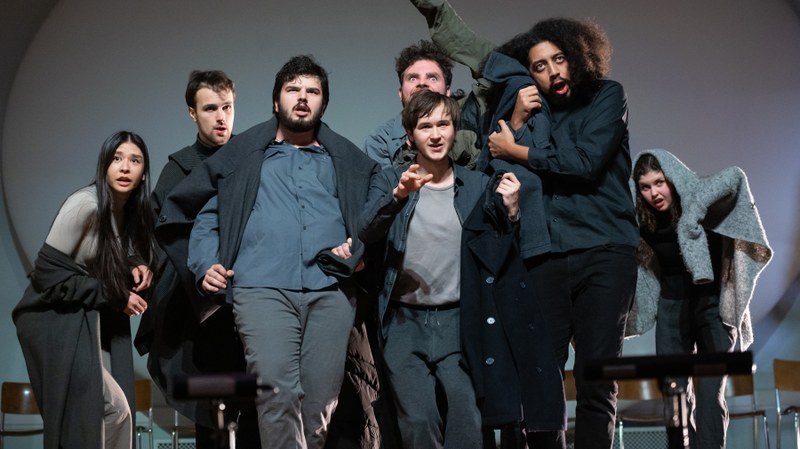
Opera project “The Cunning Little Vixen” by Leoš Janáček 
Factsheet
- Degree
- Master of Arts FHNW in Musikalischer Performance, Studienrichtung instrumental/vokal
- Study mode
- Full-time
- Learning environment
- Onsite
- ECTS points
- 120
- Duration
- 4 semesters
- Staying abroad
- Possible
- Application fee
- 200 CHF
- Semester fee
- 750 CHF (CH) | 1000 CHF (EU/EFTA) | 1250 CHF (Not-EU/Not-EFTA)
At a glance
- Individual support: Main subject tuition with internationally renowned lecturers
- Diverse stage practice: Numerous concerts on the university campus and in a wide variety of concert formats in the city of Basel – various musical constellations and contexts are complemented and enriched by projects and collaborations with professional partners from the region
- Internationally networked: Guest lecturers open up new perspectives
- Practical and reflective: Artistic work is practised here as a lively reflection of content and techniques, and lively exchange within the university community is specifically encouraged
Why study this?
Graduates of the Master of Arts FHNW in Music Performance find employment on stage as soloists, chamber musicians or orchestral musicians. The professional field of musicians will often be a combination of the above-mentioned activities, depending on additional qualifications, also in connection with instrumental/vocal lessons or music teaching tasks.
This study course is aimed at highly gifted instrumentalists/vocalists who already hold a Bachelor degree.
What orchestra, choir and large projects exist at the Basel Academy of Music?
Orchestra
The orchestra of the academy of music Basel is an important part of Music Performance and performs under the guidance of internationally renowned conductors such as Heinz Holliger, Ronald Zollman, Jonathan Nott, and Gábor Takács-Nagy, primarily large-scale repertoire works from the 19th and 20th centuries, often also in collaboration with the music academies in Lucerne, Geneva and Zurich.
Works performed included:
Franz Schubert: Messe in Es-Dur für Chor, Soli und Orchester, D 950
György Ligeti: Atmosphères
Richard Wagner: Vorspiel zum 1. Akt der Oper Lohengrin
Gustav Mahler: Sinfonie Nr. 4 G-Dur für Sopran und Orchester
Arthur Honnegger: Le Roi David für Soli, Chor, Blaser und grosses Schlagwerk
Gustav Mahler: Sinfonie Nr. 1 (Der Titan)
Richard Strauss: Suite aus der Oper Der Rosenkavalier
Johannes Brahms: Ein deutsches Requiem für Soli, Chor und Orchester op. 45
Richard Wagner: Vorspiel zum 1. Akt der Oper Lohengrin Gustav Mahler: Sinfonie Nr. 4 G-Dur für Sopran und Orchester
Chamber Academy
The Chamber Academy Basel, the chamber orchestra of the Basel Academy of Music, performs without a conductor under the direction of the concertmaster, playing solo concertos and orchestral works from the Baroque period to the 20th century, often with professors from the academy as soloists.
Chamber choir
The chamber choir is considered the concert choir of the Basel Academy of Music FHNW. In addition to demanding a cappella vocal music, the chamber choir, conducted by Martin Wettges, also performs works with orchestra. Those who sing in the chamber choir are exempt from participating in the ‘large choir’. Chamber choir can also be taken as an elective subject. Participants must pass an entrance exam. Most of them receive voice training or attend lessons with singing teachers. The choir conducting class is also involved, leading sectional and full rehearsals.
Works performed included:
Franz Schubert (1797–1828): Messe in Es-Dur für Chor, Soli und Orchester, D 950
Heinrich Schütz jubiliert – Glückwünsche aus dem Jenseits mit Musik von Giovanni Gabrieli, Claudio Monteverdi, Johann Hermann Schein, Johann Sebastian Bach, Felix Mendelssohn Bartholdy, Johannes Brahms, Hugo Distler, Knut Nystedt und Heinrich Schütz
Konzertzugabe F. M. Bartholdy: Denn er hat seinen Engeln befohlen Ausschnitt: Schubert's Messe Es-Dur
Large Choir
All first- and second-year Bachelor's students sing in the large choir of the Basel Academy of Music FHNW. The focus is on discovering one's own voice, targeted voice training and a general introduction to choir singing and the a cappella vocal repertoire. One concert is held per semester. In addition to Martin Wettges, guest conductors also regularly lead this choir.
Final concerts
The final concerts offer students of all study courses at the Basel Academy of Music a unique opportunity to perform publicly as a soloist on the main stage, accompanied by the Sinfonieorchester Basel or the Kammerorchester Basel.
The selection process takes place within the framework of an internal university competition.
Structure and programme contents
The internationally oriented two-year degree programme focuses on the practical examination of interpretational and instrumental/vocal issues. Students deepen their knowledge and skills from the bachelor's programme with a view to concert work and the ability to find their own ways of interpretation and convincingly implement these on the concert platform. They are accompanied by experienced lecturers.
The main subject lessons are the most important part of the programme in terms of quality and the necessary preparation and follow-up time. Chamber music, ensemble and orchestral playing as well as a reflective level (theory/analysis) form another important part of the programme.
Minors
In addition to the elective subjects, optional minors allow students to focus on their own personal specialisations.
Minors of Institut Klassik
Modules and Reglements
The BA and MA degree programmes at the Basel Academy of Music are based on modules.
The legally binding structure provides an initial guide to the content and weighting of the subjects on the degree programme.
The detailed content and modalities of the individual subjects can be found in the module descriptions.
The study regulations come into force together with the study and examination regulations of the Basel Academy of Music FHNW and form the legal framework.
Structures
Majors: everything DESPITE Singing, Piano, Organ, Percussion, Trumpet
Structure MA P Klassik instrument/voice Major everything despite the following in German
Major: Singing
Structure MA P Klassik instrument/voice Major: Singing in German
Major: Piano
Structure MA P Klassik instrument/voice Major: Piano in German
Major: Organ
Structure MA P Klassik instrument/voice Major: Organ in German
Major: Percussion
Structure MA P Klassik instrument/voice Major: Percussion in German
Major: Trumpet
Structure MA P Klassik instrument/voice Major: Trumpet in German
Minors

Minors of Institut Klassik
Minors

Minors of Institut Klassik
Module descriptions
Below please find the link with all the information on the module descriptions of several FHNW universities.
- Switch the language settings to English.
- Filter by semester, Hochschule für Musik Basel FHNW, the desired degree programme or other criteria to display the relevant module information.
- Use the PDF button to call up a document from each overview and save it for yourself.
- Course registrations are made via the intranet.
Study Regulations
Lecturers
Institut Klassik
Visiting Professors and Master classes
Requirements, admission, entrance exam
In order to enter the FHNW Master of Arts in Musical Performance programme with an instrumental or vocal major, applicants must be awarded a Bachelor in Music/Music and Movement or equivalent as well as they must have passed the entrance exam and were offered a free place at the Academy (limited places). Applicants who have submitted all the necessary registration documents in time and have passed the first round of the entrance exam will be invited to play a live audition.
For further information on the admission criteria, please see the Study regulations of the Master of Arts FHNW in Music Performance.
Internal Bachelor candidates absolve the entrance exam within their Bachelor qualification which they need to graduate with at least the grade 5.5. Further requirements are:
- Having passed the Master preparation course
- The jury must unanimously recommend that the student continues in the Master study course
- The consent of the Major professor
We recommend having sufficient German language skills.
Entrance exam
The entrance exam is individual for each study programme direction.
Dates
Registration
You may apply between 15th December and 1st March. Along with the registration, it is mandatory to submit the following documents:
- A curriculum vitae
- a motivational letter
- the school leaving qualification
- the Bachelor Diploma
- Second Master applicants: Master Diploma
On-Site
The live auditions will take place at the end of April. The exact dates may be seen here.
Announcement of the results
The results of the first round will be communicated by mail at the end of March.
The results of the second round will be communicated by mail at the beginning of May.
Procedure
The entrance exams is split into the first round, which is held “by video”, and the second one, which is a live audition.
Procedure
First round: Video recordings
A video recording must be submitted together with the registration.
Repertoire requirements
Video requirements
- Each work/movement must be recorded from a fixed camera perspective and without any cuts.
- The hands and the face of the musician must be visible.
- It is recommended to use a suitable stereo microphone and place it conveniently.
- The recordings must not be older than 6 months.
- Publicly recorded concerts may be submitted as long as they meet the above-mentioned requirements.
Please upload the videos onto YouTube and addthe links to your application. If yousubmitone single video of the complete programme, please set markers so that the individual works/movements can be selected directly.
Only those applicants who will be considered for the second round will be invited for the live audition.
Second round: Live audition
The repertoire to be performed (see Repertoire requirements) may be identical to the one submitted in the video. Please include the list of works in your registration.
Changes of the programme are only possible until 14 days before the live audition. In such a case, please send the updated list of works in time to registration.hsm@fhnw.ch.
The candidate may choose the first piece. Afterwards, the jury will select from the prepared repertoire and may interrupt the audition at any time.
After the audition, there will be a short conversation about the goals and contents of the study programme, the applicant’spreviouseducation, careerobjectives, preferred teacher, etc.
Organisational matters
Projects / Ensembles
At Hochschule für Musik Basel, students have the opportunity to participate in various project and ensemble programmes.
To the overview of the recurring offers.
Quicklinks
Advising and information events
Contact
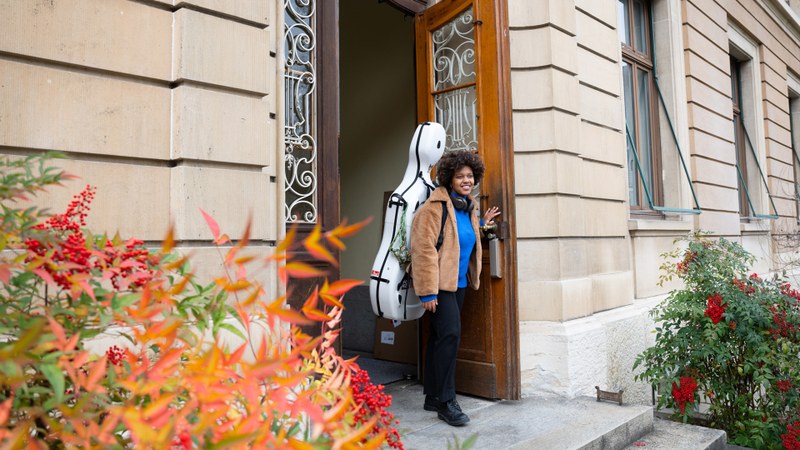
Student Administration Academy of Music, Klassik
- Phone
- +41 61 264 57 32 (Direct)
- klassik.hsm@fhnw.ch
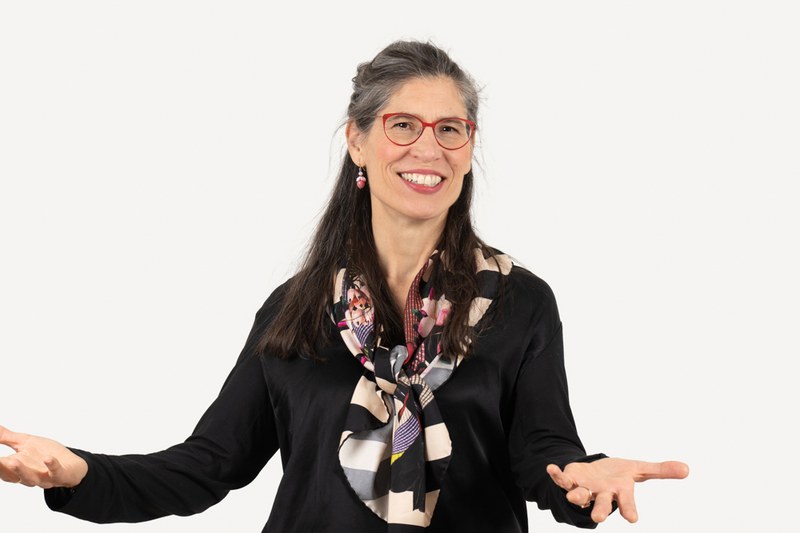
Prof. Imke Frank
- Phone
- +41 61 264 57 57 (Central office)
- imke.frank@fhnw.ch
Information events
Loading...

