Transversal Design is a study programme for practice-based research that grows community infrastructures for worlds in transition. We investigate the social, political, ecological and technological dynamics of the systems we live by to design for grounded transformation – from alternative media, speculative models, and practices of care, to tools for solidarity and radical proposals for innovation.
Factsheet
- Degree
- Master of Arts FHNW
- Study mode
- Full-time
- Learning environment
- Onsite
- ECTS points
- 120
- Next start
- 14.9.2026
- Duration
- 4 Semester
- Language
- English (B2 or equivalent)
- Place
- Campus HGK Basel
- Staying abroad
- Possible
- Application fee
- CHF 200.- (incl. aptitude assessment and enrolment)
- Semester fee
- CHF 750 (CH); CHF 1.000 (EU); CHF 1.250 (Not-EU/EFTA)
At a glance
- Students develop critical practices for changing worlds – from alternative media, speculative models and practices of care to tools for solidarity and radical proposals for innovation.
- Students are invited to design, document, rehearse, publish, hack, play, build, research, organise and write.
- New ways of thinking about the role of design in society are being explored.
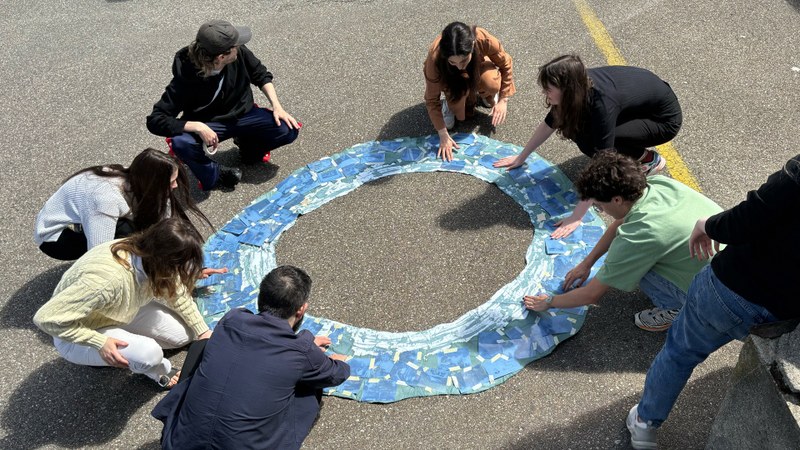
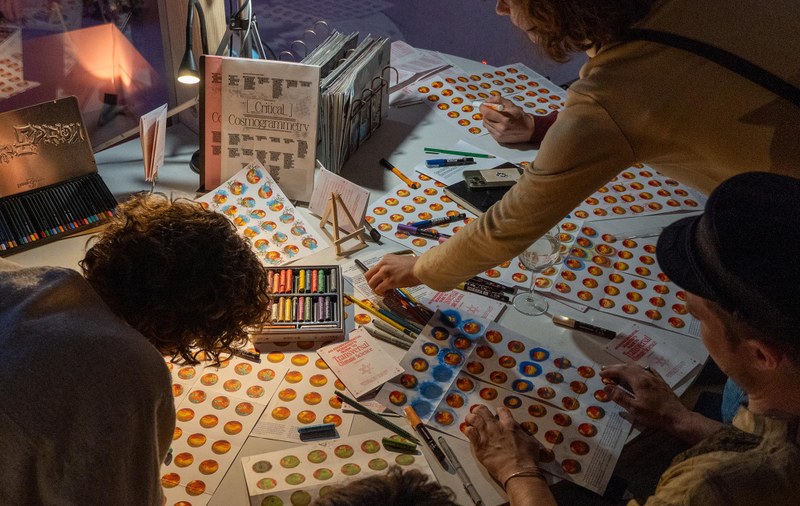
Collective cyanotyping a textile piece from the reclaiming archives workshop «Clavado en media del sol-Thrust out under the sun» hosted by Camila Amancay Chebez in collaboration with Azura Silberschmidt during the public event «To Dance on Tables» at TransBona Halle Dreispitz in July 2024. 
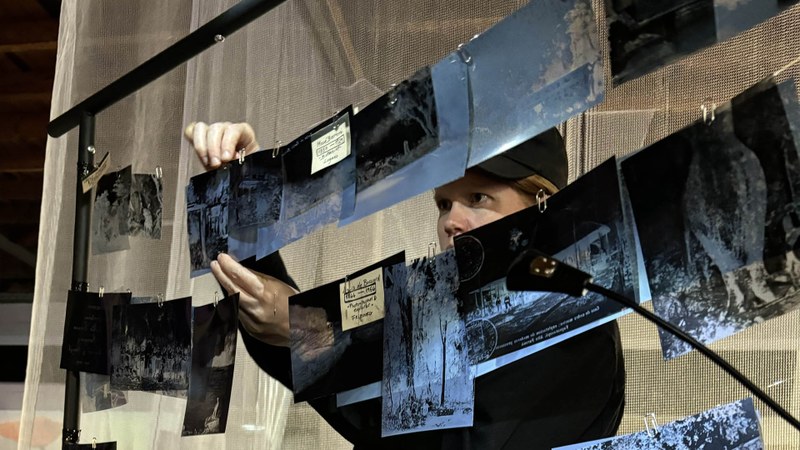
Collective cyanotyping a textile piece from the reclaiming archives workshop «Clavado en media del sol-Thrust out under the sun» hosted by Camila Amancay Chebez in collaboration with Azura Silberschmidt during the public event «To Dance on Tables» at TransBona Halle Dreispitz in July 2024.
Photo: Qingyi Ren
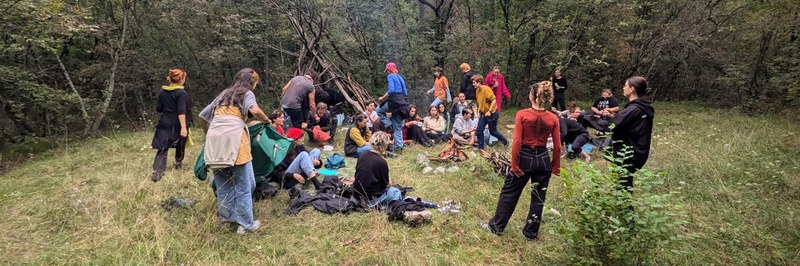
Student-organized talk series «Chatty Chatty» by Camila Chebez, Fabian Frey, Maria Maddalena Lenzi, and Danuka Tomas to gather, exchange ideas, and connect meaningfully with invited guests. Here in conversation with Bianca Elzenbaumer (Brave New Alps / La Foresta) in the forest of Rovereto during a study trip to Italy, 2024.
Photo: Kit Braybrooke
Why study this?
Goals and benefits
The MA Transversal Design trains students to build a design practice which works across disciplinary boundaries, questions hierarchies of meaning and drives transformation processes. Our students become leaders in navigating diverse settings, from design justice, critical media and norm-critical innovation to community building and co-creation. Thinking and acting transversally means taking a deep consideration into social, political, technological and ecological processes in their complex interdependencies – a skillset which is crucial in surviving the immense challenges of polycrisis that lie ahead. In your defence of an original thesis project which explores a transversal matter of concern, you will learn how to work individually and collectively on a piece of practice-based research which extends the possibilities of design into unexpected places.
Career prospects
In this programme, you will not be guided by predefined job profiles, but will learn to apply your ideas, methods and skills across a wide variety of contexts and areas of application. Our students work across many fields, organisations, communities, institutions and companies, and very often in collaboration. The MA Transversal Design is particularly suited to those who wish to enter fields which navigate uncertainty, change and transformation, exploring the possibilities of systems change, digital and/or green transitions. As a future agent of the emerging field of transversal design, you will be equipped with the skills to move across domains, generate innovative ideas, publish, convene, reflect and transform. Through the direct connection to the research activities of Critical Media Lab and other collaborators at IXDM, you will also have the chance to harness your MA to apply for PhDs.

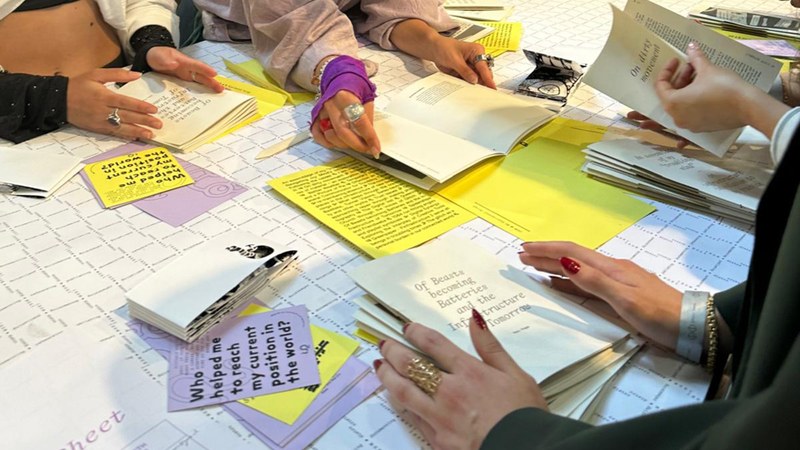
Students assembling «Infrastructuring Orientations», an experimental publication format guided by Prof. Dr. Lucie Kolb and presented at the «I Never Read, Art Book Fair Basel», 2024.
Photo: Maddalena Maria Lenzi
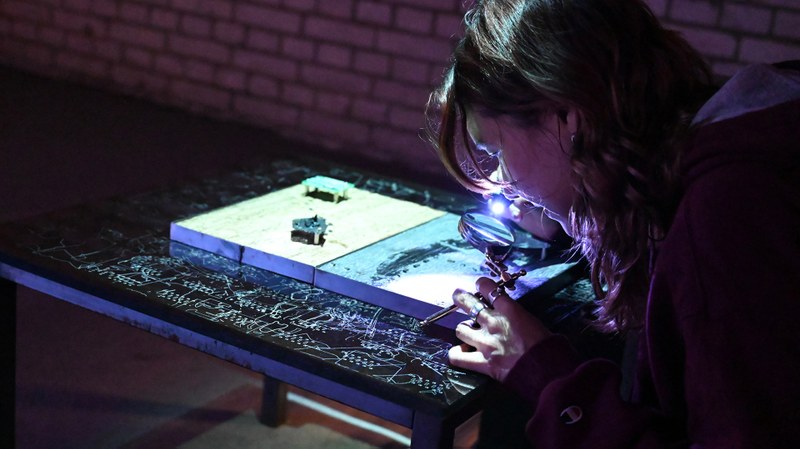
Zhixian Zhang «One Thousand Nights and One Night», student work at the public event «To Dance on Tables» at TransBona Halle Dreispitz in July 2024.
Photo: Transversal Design Team / HGK Basel FHNW
Structure and programme contents
The study programme
Transversal Design combines transdisciplinary methods across practice and research to invite students to explore why, how, and for whom. You will work with core threads of transversal design – including publishing, documenting, rehearsing, hacking and processing – to expand your practice into experimental terrains. This encourages new ways of thinking about the role of design in society – by moving beyond objects, and into processes, modes of relating, questions of eco-social justice, technology, decoloniality, and the critical infrastructures on which we all depend.
In your first year, a programme of taught courses will combine personal reflection and group collaboration. These insights will inform you in building an original thesis project in your second year which explores key matters of transversal concern, supported by expert mentors from Critical Media Lab and HyperWerk Lab at Institute Experimental Design and Media Cultures IXDM of HGK Basel. Together, let's imagine transversal worlds otherwise.
Target audience
Study with us if you are interested in expanding your creative practice beyond disciplines and into surprising new domains. The MA Transversal Design is built for those who are ready to rethink the processes, relationships, systems and infrastructures that surround us, and design regenerative futures which navigate between local and global systems.
Our students collaborate across disciplines, knowledges and cultures. Individuals with a bachelor's degree in design, art and/or architecture are invited to apply – as well as those coming from scientific and other fields who are interested in exploring the possibilities of transversal design approaches.
Infrastructure
With its diverse array of hands-on workshops, studios and labs across campus – from digital fabrication and bookbinding, to screen-printing and food cultures – the HGK Basel offers ideal conditions for combining the theoretical framings from your taught courses with the cultivation of DIY making, building and digital skills. In addition, you will be offered a shared workspace in our MA Studio which is available around the clock, along with ongoing invitations to join the community activities of Critical Media Lab and IXDM.

Study Trip to La Foresta / Rovereto with Bianca Elzenbaumer (Brave New Alps) Italy, 2024.
Photo: Kit Braybrooke
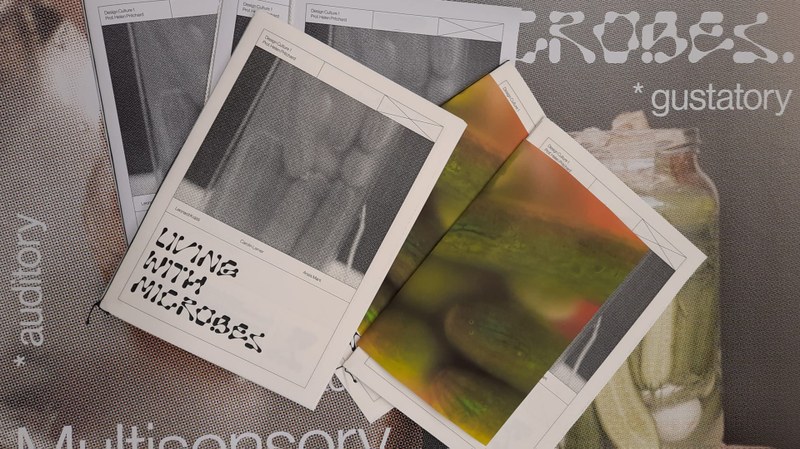
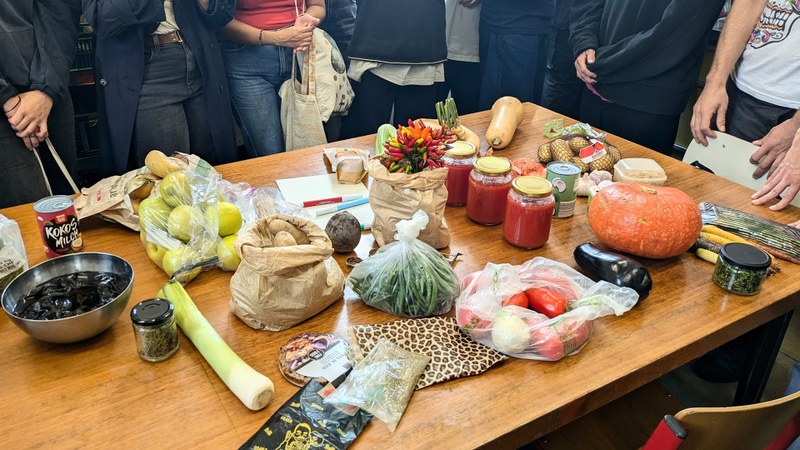
Leonard Krättli, Carolin Lerner, Anaïs Marti “Living with Microbes”, Design Culture Module with Prof. Dr. Helen V. Pritchard.
Photo: Carolin Lerner
International
International Office
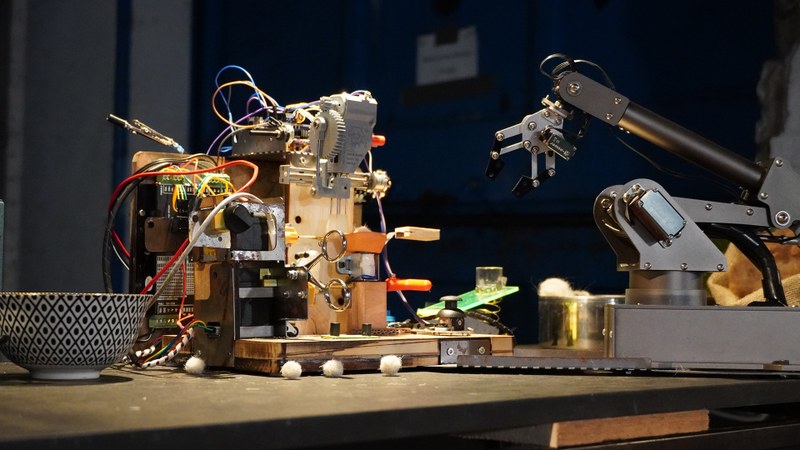
Georg Mattli «Wool for Free» at the public event «To Dance on Tables» TransBona Halle July 2024.
Photo: Transversal Design Team, 2024
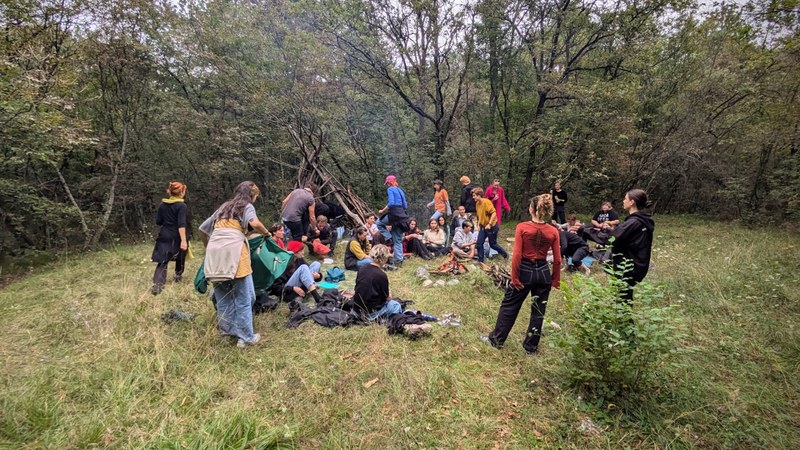
Student-organized talk series «Chatty Chatty» by Camila Chebez, Fabian Frey, Maria Maddalena Lenzi, and Danuka Tomas to gather, exchange ideas, and connect meaningfully with invited guests. Here in conversation with Bianca Elzenbaumer (Brave New Alps / La Foresta) in the forest of Rovereto during a study trip to Italy, 2024.
Photo: Kit Braybrooke
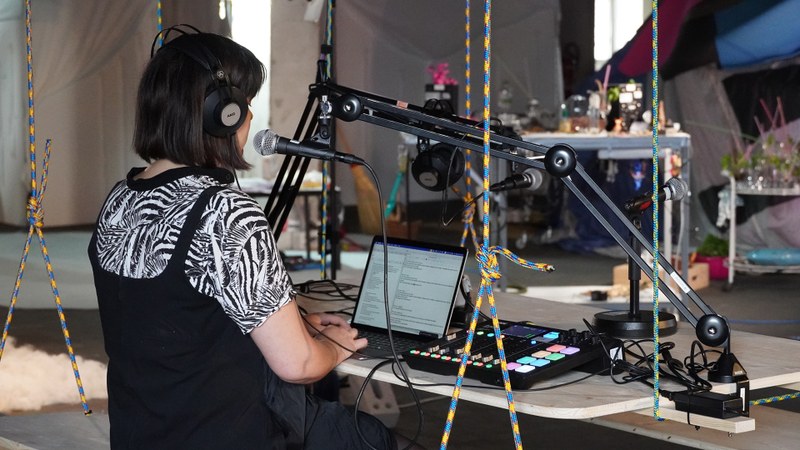
Mariana Murcia «Radio Salmon – Wetland Frequencies» at the public event «To Dance on Tables» Transbona Halle July 2024.
Photo: Transversal Design Team, 2024
Requirements and admission
Admission requirements
Academical qualifications
Admission to the aptitude assessment normally requires one of the following qualifications:
- A Bachelor’s degree in Design or a related field of study.
- A similar, equivalent degree in Design (at BA level pursuant to the “Dublin Descriptors").
If an applicant shows promising design potential, lateral entry from a different discipline is possible; in this case, please contact the Head of the degree programme.
Language of tuition
International students are welcome to apply for the Master’s degree programme. The language of tuition is English (B2 level or equivalent).
Information of the aptitude assessment + dates + study regulations
To apply for a place at the HGK Basel, the required documents must be submitted by deadline 29.03.2026. Please send the specific enquiries to email address.
Dates aptitude assessment 2026
- 01.11.2025
Publication of the detailed information on the aptitude assessment - 29.03.2026
Registration deadline and deadline for submitting the required documents for the aptitude assessment. - 14.09.2026
Fall Semester begin 2026/27
FAQ online registration
Advising and information events
Contact
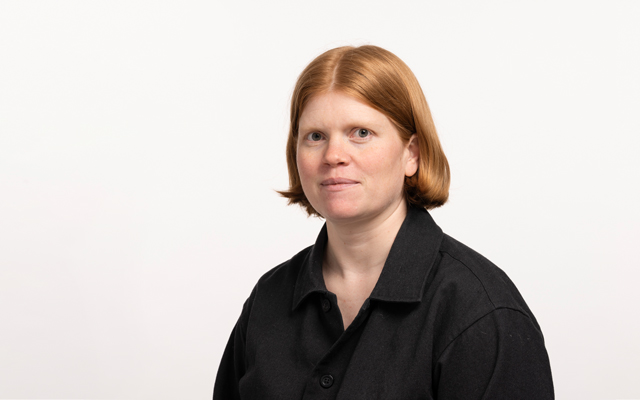
Prof. Dr. Kit Braybrooke
- Phone
- +41 61 228 42 35 (Direct)
- kit.braybrooke@fhnw.ch

Transversal Design (MA)
- Phone
- +41 61 228 40 66 (Central office)
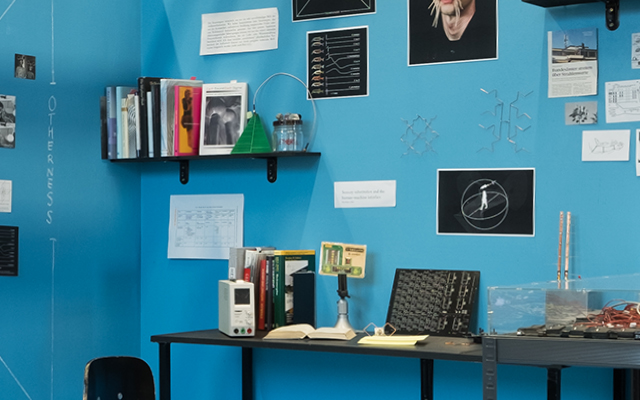
Team Institut Experimentelles Design und Medienkulturen (IXDM)
- Phone
- +41 61 228 40 66 (Central office)
- info.ixdm.hgk@fhnw.ch
Information events
Loading...
Registration
Transversal DesignSeptember 2026
- Date
- 14.9.2026
- Duration
- 4 Semester
- Place
- Campus HGK Basel
- Application start
- 1.11.2025
- Final application date
- 29.3.2026
- Notes
- The application window has been extended until 29 March 2026.
Transversal DesignSeptember 2027
- Date
- 20.9.2027
- Duration
- 4 Semester
- Place
- Campus HGK Basel
- Application start
- 1.11.2026
- Final application date
- 15.3.2027
Institute Experimental Design and Media Cultures (IXDM)
FHNW University of Applied Sciences and Arts Northwestern Switzerland
Basel Academy of Art and Design
Institute Experimental Design and Media Cultures (IXDM), Highrise: D. 3.01
Freilager-Platz 1
CH - 4142 Münchenstein near Basel
Campus HGK Basel
FHNW University of Applied Sciences and Arts Northwestern Switzerland
Basel Academy of Art and Design
Freilager-Platz 1
4142 Münchenstein near Basel