
Through the propagation of digital media and the concomitant democratization of communication channels, the critical approach to visual and interaction-based design has manifestly gained in importance, not least because it has fundamentally changed the significance of information and communication in society.
The aim of the Institute is to apply the new technological achievements by means of experiment in realistic as well as speculative scenarios in the context of communication, for the purpose of developing new application models. Unlike established technologies, new technological advancements can be deployed differently from their originally intended purposes. At the Institute, this new experimental approach is seen as a basis for a reflective engagement with communication, visual communication, images and their impact, along with technological development in general.
The Institute pursues its activities with regard to training through the BA degree programme Visual Communication and Digital Spaces and the research-focussed MA programme Digital Communication Environments.
In the field of continuing education, the Institute offers two MAS degree programmes in Graphic Design in collaboration with the University of Illinois Chicago, along with the Basel Summer and Winter Workshops, respectively.
In the service sector, the ANDICO LAB handles communication projects on behalf of public institutions, organizations, and businesses. In research, the Institute carries out externally funded projects in the field of applied media, communication, visual, conceptual and design research. PhD projects in the aforementioned fields are offered in collaboration with universities in Switzerland and abroad.


Degree programmes

Visual Communication and Digital Spaces
- Studying mode
- Full-time
- Teaching language
- German
- Place
- Basel
- Duration
- 6 Semester
- Next start
- 20.9.2027

Digital Communication Environments
- Studying mode
- Full-time
- Teaching language
- English
- Place
- Basel
- Duration
- 4 Semester
- Next start
- 20.9.2027


Continuing Education IDCE
MAS / CAS
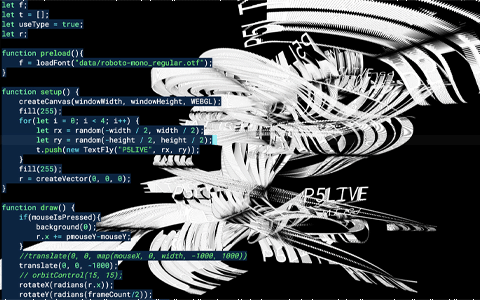
Design Literacy
- Fee
- CHF 7'000
- Teaching language
- English, German
- Place
- Basel
- Next start
- Rolling intake possible
Modules


Research
Research at the IDCE examines diverse forms of visual communication in digital environments and with analog media through practice-based research.
With our research projects we strive to gain insights into the potential and limitations of visual communication, its channels of dissemination, as well as the processes and tools of creating visual messages. We use these insights in practice-oriented projects together with cooperation partners from academia, civil society or public authorities with the aim of social participation, inclusion and diversity, as well as to strengthen democratic societies and ecological sustainability. Moreover, we investigate design practice and the design processes themselves. We historically examine how they continue to change in shifting technological, social and cultural contexts and conduct research into the history of Swiss graphic design and its digital transformation. At the same time, we explore the question of what future design processes might look like and how new tools such as generative AI’s in particular will change professional design and visual culture.

Emerging Practices in Modular Synthesis: Towards a Virtual Ethnography for Mixed Realities
- Institute
- Institute of Digital Communication Environments

Incubator for Design Cultures (swissuniversities)
- Institute
- Institute of Digital Communication Environments

WYSIWYG
- Institute
- Institute of Digital Communication Environments
- Research field
- Histories of visual communication
Research Colloquium
The research colloquium of the Institute Digital Communication Environments of the Basel Academy of Art and Design FHNW discusses research projects from the perspective of image practice, art science, philosophy, and psychology with the aim of putting relevant questions about image design and image perception up for discussion and differentiating them. The definition of practice-led research is thereby further advanced. The examination ot the design process forms the overarching theme of the colloquium. Historical research, theoretical positions or practical approaches allow to gain access from different perspectives on this fundamental act for design. The colloquium offers a framework for discussion within the institute as well as for exchange with external researchers in order to deepen specific topics such as semiotics, production aesthetics or historical methodology.
Publications/Symposia
In the form of conferences and publications, the Institute Digital Communication Environments and the Research Colloquium's engagements with selected research topics become publicly available and contribute to the current discourse on image design, image perception, and issues of visual communication.
Research Responsible
Labs
Communication Design – AnDiCo Lab
- Institute
- Institute of Digital Communication Environments
Basel Design History Lab
Creative Technologies Lab
Projects

Thesis Catalogues

Thesis Projects

Instagram-Feed IDCE
Publications
You can find an extract of the Institute’s bibliography here

Sandra Bischler über die Anfänge der computergestützten Grafikdesign-Ausbildung an der HGK Basel
- Date
- 23.3.2026
- Institute
- Institute of Digital Communication Environments

Sex: Larissa Brochella präsentiert Master-Thesis im Slanted Magazine
- Date
- 2.6.2025
- Institute
- Institute of Digital Communication Environments

Diplomkataloge des Institute Digital Communication Environments der HGK Basel im E-Pub-Format
- Date
- 26.9.2025
- Institute
- Institute of Digital Communication Environments
Network and partners
The Institute Visual Communication has a diverse network of partner institutions that includes, among others, the National Institute of Design in Ahmedabad, India, the Paju Institute of Typography, South Korea, the National Taiwan Normal University in Taipei and the Rhode Island School of Design in Providence, USA.
Contact & Team
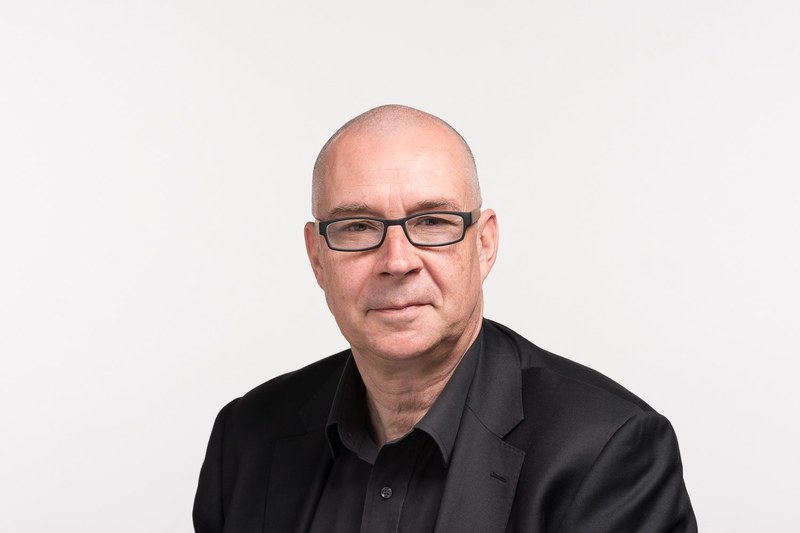
Prof. Michael Renner
- Phone
- +41 61 228 40 85
- michael.renner@fhnw.ch

Getting there
Public transport
The campus is easy to reach by public transport. The stop Freilager on BLT line 11 is immediately in front of the Campus (from Bahnhof SBB in direction Aesch)
IMPORTANT NOTICE:
Tram replacement service 18 May to 12 December 2026:
Due to construction work / track renewal on tram line 11, the Freilager stop will not be served by trams between 18 May and 12 December 2026.
Replacement buses will run between the Dreispitz stop and the Freilager stop. The temporary bus stops are signposted and are located a few metres from the tram stops.Up-to-date information on the BLT tram line can be found here: BLT-Tramlinie 11 (in German)
By car
Leave the motorway A2 at the junction Basel-St. Jakob and follow the sign Dreispitz. Approaching from Münchensteinerstrasse enter the Dreispitz complex through Gate 13 and park your car in one of the public car parks (Ruchfeld or Leimgrube). When setting your satnav, please note that the Freilager complex is part of the municipality of Münchenstein, Canton Basel-Landschaft.
Access by car for people with disabilities
Choose the access via Florenz-Strasse in the direction of the High-rise building (Building D). To lower the bollard at the gates of the campus please ring the bell. You will be connected to our reception in Building D.
Post address
Basel Academy of Art and Design FHNW
Institute Digital Communication Environments
Postfach (P.O. Box)
CH-4002 Basel
Institute Digital Communication Environments IDCE
FHNW University of Applied Sciences and Arts Northwestern Switzerland
Basel Academy of Art and Design
Institute Digital Communication Environments (IDCE)
High-rise: D 5.03
Freilager-Platz 1
CH - 4142 Münchenstein near Basel