Skip to main contentSkip to search barSkip to navigationSkip to footer
Logo of the University of Applied Sciences and Arts Northwestern Switzerland
  • DE
  • EN
  • Home

Ten Schools One Goal

The FHNW comprises 10 schools with different specializations. Select a school to see its specific courses, study programmes and information.

Applied Psychology

Architecture, Construction and Geomatics

Art and Design

Music

Computer Science

Life Sciences

School of Education

Social Work

Engineering and Environment

Business

  • Study offerings

    • All degree programmes
    • Bachelor of Arts
    • Master of Arts
    • CoCreate programme
    • PHD programmes
    • MDes programme
    • Integral HGK Basel
    • Guest Auditors
    • Info events
  • All about studying

    • Enrolment at the HGK Basel
    • Fees and scholarships
    • Degree programme administrations
    • Semester dates
    • Tools for studying
    • Counselling services
    • German language courses
    • Insurance and pensions
    • Civilian and military service
    • Legal and formal matters
    • Course catalogue
  • Study Internationally

    • International students
    • Incoming students
    • Outgoing students
    • Internship
    • Partner universities
    • German language courses
  • Continuing education offerings

    • All continuing education programmes
    • MAS - Master of Advanced Studies
    • CAS - Certificate of Advanced Studies
    • Modules
    • Info events
  • All about continuing education

  • International Office

    • Mobility for academics and staff
    • Study Internationally
  • Research

    • Research fields
    • Projects
    • PhD Projects
  • Collaboration

    • Services
  • Updates and insights

    • News and stories
    • Applause
    • Publications
    • Newsletter (DE)
  • Events

    • All events
    • Info events
  • Media

  • About the Basel Academy of Art and Design

    • Management and organisation
    • People directory
  • Institutes

    • Institute Art Gender Nature
    • Institute Arts and Design Education
    • Institute Contemporary Design Practices
    • Institute Digital Communication Environments
    • Institute Experimental Design an Media Cultures
  • Campus and Infrastructure

    • CIVIC
    • Media Library Basel
    • der TANK
    • FoodCultureLab
    • Café Freilager and Bistro of the Arts
    • Sport
    • Studi-Lounge
    • Accessibility & Facilities
  • Campus.Workshops

    • Sculptor’s studio
    • Bookbinding
    • Digital Fabrication Lab
    • Woodworking
    • Plastics
    • Paint shop
    • Media.Workshop
    • Metalworking
    • Sewing.Island
    • Screen printing
Logo of the University of Applied Sciences and Arts Northwestern Switzerland
  • About the School
    • HGK Basel
    • Degree Programmes
    • Continuing Education
    • Research
    • News & Stories
    • Events
    • NEXT Generation Degree Projects
  • Social Media
    • Instagram
    • LinkedIn
  • About FHNW
    • Organisation
    • Schools
    • Locations
    • FHNW Library
    • Media Relations
  • Support
    • IT Support
    • Inside FHNW
    • Webmail
  • Data Protection
  • Imprint
  • Accessibility
  • Study offerings

    • All degree programmes
    • Bachelor of Arts
    • Master of Arts
    • CoCreate programme
    • PHD programmes
    • MDes programme
    • Integral HGK Basel
    • Guest Auditors
    • Info events
  • All about studying

    • Enrolment at the HGK Basel
    • Fees and scholarships
    • Degree programme administrations
    • Semester dates
    • Tools for studying
    • Counselling services
    • German language courses
    • Insurance and pensions
    • Civilian and military service
    • Legal and formal matters
    • Course catalogue
  • Study Internationally

    • International students
    • Incoming students
    • Outgoing students
    • Internship
    • Partner universities
    • German language courses
  • Continuing education offerings

    • All continuing education programmes
    • MAS - Master of Advanced Studies
    • CAS - Certificate of Advanced Studies
    • Modules
    • Info events
  • All about continuing education

  • International Office

    • Mobility for academics and staff
    • Study Internationally
  • Research

    • Research fields
    • Projects
    • PhD Projects
  • Collaboration

    • Services
  • Updates and insights

    • News and stories
    • Applause
    • Publications
    • Newsletter (DE)
  • Events

    • All events
    • Info events
  • Media

  • About the Basel Academy of Art and Design

    • Management and organisation
    • People directory
  • Institutes

    • Institute Art Gender Nature
    • Institute Arts and Design Education
    • Institute Contemporary Design Practices
    • Institute Digital Communication Environments
    • Institute Experimental Design an Media Cultures
  • Campus and Infrastructure

    • CIVIC
    • Media Library Basel
    • der TANK
    • FoodCultureLab
    • Café Freilager and Bistro of the Arts
    • Sport
    • Studi-Lounge
    • Accessibility & Facilities
  • Campus.Workshops

    • Sculptor’s studio
    • Bookbinding
    • Digital Fabrication Lab
    • Woodworking
    • Plastics
    • Paint shop
    • Media.Workshop
    • Metalworking
    • Sewing.Island
    • Screen printing

Type a search term and search continuing education,degree programmes, events, documents and other content.

Digital Communication Environments MA, Basel Academy of Art and Design

Basel Academy of Art and Design


  • Art and Design
  • Degree programmes
  • Study offerings
  • All degree programmes
All degree programmes
header_ma_header.jpg

The programme enables students to enhance their skills in the areas of design practices, technical knowledge, research methods and theoretical knowledge in the context of digital communication channels.


Factsheet

Degree
Master of Arts FHNW
Study mode
Full-time
Learning environment
Onsite
ECTS points
120
Next start
14.9.2026
Duration
4 Semester
Language
English (B2 level or equivalent)
Place
Campus HGK Basel
Staying abroad
Possible
Application fee
CHF 200.- (incl. aptitude assessment and enrolment)
Semester fee
CHF 750 (CH); CHF 1.000 (EU); CHF 1.250 (Not-EU/EFTA)
Documents
  • Auszug Gebührenordnung FHNW
  • HGK-Studienjahresstruktur 2026-2027

At a glance

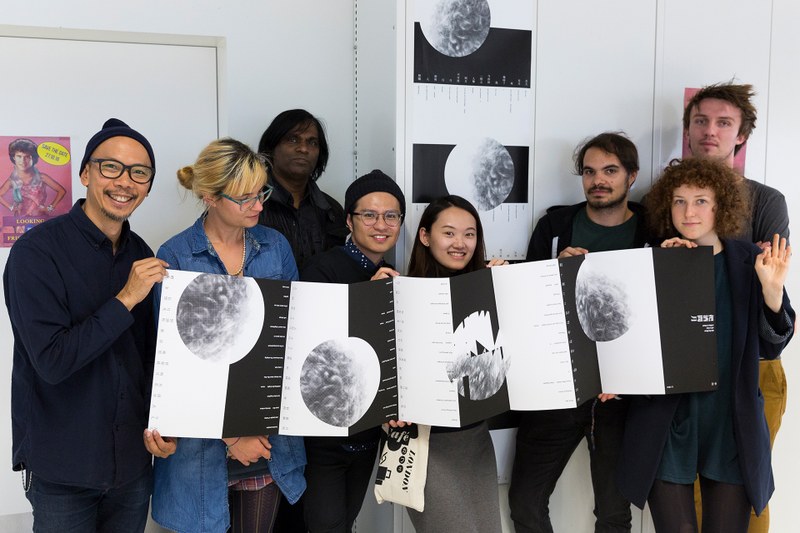
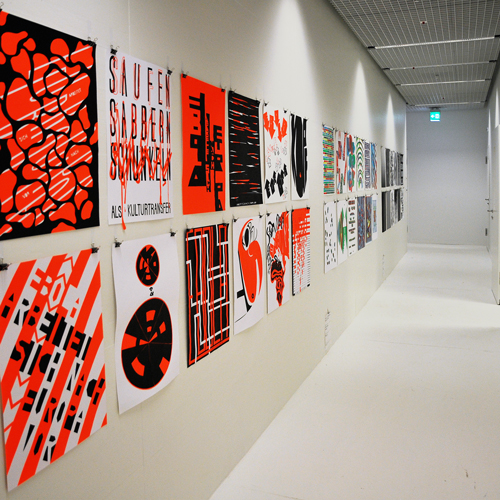
  • Students expand their skills in the experimental and reflective design practice of visual messages for analogue and digital communication environments.
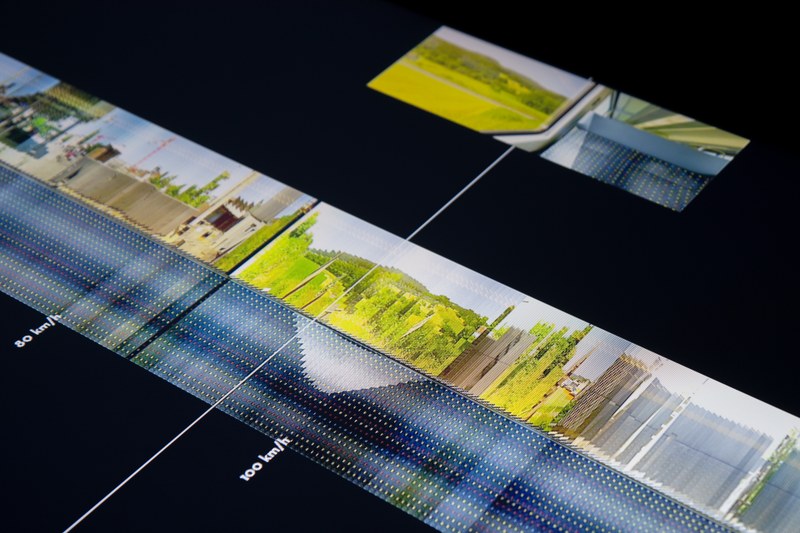
  • The programme introduces design-oriented research and experimental exploration of new technologies for the empirical evaluation of visual messages.
  • It teaches positions in visual, media and communication theory as well as philosophy, anthropology and psychology in order to critically contextualise design decisions, concepts and research questions.
  • ivk_ma_01.jpg
  • ivk_ma_02.jpg

Why study this?

Goals and benefits

The master’s programme prepares students to confront current communication challenges. The diversity of our society and, by extension, the diversity of perspectives it contains must be met with a diversity of voices in our visual messages. The fast pace of technological development offers new opportunities, but also requires critical questioning. Through the experimental use and development of new technological achievements, models can be developed that critically demonstrate their defined purpose or their deviation from it. The standardisation and omnipresence of digital tools and the flattening of visual expression that goes along with it requires new abilities to overcome the imposed restrictions and to understand communication as a culturally shaped phenomenon.

Career prospects

The master’s programme imparts the autonomy needed to be as prepared as possible for future challenges in communications-related, creative, medial, teaching and researching fields of work. The graduates have advanced specialist skills in order to establish themselves in leading positions of the communication industry (offices for visual communication, corporate communication, communication agencies, media agencies, publishing houses, journalism, TV, in-house communication teams, etc.). Other graduates establish themselves in research and teaching or in cultural entrepreneurship. They also have the necessary methodological skills to reflect on and further develop their own working methods within the context of social and technological change.

  • ivk_ma_03.jpg
  • ivk_ma_04.jpg

Structure and programme contents

The study programme

This master’s programme offers three areas in which the students can enhance their skills over the course of four semesters: 1. Expanding the experimental and reflective design practice of visual messages for analogue and digital communication environments, 2. Getting acquainted with research methods from design-oriented research and experimental exploration of new technologies to empirical evaluation of visual messages, 3. Getting an overview of relevant positions in visual, media and communication theory as well as philosophy, anthropology and psychology in order to critically put design decisions, concepts and research questions into context. On the basis of a practical foundation in a design-oriented bachelor’s study programme or a theory-oriented bachelor’s degree in cultural studies, the main goal of the study programme is a complementary fusion of skills between design and communication practice, research and theory.

Study structure

All students engage with the fields of design practice, practice-based research, and theoretical reflection across the first three semesters. The following fourth semester is the thesis semester. Through working together throughout their studies, the students, who come from different educational and cultural backgrounds, gradually acquire a combined set of practical, research, and theoretical communication skills.

Immersions

Over three semesters, all students immerse themselves in the main modules: Design Practice, Practice-based Research and Theoretical Reflection. The fourth semester is dedicated to writing the thesis. In a wide range of elective modules (in the areas of technology, practice, research or theory), a customised study programme can be put together that can be heavily guided by a specific project idea. By collaborating with students from a variety of academic and cultural backgrounds, students achieve a combination of practical, research and theory-based communication skills over the course of the programme.

Modules

Design practice
Students work on complex issues related to the design of digital communication environments, further develop their design method and improve their technical skills for the experimental exploration of digital channels. In the Authorship (1st semester), The Archive (2nd semester) and Interdisciplinary Focus (3rd semester) modules, you will improve your knowledge of and experience with design processes. You will further develop your language skills by talking about design processes in project teams with other students and in presentations.

Practically oriented research
In the Design Research (1st semester), Inquiry into Future Technologies (2nd semester) and Empirical Evaluations (3rd semester) modules, you will get to know different practically oriented research methods that can be used to scientifically back decisions in the field of communication. You will learn how questions of Visual and Media Science, Science and Technology Studies or Social Sciences can be combined with practically oriented methods. Knowing the state of the art of a research question puts you in a position to define and work on your own research approach. In the research module, practical, technological and theoretical areas of knowledge are brought together.

Theoretical fields of knowledge
In the Visual and Media History (1st semester), Theories of the Digital (2nd semester) and Critical Theory (3rd semester) modules, you will improve your conceptual and strategic knowledge in the field of communication in digital environments. Acquiring knowledge about the theory and practice of visual communication and current technological developments as well as about related fields of knowledge helps students formulate their own practice-based research questions. The examination of theoretical fields of knowledge is a foundation for describing the state of the art of a knowledge area and articulating open-ended questions.

Target audience

The Digital Communication Environments master’s programme is geared towards students who already have a bachelor’s degree from an art or design university (e.g. Visual Communication, Communication Design, Media Design, Graphic Design, Photography) or a bachelor’s in a cultural studies field (e.g. Art History, Media Science). The objective consists of combining design practices in digital communication environments with practically oriented research approaches and theories in the field of Visual and Media Studies. It is the only Master of Arts in the design field in Switzerland that has 120 ECTS credits and thus meets the formal requirements for a PhD.

Infrastructure

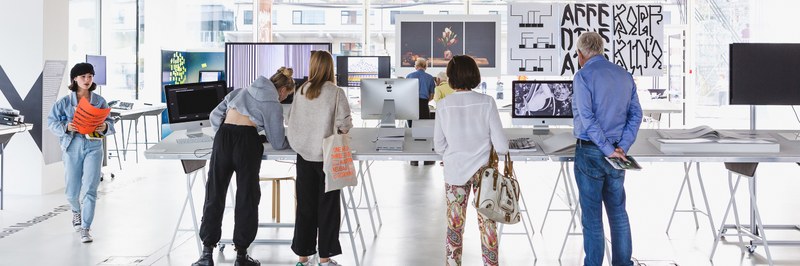
With its studios, labs and central Campus.Workshops, the HGK provides an ideal environment for bringing together a curiosity for craftsmanship and a desire to learn technical skills and gain digital know-how. What’s more, all students have 24/7 access to their own workplace in the spacious studios.

Projects
Loading
  • ivk_ma_05.jpg
  • IVK_Team.jpg

International

International Office

Exchange programmes offer students and staff the opportunity to network and develop both within Switzerland and internationally. The Basel Academy of Art and Design FHNW maintains partnerships and accredited agreements with universities and academies in Switzerland and abroad.

Programme Head & Lecturers
Loading
  • Annik Troxler
    Annik Troxler
  • Arno Schubbach
    Dr. Arno Schubbach
  • Bérénice Serra
    Prof. Bérénice Serra
  • Claire Reymond
    Dr. phil. Claire Reymond
  • Dirk Koy
    Dirk Koy
  • Invar-Torre Hollaus
    Invar-Torre Hollaus
  • Jinsu Ahn
    Jinsu Ahn
  • Jiri Oplatek
    Jiri Oplatek
  • Kambiz Shafei
    Dr. Kambiz Shafei
  • Leander Eisenmann
  • Ludwig Zeller
    Dr. Ludwig Zeller
  • Marion Fink
    Prof. Marion Fink
  • Matthias Remmele
    Matthias Remmele
  • Michael Renner
    Prof. Michael Renner
  • Paloma López Grüninger
    Dr. Paloma López Grüninger
  • Pat Löffel
    Pat Löffel
  • Philipp Stamm
    Prof. Philipp Stamm
  • Sophie Kellner
  • Ted Davis
    Ted Davis
  • Thomas Bircher
    Thomas Bircher
  • Viola Diehl
    Viola Diehl

Requirements and admission

Admission requirements

Academical qualifications
Admission to the aptitude assessment for the Master’s degree programme normally requires one of the following qualifications:

  • A Bachelor’s degree in Design (Visual Communication) or a related field of study.
  • A similar, equivalent degree in Design (at BA level pursuant to the “Dublin Descriptors").

If an applicant shows promising design potential, lateral entry from a different discipline is possible; in this case, please contact the Head of the degree programme.

Language of tuition
International students are welcome to apply for the Master’s degree programme. The language of tuition is English (B2 level or equivalent).

Information of the aptitude assessment + dates + study regulations

To apply for a place at the HGK Basel, the required documents must be submitted by deadline 22.03.2026.Please send the specific enquiries to email address.

Info aptitude assessment 2026

Dates 2026

  • 01.11.2025
    Publication of the detailed information on the aptitude assessment
  • 22.03.2026
    Registration deadline and deadline for submitting the required documents for the aptitude assessment.
  • 31.08. - 11.09.2026
    Introductory weeks at the HGK Basel (mandatory)
  • 14.09.2026
    Fall Semester begin 2026/27

Study Regulations, Digital Communications Environments (MA) PDF

FAQ online registration
Loading

Advising and information events

Contact

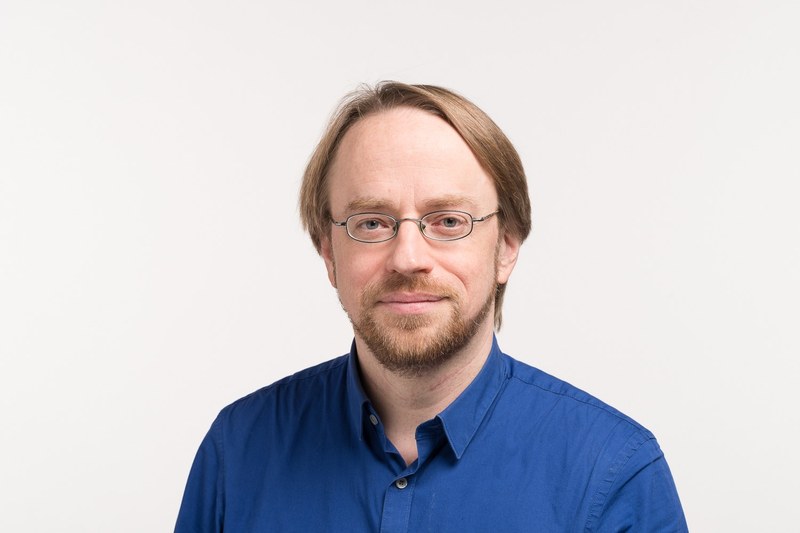
Michael Renner

Prof. Michael Renner

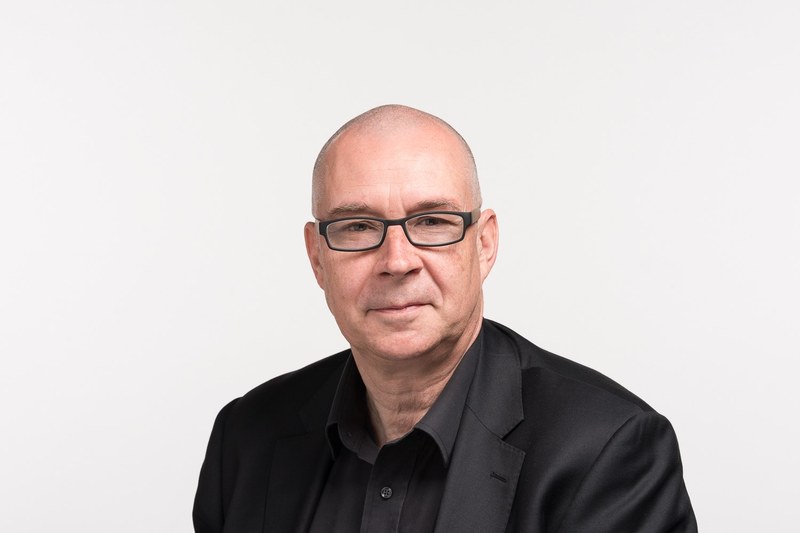
Head of IDCE / Head of MA Digital Communication Environments
Phone
+41 61 228 40 85
E-Mail
michael.renner@fhnw.ch
Team Institute Digital Communication Environments (IDCE)

Team Institute Digital Communication Environments (IDCE)

Phone
+41 61 228 41 11
E-Mail
info.idce.hgk@fhnw.ch

Information events

Loading...


Registration

Digital Communication Environments
September 2026

Date
14.9.2026
Duration
4 Semester
Place
Campus HGK Basel
Application start
1.11.2025
Final application date
22.3.2026
Notes
The application window has been extended until 22 March 2026.
Register

Digital Communication Environments
September 2027

Date
20.9.2027
Duration
4 Semester
Place
Campus HGK Basel
Application start
1.11.2026
Final application date
15.3.2027

Institute Digital Communication Environments IDCE

FHNW University of Applied Sciences and Arts Northwestern Switzerland
Basel Academy of Art and Design
Institute Digital Communication Environments (IDCE)
High-rise: D 5.03

Freilager-Platz 1
CH - 4142 Münchenstein near Basel

+41 61 228 41 11info.idce.hgk@fhnw.chRoute planner

Campus HGK Basel

FHNW University of Applied Sciences and Arts Northwestern Switzerland
Basel Academy of Art and Design

Freilager-Platz 1
4142 Münchenstein near Basel

+41 61 228 44 44info.hgk@fhnw.chRoute plannerMore information

Basel Academy of Art and Design FHNW University of Applied Sciences and Arts Northwestern Switzerland

  • About the School
    • HGK Basel
    • Degree Programmes
    • Continuing Education
    • Research
    • News & Stories
    • Events
    • NEXT Generation Degree Projects
  • Social Media
    • Instagram
    • LinkedIn
  • About FHNW
    • Organisation
    • Schools
    • Locations
    • FHNW Library
    • Media Relations
  • Support
    • IT Support
    • Inside FHNW
    • Webmail
Logo FHNW - 20 Years
Logo Swiss Universities
Logo European University Association
© University of Applied Sciences and Arts Northwestern Switzerland (FHNW)
  • Data Protection
  • Imprint
  • Accessibility
  • DE
  • EN