Skip to main contentSkip to search barSkip to navigationSkip to footer
Logo of the University of Applied Sciences and Arts Northwestern Switzerland
  • DE
  • EN
  • Home
  • Degree programmes
  • Continuing education

Ten Schools One Goal

The FHNW comprises 10 schools with different specializations. Select a school to see its specific courses, study programmes and information.

Applied Psychology

Architecture, Construction and Geomatics

Art and Design

Music

Computer Science

Life Sciences

School of Education

Social Work

Engineering and Environment

Business

  • Research

    • Research fields
    • Projects
  • Updates and insights

    • News and stories
  • Events

  • Media corner

  • About the School of Engineering and Environment

    • People directory
    • Management Board
  • Institutes

    • Institute of Automation
    • Institute of Bioenergy and Resource Efficiency
    • Institute of Business Engineering
    • Institute of Electric Power Systems
    • Institute of Humanities and Social Sciences
    • Institute of Polymer Engineering
    • Institute of Mathematics and Natural Sciences
    • Institute of Polymer Nanotechnology
    • Institute of Optometry
    • Institute of Product and Production Engineering
    • Institute for Sensors and Electronics
    • Institute of Thermal and Fluid Engineering
    • Laboratories of the School of Engineering and Environment
Logo of the University of Applied Sciences and Arts Northwestern Switzerland
  • About the School
    • FHNW School of Engineering and Environment
    • Degree Programmes
    • Continuing Education
    • Collaboration in Research and Services
  • Social Media
    • LinkedIn
    • Instagram
    • Facebook
    • TikTok
    • YouTube
  • About FHNW
    • Organisation
    • Schools
    • Locations
    • FHNW Library
    • Media Relations
  • Support
    • IT Support
    • Inside FHNW
    • Webmail
  • Data Protection
  • Imprint
  • Accessibility
  • Research

    • Research fields
    • Projects
  • Updates and insights

    • News and stories
  • Events

  • Media corner

  • About the School of Engineering and Environment

    • People directory
    • Management Board
  • Institutes

    • Institute of Automation
    • Institute of Bioenergy and Resource Efficiency
    • Institute of Business Engineering
    • Institute of Electric Power Systems
    • Institute of Humanities and Social Sciences
    • Institute of Polymer Engineering
    • Institute of Mathematics and Natural Sciences
    • Institute of Polymer Nanotechnology
    • Institute of Optometry
    • Institute of Product and Production Engineering
    • Institute for Sensors and Electronics
    • Institute of Thermal and Fluid Engineering
    • Laboratories of the School of Engineering and Environment

Type a search term and search continuing education,degree programmes, events, documents and other content.

  • Engineering and Environment
  • About us
  • About the School of Engineering and Environment
  • People directory
People directory

Prof. Dr. Ernest Weingartner,

Job title/activity of the person
Lecturer in Sensor and Aerosol Technology

hero_ernest_weingartner-topbild.jpg

Contact

Phone
+41 56 202 79 18 (Direct)
E-Mail
ernest.weingartner@fhnw.ch

Address

Fachhochschule Nordwestschweiz FHNW
Hochschule für Technik und Umwelt
Klosterzelgstrasse 2
5210 Windisch

Room

1.231

Activities at FHNW

  • Group Leader of the Aerosol Technology Group and Deputy Head at the FHNW Institute for Sensors and Electronics
  • Lecturer in Sensor Technology, Supervisor of Bachelor and Master Students

Research

  • Particle measurement
  • Carbonaceous aerosols (soot)
  • Aerosol generation and filtration
  • Spectroscopy
  • Photothermal methods

Teaching

  • Measurement and Sensor Technology, Measurement and Sensor Technology 1 and Measurement and Sensor Technology 2
  • Laboratory Energy and Drive Systems 1 and Laboratory Energy and Drive Systems 2 

Projects

Loading

Profile

Biography

ORCID and LinkedIn

Work Experience

Since 2018     
Deputy Head of the FHNW Institute for Sensors and Electronics
FHNW University of Applied Sciences and Arts Northwestern Switzerland, School of Engineering and Environment, Windisch

Since 2018,
Lecturer at the Department of Environmental Systems Sciences at ETH Zurich

Since 2018     
Group Leader of the Aerosol Technology Group in the newly founded FHNW Institute for Sensors and Electronics

Since 2018 
Full Professor at FHNW

Since 2014             
Researcher at the FHNW Institute for Aerosol and Sensor Technology and Lecturer at FHNW

2001 - 2014           
Group Leader of the Aerosol Physics Group in the Laboratory of Atmospheric Chemistry at PSI, Switzerland

1996 - 2001
Staff Scientist in the Laboratory of Radio- and Environmental Chemistry at PSI, Switzerland

Education

1996 
Ph.D. thesis: “Modification of combustion aerosols in the  atmosphere”, No. 11733, ETH Zurich

1992 - 1996
Graduate studies in the "Laboratory for Combustion Aerosols and Suspended Particles" at ETH Zurich

1992
Diploma in Experimental Physics, ETH Zurich

1985 - 1991
Undergraduate studies in physics at the ETH Zurich

Competencies

Personal skills
I have in-depth experience with the design of experiments to characterize physical and chemical properties of particulate matter. Already during my experimental PhD work at ETHZ, I studied the aging processes of real soot particles in the atmosphere. Then, during 13 years of cutting-edge research at the Paul Scherrer Institute (PSI), I characterized the properties and impacts of natural and anthropogenic aerosols contributing to the provision of better data for future climate and air quality models. In field measurement campaigns near and far from various aerosol sources, I investigated the physical and chemical properties of particles to understand their sources and impacts. An important task was to identify and quantify the different sources of carbonaceous aerosols (e.g., soot emissions from traffic vs. domestic wood burning). These data are very important as they could be used to mitigate exposure to high concentrations of harmful particles and so improve the health of the populace.
I was also responsible for establishing and operating the continuous aerosol measurements at the high alpine research station Jungfraujoch. This work was conducted within the Swiss Global Atmosphere Watch (GAW) aerosol programme under the auspices of WMO. One research focus was, for example, the characterization of aerosol optical properties and the interaction of aerosol particles with mixed-phase clouds. The results are important for the improvement of climate models, as they allow a better representation of the complex interactions of (anthropogenic) aerosol particles with radiation and their interactions in clouds.

With my research, I have contributed to reducing the uncertainties in the measurement of carbonaceous particles. In 2003, I quantitatively characterized the complex processes and resulting artifacts of a multiwavelength absorption photometer (aethalometer). This paper has been cited more than 1100 times and paved the way for a better determination of aerosol absorption coefficients using filter-based methods and is used today for the source apportionment of atmospheric black carbon particles. Nevertheless, the measurement uncertainties of this filter-based method remain large. I therefore started in 2014 to evaluate better alternatives and the in-situ method based on photothermal interferometry (PTI) and photoacoustics (PA) attracted my attention. Since then, my group is refining these techniques which can measure aerosol black carbon very precisely. My team has developed a new measuring technique based on a single beam PTI. This method is currently being refined and miniaturized using waveguides and photonic integrated circuits (pic).

I am dedicated to developing innovative instrumentation to answer relevant research questions. A few examples (besides the above-mentioned photothermal techniques):

  • A new prototype aerosol sensor for the reliable detection of volcanic ash has recently been developed. The envisaged application is the employment of this new technique on board of passenger aircraft. The sensor allows in-situ monitoring of the airplane’s exposure to volcanic ash.
  • A Ice Selective Inlet (ISI), which allows for the extraction of small ice particles in mixed-phase clouds for the physicochemical characterization of ice nuclei.
  • The white-light humidified optical particle spectrometer (WHOPS) is a newly developed instrument that allows the measurement of the hygroscopic properties of supermicrometer-sized aerosols. The high temporal resolution enabled the instrument to be used on board a research zeppelin as part of an EU project to study the aging processes of pollutants.
  • The first instrument (low-temperature H-TDMA) to measure the dependence of aerosol particle size on relative humidity in-situ at temperatures below 0°C. This pioneering work has triggered the development of many other H-TDMA instruments that are currently deployed worldwide in laboratories and in the field to quantify the water uptake of aerosol particles.

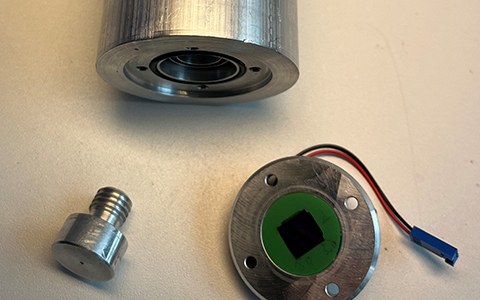
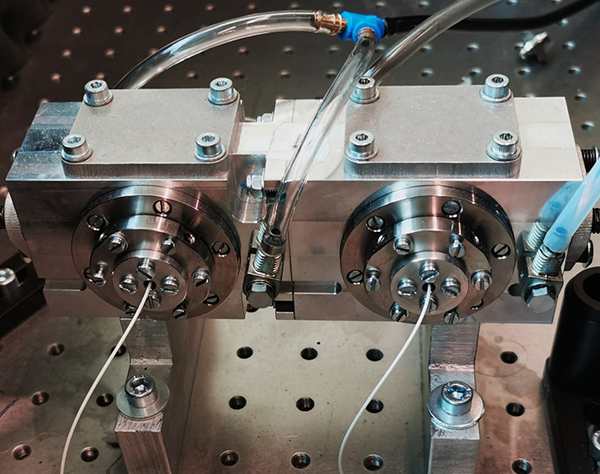
A new instrument (DustEar) for the acoustic detection of aerosols that directly measures the mass of individual particles. This development is in demand in metrology, for example, as it enables the traceability of the mass of aerosol particles.

Publications

Author/Coauthor of more than 187 peer-reviewed scientific papers, h-index: 89 (as of March 2023)

Full publication lists

  • Web of Science
  • Google Scholar

School

Loading

School of
Engineering and Environment FHNW University of Applied Sciences and Arts Northwestern Switzerland

  • About the School
    • FHNW School of Engineering and Environment
    • Degree Programmes
    • Continuing Education
    • Collaboration in Research and Services
  • Social Media
    • LinkedIn
    • Instagram
    • Facebook
    • TikTok
    • YouTube
  • About FHNW
    • Organisation
    • Schools
    • Locations
    • FHNW Library
    • Media Relations
  • Support
    • IT Support
    • Inside FHNW
    • Webmail
Logo FHNW - 20 Years
Logo Swiss Universities
Logo European University Association
© University of Applied Sciences and Arts Northwestern Switzerland (FHNW)
  • Data Protection
  • Imprint
  • Accessibility
  • DE
  • EN