Translating the benefits of DBS testing to veterinary medicine
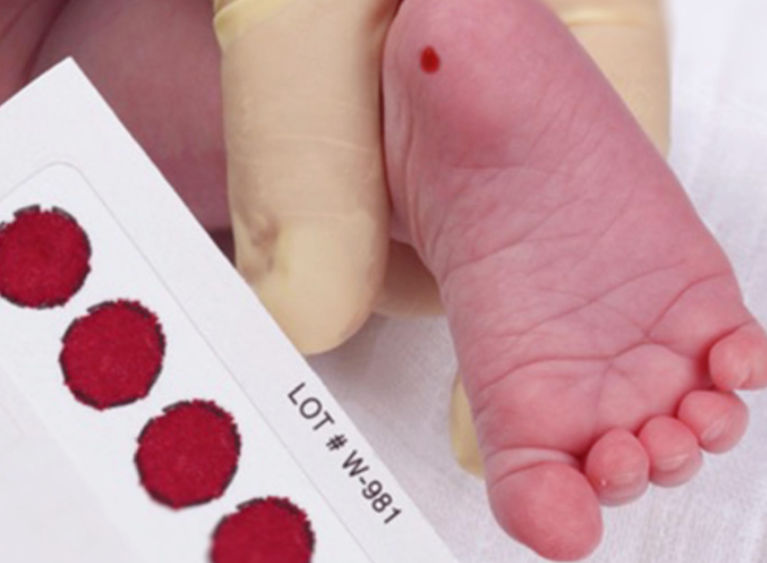
Dried blot spot (DBS) testing is a cost-effective and minimally invasive method to detect diseases and measure biological parameters. A small prick on the finger or heel is made, a few drops of blood are collected on a special filter paper, and the paper is sent to a lab for analysis.
The technology is widely used in human medicine: examples include screening newborns for metabolic dieseases, and at-home testing of vitamin D, estrogen, testosterone, cortisol, thyroid-stimulating hormone and lipids. However, DBS testing is not yet broadly used in veterinary diagnostics.
In this project, our team established and validated protocols for DBS testing of Hepatitis E virus (HEV), African swine fever virus (ASFV) and Aujeszky’s disease virus (ADV) in domestic pigs.
Our results show that DBS testing is a reliable and practical alternative to using liquid blood samples for the detection of antibody responses to viruses in pigs. DBS is significantly less stressful and dangerous for the animal and can provide both humane and economic benefits.
Despite these promising results, large-scale testing using field samples is required before the technology can be broadly applied.
Methods
We used and prepared different types of blood samples so that we could compare diagnostic results:
- liquid (plasma)
- dried serum (liquid portion of blood cell, dried)
- dried whole blood cell (DBS)
For Hepatitis E, we could obtain positive and negative samples, because the disease is prevalent. For Aujeszky’s disease, we needed to create positive samples, as the disease has been eradicated in Europe. We did this by spiking blood with antibodies against the virus. For African swine virus, we both obtained positive samples, and created our own positive samples by spiking.
To extract the antibodies from the dried blood spots, we established elution protocols. We tested various parameters: the number of disks, type and volume of elution buffer, incubation time of the disks in elution buffer, and volume of eluate used for detection.
Once the protocols were in place, we tested 52 DBS samples in three independent runs for each pathogen.
To measure the diagnostic performance, we compared results of DBS tests done by ELISA with tests done using the corresponding serum or plasma samples.
Results
Hepatitis E virus
African swine fever (ASF) virus
Aujeszky’s disease virus
Project details
- Type
- Research project
- Research field
- Instrumental analytics
- Topics
- Biology and chemistry, Diagnostics, Health and medicine, Health promotion and prevention, Natural sciences, Pharmaceutical, medical and biotechnology
- School
- FHNW School of Life Sciences / Institute for Chemistry and Bioanalytics
- Partners
- Institute of Virology, Vetsuisse Faculty, University of Zurich
STERA Scientific AG - Funding
- Innosuisse
- Duration
- 2025-2026
- Team
- Ranja Steinhauer
Eric Kübler
Stefan Gaugler
Cornel Fraefel
Julia Lechmann
Publications
Steinhauer, R., Kübler, E., Gaugler, S., Fraefel, C., & Lechmann, J. (2026). Evaluation of dried blood spot testing for serological monitoring of epizootic and zoonotic pathogens in domestic pigs. Journal of Virological Methods,341, 115336.
Contact

Prof. Dr. Stefan Gaugler
- Phone
- +41 61 228 50 98
- stefan.gaugler@fhnw.ch
Further projects
Microplastic analysis in environmental samples
- Institute
- Institute for Ecopreneurship, Institute for Chemistry and Bioanalytics
- Research field
- Instrumental analytics
Automated preparation of whole blood samples
- Institute
- Institute for Chemistry and Bioanalytics
- Research field
- Instrumental analytics
Fully automated blood screening in newborns
- Institute
- Institute for Chemistry and Bioanalytics
- Research field
- Instrumental analytics