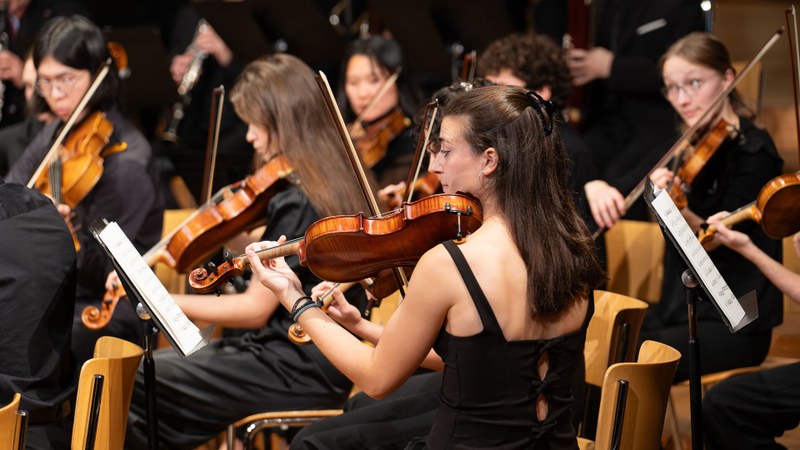
Institut Klassik | Music lovers love Basel! The cultural city in the border triangle of Switzerland, Germany and France offers the ideal environment for studying music. Internationally renowned lecturers help students from all over the world make their dreams come true.
Factsheet
- Degree
- Bachelor of Arts FHNW in Musik, Studienrichtung instrumental/vokal
- Study mode
- Full-time
- Learning environment
- Onsite
- ECTS points
- 180
- Next start
- 14.9.2026
- Duration
- 6 semesters
- Language
- German: B1 level in German required
- Staying abroad
- Possible
- Application fee
- 200 CHF
- Semester fee
- 750 CHF (CH) | 1000 CHF (EU/EFTA) | 1250 CHF (Not-EU/Not-EFTA)
At a glance
- Intensive work on the instrument or voice
- Technology, repertoire, artistic expressiveness
- Wide range of compulsory and optional subjects
Why study this?
The FHNW Bachelor of Arts in Music with an instrumental/vocal major focuses on enhancing students’ instrumental/vocal proficiency. To this end, students will hone their technical skills, acquire a stylistically broad repertoire and build on their forms of artistic expression. As well as the core curriculum, the programme covers a wide range of closely aligned compulsory and elective courses.
The FHNW Bachelor of Arts in Music is not a professional qualification. Those seeking a career as a music teacher, orchestral musician or soloist must follow up their undergraduate studies with a Master’s degree programme in their chosen field of specialisation.
A FHNW Bachelor of Arts in Music opens up further education opportunities at other universities for the arts, teacher education universities or research/doctoral universities.
The FHNW Bachelor of Arts in Music is a degree programme aimed at talented instrumentalists and vocalists who have excellent prior knowledge of their chosen discipline, and are already familiar with music theory and ear training.
Why are you studying this programme? Why in Basel?
Find out about Eloy Tamòs motivations in the video portrait.
Structure and programme contents
The BA and MA degree programmes at the Basel Academy of Music are based on modules.
The legally binding structure provides an initial guide to the content and weighting of the subjects on the degree programme.
The detailed content and modalities of the individual subjects can be found in the module descriptions.
The study regulations come into force together with the study and examination regulations of the Basel Academy of Music FHNW and form the legal framework.
Structures
Majors: Oboe / Clarinet / Bassoon / Horn / Trombone / Tuba / Saxophone / Double bass
Structure BA instrument/voice Major: Oboe, Clarinet, Bassoon, Horn, Trombone, Tuba, Saxophone, Double bass in German
Major: Singing
Structure BA instrument/voice Major: Singing in German
Major: Guitar
Structure BA instrument/voice Major: Guitar in German
Major: Harp
Structure BA instrument/voice Major: Harp in German
Major: Piano
Structure BA instrument/voice Major: Piano in German
Major: Organ
Structure BA instrument/voice Major: Organ in German
Major: Flute
Structure BA instrument/voice Major: Flute in German
Major: Trumpet
Structure BA instrument/voice Major: Trumpet in German
Major: Percussion
Structure BA instrument/voice Major: Percussion in German
Majors: Violin / Viola / Violoncello
Structure BA instrument/voice Major: Violin, Viola, Violoncello in German
Module descriptions
Below please find the link with all the information on the module descriptions of several FHNW universities.
- Switch the language settings to English.
- Filter by semester, Hochschule für Musik Basel FHNW, the desired degree programme or other criteria to display the relevant module information.
- Use the PDF button to call up a document from each overview and save it for yourself.
- Course registrations are made via the intranet.
Study Regulations
Lecturers
Institut Klassik
Requirements, admission, entrance exam
We expect students to have very good German language skills at the beginning of the studies. Students who are not German native speakers must present a B1 or a higher level German language certificate according to the Common European Framework of Reference for Languages (CEFR) at the beginning of the studies. This certificate must be complete, i.e. all modules (reading, listening, writing, speaking) have been tested separately and passed at a minimum level of B1 overall. Only certificates with the ALTE-Q-Mark seal of approval (e.g. the B1 certificate of the Goethe-Institut or the telc certificate) are accepted.
Entrance exam
The entrance exam is individual for each study programme direction.
Dates
Registration
You may apply between the 15th December and the 1st March.
Along with the registration, it is mandatory to submit the following:
- A passport photo
- a curriculum Vitae
- a motivational letter
- the school leaving qualification or proof of an equivalent general education qualification
- Applicants who have chosen a vocal major must provide an expert phoniatric assessment.
On site
The live auditions will take place in April. The exact dates may be seen here.
Announcement of the results
The results of the first round will be communicated by mail at the end of March.
The results of the second round will be communicated by mail in May.
Procedure
The entrance exam is split into the first round, which is held “by video”, and the second one, which is a live audition. The second round also includes a theoretical part.
Procedure
First round: Video recording
A video recording must be submitted together with the registration.
Repertoire requirements
Video requirements
- Each work/movement must be recorded from a fixed camera perspective and without any cuts.
- The hands and the face of the musician must be visible.
- It is recommended to use a suitable stereo microphone and place it conveniently.
- The recordings must not be older than 6 months.
- Publicly recorded concerts may be submitted as long as they meet the above-mentioned requirements.
Please upload the videos onto YouTube and add the links to your application. If you submit one single video of the complete programme, please set markers so that the individual works/movements can be selected directly.
Only those applicants who will be considered for the second round will be invited for the live audition.
Second round: Live audition and theoretical part
a. Live audition
The repertoire to be performed (see Repertoire requirements) may be identical to the one submitted in the video. Please include the list of works in your registration.
Changes of the programme are only possible until 14 days before the live audition. In such a case, please send the updated list of works in time to registration.hsm@fhnw.ch.
The candidate may choose the first piece. Afterwards, the jury will select from the prepared repertoire and may interrupt the audition at any time.
After the audition, there will be a short conversation about the goals and contents of the study programme, the applicant’s previous education, career objectives, preferred teacher, etc.
b. Theoretical part (ear training test and piano playing)
The ear training test checks the ability to perform non-instrumental musical processes (relative pitch test) as well as basic knowledge of music theory. The piano playing is tested at the beginning of the ear training test: Performance of a prepared piece, sight reading, Major and Minor cadences with up to two key signatures.
Further information: ear training test and piano playing
Organisational matters
Projects / Ensembles
At Hochschule für Musik Basel, students have the opportunity to participate in various project and ensemble programmes.
To the overview of the recurring offers.
Quicklinks
Advising and information events
Contact
Student Administration Academy of Music, Klassik
- Phone
- +41 61 264 57 32 (Direct)
- klassik.hsm@fhnw.ch
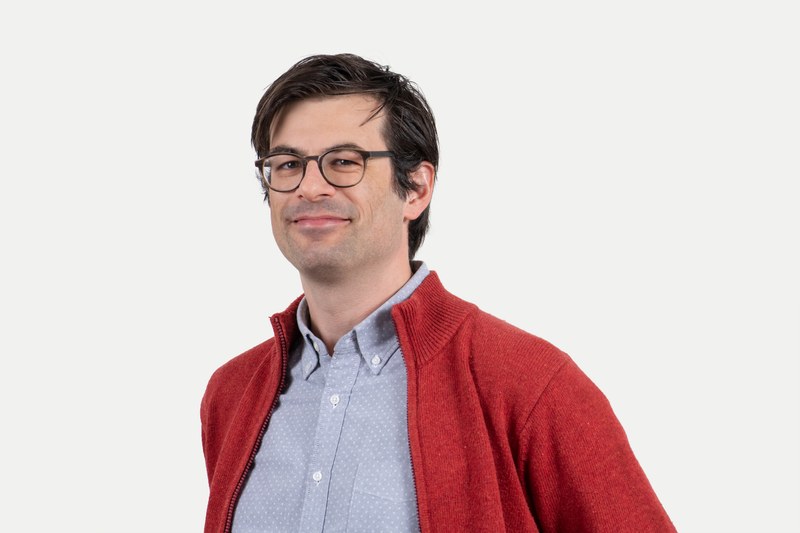
Prof. Roman Digion
- Phone
- +41 61 264 57 57
- roman.digion@fhnw.ch
Information events
Loading...
Registration
BA Music | Instrument / Voice
- Date
- 14.9.2026
- Duration
- 6 semesters
- Place
- Campus Musik-Akademie Basel