Skip to main contentSkip to search barSkip to navigationSkip to footer
Logo of the University of Applied Sciences and Arts Northwestern Switzerland
  • DE
  • EN
  • Home
  • International

Ten Schools One Goal

The FHNW comprises 10 schools with different specializations. Select a school to see its specific courses, study programmes and information.

Applied Psychology

Architecture, Construction and Geomatics

Art and Design

Music

Computer Science

Life Sciences

School of Education

Social Work

Engineering and Environment

Business

  • Degree programmes

    • All degree programmes
    • BA Music
    • BA/MA Music and Movement & Educational Music
    • MA Performance
    • MA Specialised Performance
    • MA Music Pedagogy
    • MA Composition/Music Theory
    • MA Music and Scene in Transformation
    • PreCollege
    • Info events
  • All about studying

    • Admission & Entrance Exam
    • Study internationally
  • Continuing education

    • All continuing educations
    • Music Pedagogy
    • Info events
  • Research

    • Research fields
    • Informations for students/PhD
    • Research events
  • Research Klassik

    • Communication Human & Machine
    • Music Philosophy
    • Music Pedagogy
    • Performing Sources
    • Sounding Futures
  • Research Schola Cantorum Basiliensis

    • Historical Performance Practice
    • Organology
    • Publications Schola Cantorum Basiliensis
    • Symposia and study days
  • Updates and insights

    • News and stories
  • Events

    • Concerts and events
    • Info days
  • Media

  • About the Basel Academy of Music

    • Director's board
    • Teaching staff
    • People directory
    • Event calendar
    • Contact
  • Institutes

    • Klassik
    • Schola Cantorum Basiliensis
    • Jazz
  • Campus and infrastructure

Logo of the University of Applied Sciences and Arts Northwestern Switzerland
  • About the School
    • HSM Basel
    • Klassik
    • Schola Cantorum Basiliensis
    • Jazz
    • Degree Programmes
    • Continuing Education
    • Research
  • Social Media
    • YouTube
    • Instagram
    • Veranstaltungskalender
  • About FHNW
    • Organisation
    • Schools
    • Locations
    • FHNW Library
    • Media Relations
  • Support
    • IT Support
    • Inside FHNW
    • Webmail
  • Data Protection
  • Imprint
  • Accessibility
  • Degree programmes

    • All degree programmes
    • BA Music
    • BA/MA Music and Movement & Educational Music
    • MA Performance
    • MA Specialised Performance
    • MA Music Pedagogy
    • MA Composition/Music Theory
    • MA Music and Scene in Transformation
    • PreCollege
    • Info events
  • All about studying

    • Admission & Entrance Exam
    • Study internationally
  • Continuing education

    • All continuing educations
    • Music Pedagogy
    • Info events
  • Research

    • Research fields
    • Informations for students/PhD
    • Research events
  • Research Klassik

    • Communication Human & Machine
    • Music Philosophy
    • Music Pedagogy
    • Performing Sources
    • Sounding Futures
  • Research Schola Cantorum Basiliensis

    • Historical Performance Practice
    • Organology
    • Publications Schola Cantorum Basiliensis
    • Symposia and study days
  • Updates and insights

    • News and stories
  • Events

    • Concerts and events
    • Info days
  • Media

  • About the Basel Academy of Music

    • Director's board
    • Teaching staff
    • People directory
    • Event calendar
    • Contact
  • Institutes

    • Klassik
    • Schola Cantorum Basiliensis
    • Jazz
  • Campus and infrastructure

Type a search term and search continuing education,degree programmes, events, documents and other content.

MA Music Pedagogy | Early Music, Basel Academy of Music

Basel Academy of Music


  • Music
  • Degree programmes
  • Studying Music
  • All degree programmes
All degree programmes
HSM_SCB_MA_Musikpädagogik_Traversos17_E_Kugionis.jpg

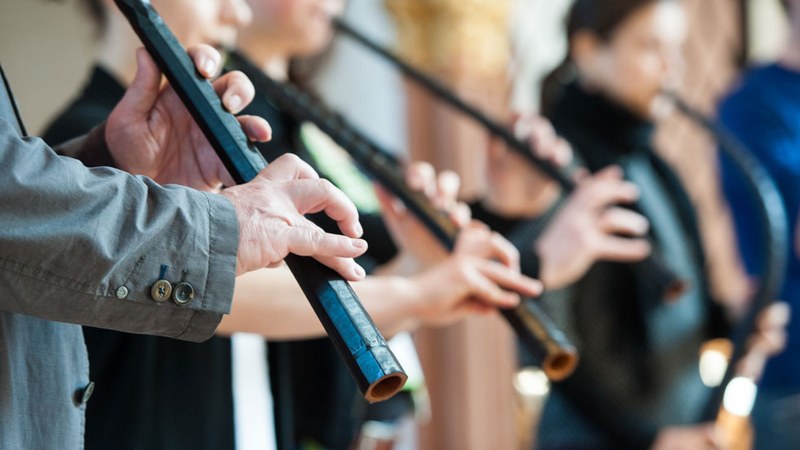
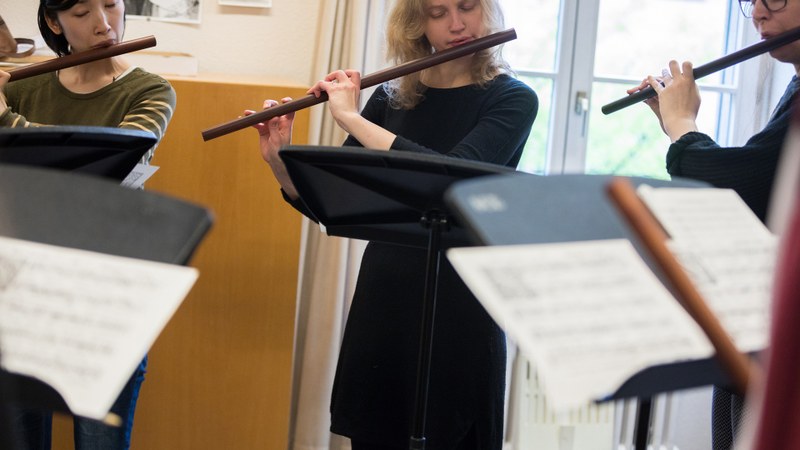
Early music has long since ceased to be a marginal phenomenon in the cultural scene and has also been included in the educational offerings of music schools and universities for some time now. The master’s qualification at the Schola Cantorum Basiliensis enables graduates to teach in music schools and conservatories around the world in a sound and inspiring manner. At the Schola Cantorum Basiliensis, you will find a unique international community of high-calibre lecturers and students for your educational and artistic development.
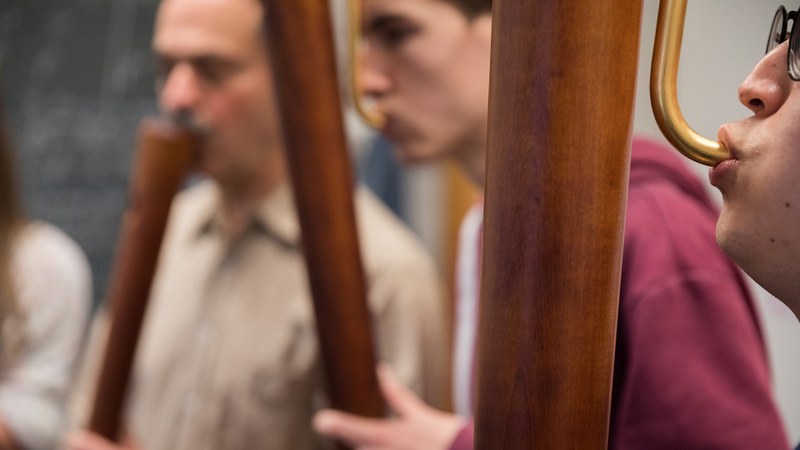
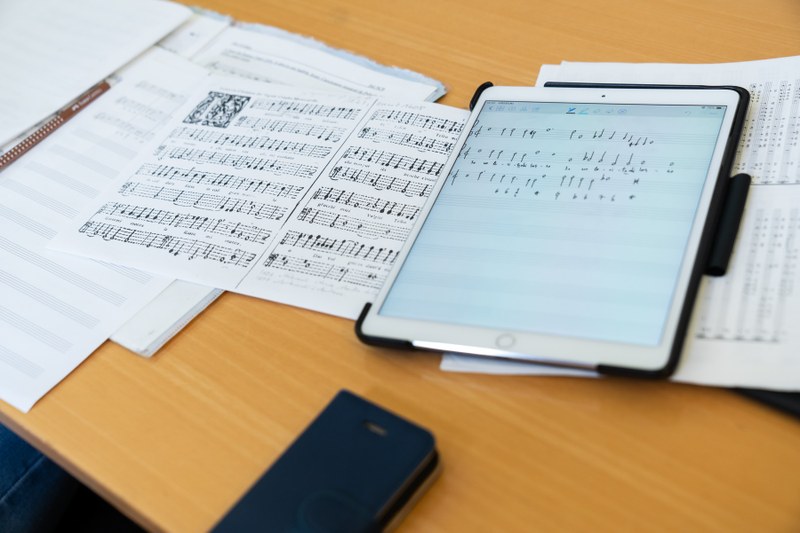
  • HSM_SCB_MA_Musikpädagogik_Fagotte.jpg
  • HSM_SCB_MA_Musikpädagogik_Impressionen2019_DSC4494©Susanna Drescher.jpeg
  • HSM_SCB_MA_Musikpädagogik_Traversos17_E_Kugionis.jpg

Factsheet

Degree
Master of Arts FHNW in Musikpädagogik, Studienrichtung Alte Musik instrumental / vokal
Study mode
Full-time
Learning environment
Onsite
ECTS points
120
Duration
4 semesters
Language
level B2 in German is required
Staying abroad
Not applicable
Application fee
200 CHF
Semester fee
750 CHF (CH) | 1000 CHF (EU/EFTA) | 1250 CHF (Not-EU/Not-EFTA)

At a glance

  • Learning the tools and skills of historical didactics and methodology
  • Gaining a high level of artistic qualification to develop a distinctive profile as a musician
  • Developing the theory and history of early music in order to make competent performance and aesthetic decisions

Why study this?

The master's degree qualifies graduates to teach at music schools and conservatories worldwide and to impart their main subject in the field of historical music practice in a sound and inspiring manner. With a focus on teaching the technique and music of their main instrument, students acquire the skills and tools of historical didactics and methodology. This theoretical and practical contextualisation opens up a wide range of perspectives for contemporary, diverse teaching activities.

The MA programme in Music Pedagogy is geared towards students who wish to add teaching qualifications to a well-founded course of study as a practising musician. Essential prerequisites are an interest in teaching and a flair for communication, as well as conversational fluency in the German language.

The aim of this Master’s degree programme is to develop the independent artistic personality of instrumentalists and singers with excellent musical and technical ability, both as soloists and ensemble performers. It also imparts specific knowledge of music theory and history pertinent to Early Music, which will equip students to make independent and well-founded decisions about performance practice and aesthetics. This artistic and intellectual autonomy is necessary in order to succeed in a market which is dominated less by traditional institutional employers and more by an interest in the creativity and persuasiveness of individual musicians.

Holders of an MA in Music Pedagogy with an Early Music specialisation are equipped to share and teach their specialist knowledge and skills within music school and upper-secondary settings.

The MA in Music Pedagogy with an Early Music specialisation offered by the Schola Cantorum Basiliensis enables students to provide professional instrumental/singing tuition at music schools and at the upper-secondary level. Generally speaking, teaching positions are rare in this highly specialised field. The one notable exception is recorder teaching, which remains in demand among the amateur musician community and draws on a repertoire that extends beyond Early Music.


Structure and programme contents

The Schola Cantorum Basiliensis (SCB), together with the FHNW School of Music (HSM), offers a Master’s degree in Music Pedagogy with an Early Music specialisation. Teaching methodology specific to Early Music as well as courses in the major subject take place at the SCB, while the HSM is responsible for the general music pedagogy courses. Alongside teacher training, the programme also nurtures the students’ own artistic development as a harmonious combination of these two aspects, one that is essential for a truly effective and fruitful pedagogical qualification.  Students will also acquire a sound background in theoretical and practical subjects relevant to Early Music.

What sets certain major instruments (baroque bassoon, baroque oboe, recorder, harpsichord, voice, lute, organ, viola de gamba) apart from others is a current and ongoing demand for teachers of these instruments. Consequently, the SCB offers these majors as part of its regular MA in Music Pedagogy programme. Other instrumental majors that exist in a modern form (violin, cello, fortepiano, flute, trombone  etc.) are only offered through the SCB under special conditions and generally require a previous Master's degree on the modern instrument.
Such holders of a recognised Master’s degree may, in close consultation with the FHNW Academy of Music, Klassik, tailor their Music Pedagogy studies to their chosen instrument. The relevant instrumental teaching methodology classes are dispensed by the HSM.

Please note that the SCB may not offer the MA programme in Music Pedagogy every year.

Modules and Reglements

The BA and MA degree programmes at the Basel Academy of Music are based on modules.

The legally binding structure provides an initial guide to the content and weighting of the subjects on the degree programme.
The detailed content and modalities of the individual subjects can be found in the module descriptions.
The study regulations come into force together with the study and examination regulations of the Basel Academy of Music FHNW and form the legal framework.

Structure

Structure MA Early Music Music Pedagogy instrument/voice in German

Module descriptions

Below please find the link with all the information on the module descriptions of several FHNW universities.

  • Switch the language settings to English.
  • Filter by semester, Hochschule für Musik Basel FHNW, the desired degree programme or other criteria to display the relevant module information.
  • Use the PDF button to call up a document from each overview and save it for yourself.
  • Course registrations are made via the intranet.

Module descriptions

Study Regulations

Study Course Regulations MA Early Music Music Pedagogy instrument/voice in German


Lecturers

Music practical subjects

teaser_bartz_teaser-1304.jpg
More details

Schola Cantorum Basiliensis

HSM_SCB_Zinken_Haende18_S_Drescher.jpg
All Lecturers

Requirements, admission, entrance exam

To be admitted to the Master’s programme, applicants must have passed the admission procedure. It breaks down as follows:

  • verification of the admission criteria
  • submission of all necessary registration documents in time
  • passing the entrance exam
  • a free place at the Academy was offered to the applicant (limited places of admission)

Admission shall be granted for the academic year to which the entrance exam applies to.

We expect students to have good German language skills at the beginning of the studies. Students who are not German native speakers must present at least a B1 German language certificate (according to the Common European Framework of Reference for Languages (CEFR)) at the beginning of the studies.

Admission criteria

To be admitted to the Master’s programme, applicants must hold a Bachelor degree in Music/Music and Movement or an equivalent qualification.

Applicants who have failed any part of their Bachelor degree programme may be provisionally admitted to the Master’s programme under the condition that they successfully resit the relevant exam(s) by the end of the first MA semester. In order to be accepted for study, enough billable ECTS credit points must be available to fulfil all requirements of the diploma programme. For the Master's degree the minimum is 30 ECTS credit points. Applicants must declare any ECTS credits they have acquired from a previous course of study that they had failed to complete.

The admission procedure requires applicants pass an entrance exam. It breaks down as follows:

  1. Verification that the applicant meets all formal admission criteria
  2. Admission to the entrance exam
  3. Entrance exam
  4. Decision on admission

Admission shall be granted for the academic year to which the aptitude test applies. This test may be retaken no more than once per degree programme/major, but no earlier than the next official aptitude test date.

Places on the degree programme are limited; a quota is set for first-year admissions. Based on the framework regulations governing student intake restrictions for Bachelor and Master’s degree programmes at the University of Applied Sciences and Arts (FHNW), the FHNW Basel Academy of Music shall make its final selection based on the level and comparative ranking of the applicants' examination results.

For further information on the admission criteria, please see the Study Course Regulations MA Early Music Music Pedagogy instrument/voice in German.

General Registration ProcedureAll about Studying in Basel

Entrance exam

The entrance exam is individual for each study programme direction.

Dates

Registration
You may apply from 15 December until 31 January.
The following documents must be handed in with your registration:

  • A curriculum Vitae incl. motivational letter
  • school leaving qualification (Matura, Abitur, Baccalauréat, High School-Diploma)
  • Bachelor Diploma
  • Second Master students: Master Diploma
  • Not German native speakers: German Language Certificate (B2)

On-site
The on-site auditions will take place between mid-March and mid-April. The exact dates may be seen here in the beginning of January.

Announcement of the results
The results of the first round/invitations for entrance exam on-site will be communicated by email by the end of February.
The results of the on-site entrance exam will be communicated by email in the beginning of May.

Procedure

The entrance exams consist of an on-site audition.

There will be a first round "by video" (details below) for the majors violin, recorder (renaissance-romantic) and voice (renaissance-romantic). Exams for all other majors will take place directly on-site.

Persons unable to take an on-site assessment for visa, financial or environmental (long distance travel) reasons may submit a request for an online entrance assessment (video presentation and live interview). This request must be sent to scb.hsm@fhnw.ch at the same time as the registration (by 31 January), stating the reasons, and must then be approved by the management.

Artistic entrance exam

First round: Video recordings for violin, recorder (renaissance-romantic) and voice (renaissance-romantic)

Video recordings must be handed in as part of the registration.

List of works for the first round

  • Content
    Please prepare 3 pieces that present a selection of different stylistic fields. Use the repertoire samples as a guide. Applicants must perform on period instruments or replicas thereof in the entrance exams. List the information on your list of works for the first round.
  • Form
    three separate uncut videos of music (one per piece)
  • Total length of the videos together
    15 – max. 20 minutes.
  • Date
    The recordings should usually be new and prepared for the entrance exams. Published videos only uncut and not older than six months.
  • (Continuo-)Accompaniment
    Is requested. You can work with people from your own setting.

Technical requirements

  • Camera Position
    Please record the video from a fixed point of view, ideally using a tripod. The hands and the face of the candidate/musician plus the instrument must be visible.
  • Audio
    We recommend using a separate stereo microphone and placing it properly (if necessary, you may also use the microphone of a camera, computer, or smartphone).

Transmission

  • Video Platform
    Please upload your three videos unlisted to YouTube. (exception: candidates from China may use a corresponding alternative platform).
  • Add the corresponding direct link from YouTube per work in the list of works for the first round.
  • Please also enter the YouTube links in the registration tool.
  • Please ensure that the videos are accessible for six months.
  • Submission
    Submit the list of works with the rest of your registration or send it via email to registration.hsm@fhnw.ch by 31 January.

Only applicants considered for the second round will be invited to an on-site audition.

On-site audition (second round)

Please also refer to the document entrance exam (in German).

List of works for the entrance exam on-site

Audition plus interview
Please prepare a programme of 15 to max. 20 minutes with pieces from at least three different stylistic fields. Use the repertoire samples as a guide. The programme (may be identical to the one of the video) must be submitted together with the list of works for the entrance exam on-site. The candidate may choose the first piece. Then, the jury will decide which works to play and is allowed to interrupt the audition at any time. Afterwards, there will be a short conversation about the study objectives and contents as well as the applicant’s prior education, experience and career goals, the preferred professor, etc.

The general section of the entrance exam (theory) and proof of proficiency on a keyboard instrument take place on the same day, usually before or after the on-site audition for the main subject (duration: 20 min.).

  • sing and identify intervals played on the harpsichord (closed and open position)
  • active singing of intervals above or below a given pitch
  • sing and identify seventh chords (7, 5/6, 3/4/6, 2/4/6)
  • Dictation: sing and notate a two-voice setting (soprano and bass)
  • identify the chords (preferably figured bass; modern harmony also acceptable)
  • Improvisation: sing a continuation of the dictated melody
  • Sight-sing a melody of medium difficulty from the 17th or 18th century, notated in treble or bass clef
  • Performance of a prepared, short piece of your choice on the harpsichord (not required for those with major keyboard or plucked instruments)
  • Tonality and mode issues

Further information can be found here.

Pedagogical entrance exam

The pedagogical entrance exam can only be taken if the artistic entrance exam was successful and lasts 30'. During an interview, essential prerequisites for the study of music pedagogy are examined, especially the motivation and the pedagogical ideas of the candidate. Other elements of the entrance exam depend on the background of the candidate. They are determined by the jury itself and communicated in advance.


Organisational matters

Quicklinks
  • Welcome: A brief overview
  • Studying in Switzerland
  • Tuition fees & Financing
  • Scholarship
  • Module descriptions
Files and Regulations
  • Dates Entrance Exam on Site
  • List of works for Entrance Exam
  • Study regulations
  • Semester dates

Advising and information events

Contact
Student Administration Office Schola Cantorum Basiliensis

Student Administration Office Schola Cantorum Basiliensis

Phone
061 264 57 42 (Direct)
E-Mail
scb.hsm@fhnw.ch
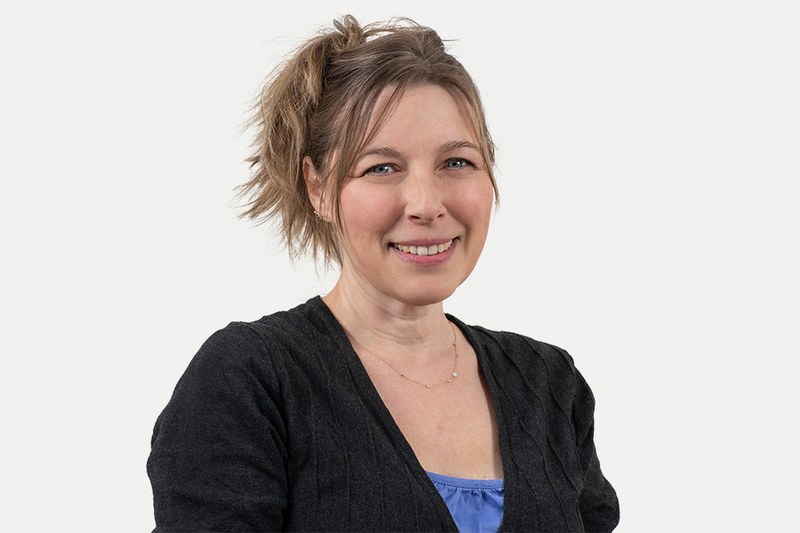
Kelly Landerkin

Prof. Kelly Landerkin

Member of the Management Board SCB, Head of Programmes Bachelor and Master Medieval-Renaissance and Master Music Pedagogy
Phone
+41 61 264 57 57 (Central office)
E-Mail
kelly.landerkin@fhnw.ch

Information events

Loading...


Registration

The next registration window is open from 15th December to 31th January.

Basel Academy of Music FHNW University of Applied Sciences and Arts Northwestern Switzerland

  • About the School
    • HSM Basel
    • Klassik
    • Schola Cantorum Basiliensis
    • Jazz
    • Degree Programmes
    • Continuing Education
    • Research
  • Social Media
    • YouTube
    • Instagram
    • Veranstaltungskalender
  • About FHNW
    • Organisation
    • Schools
    • Locations
    • FHNW Library
    • Media Relations
  • Support
    • IT Support
    • Inside FHNW
    • Webmail
Logo FHNW - 20 Years
Logo Swiss Universities
Logo European University Association
© University of Applied Sciences and Arts Northwestern Switzerland (FHNW)
  • Data Protection
  • Imprint
  • Accessibility
  • DE
  • EN