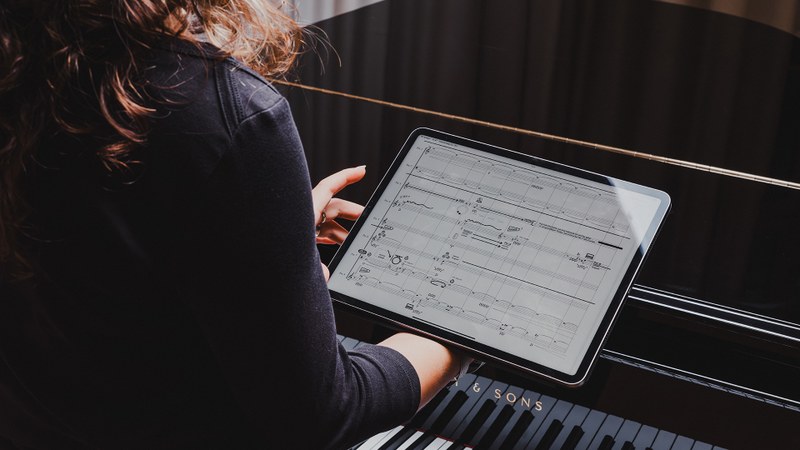
Institut Klassik | Is your professional goal to teach Music Theory? In this master’s degree programme, you will develop your basic skills from the BA on an individual basis and bring them to professional maturity. This is achieved through a strong focus on teaching the main subject on the one hand, and through sound pedagogical training on the other. Graduates of this programme teach music theory in private lessons, at music schools and as a compulsory subject at music colleges.

Factsheet
- Degree
- Master of Arts FHNW in Musikpädagogik, Studienrichtung Musiktheorie
- Study mode
- Full-time
- Learning mode
- Onsite
- ECTS credits
- 120
- Next start
- 13.9.2027
- Duration
- 4 semesters
- Teaching language
- B1 level in German required
- Stay abroad
- Possible
- Application fee
- 200 CHF
- Semester fee
- 750 CHF (CH) | 1000 CHF (EU/EFTA) | 1250 CHF (Not-EU/Not-EFTA)
At a glance
- Acquire a broad education in music theory.
- Learn to pass on this knowledge in a musically practical and linguistically competent manner
- Be qualified to teach music theory at music education institutions such as conservatories and music schools, or independently
Why study this?
Graduates of this study programme are qualified to teach music theory on a private basis, in music schools and music academies.
This study programme is aimed at holders of a Bachelor degree with a Music Theory Major (or equivalent qualification).
Structure and programme contents
Intellectual ability and musicianship
The FHNW Master of Arts in Music Pedagogy with a Music Theory Major places considerable emphasis on the students’ reflective intellectual abilities (including research-related aspects), their musicianship (writing stylistic exercises and small-scale compositions, score playing and improvisation) and their capacity to talk about and write on the subject in a clear and competent manner. Students may also make use of external educational opportunities in the fields of music theory, music practice and musicology (at the Schola Cantorum Basiliensis, the University of Basel or the Paul Sacher Stiftung) in order to acquire knowledge and ideas beyond the boundaries of their own subject that could be of benefit in their future career.
Modules and regulations
The BA and MA degree programmes at the Basel Academy of Music are based on modules.
The legally binding structure provides an initial guide to the content and weighting of the subjects on the degree programme.
The detailed content and modalities of the individual subjects can be found in the module descriptions.
The study regulations come into force together with the study and examination regulations of the Basel Academy of Music FHNW and form the legal framework.
Structure
Minors
Module descriptions
Study Regulations
Lecturers
Music Theory
Institut Klassik
Requirements, admission, entrance exam
In order to enter the FHNW Master of Arts in Music Pedagogy programme with the Major Music Theory, applicants must be awarded a Bachelor in Music or equivalent as well as they have to have passed the entrance exam and were offered a free place at the Academy (limited places). Applicants who have submitted all the necessary registration documents in time and have passed the first round of the entrance exam will be invited to play a live audition.
For further information on the admission criteria, please see the Study field regulations of the Master of Arts FHNW in Music Pedagogy, Music Theory (in German).
We expect students to have very good German language skills at the beginning of the studies. Students who are not German native speakers must present at least a B1 German language certificate according to the Common European Framework of Reference for Languages (CEFR) at the beginning of the studies.
This certificate must be complete, i.e. all modules (reading, listening, writing, speaking) have been tested separately and passed at least at level B1 overall. Only certificates that have been certified with the ALTE-Q-Mark seal of approval (e.g. the B1 certificate of the Goethe-Institut or the telc certificate) are accepted.
The required certificate B1 must be submitted with the confirmation of admission but not later than 31 May. Exceptions will be decided upon by the head of degree programme.
Entrance exam
The entrance exam is individual for each study programme direction.
Dates
Procedure
Examples exams
Organisational matters
sonic space basel
Projects / Ensembles
Quicklinks
Files and Regulations
Music library "Vera Oeri-Bibliothek"
Advising and information events
Contact
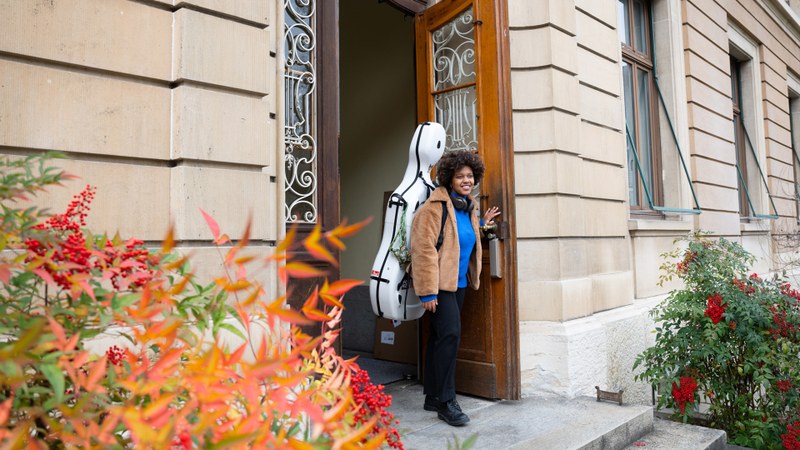
Student Administration Academy of Music, Klassik
- Phone
- +41 61 264 57 32 (Direct)
- klassik.hsm@fhnw.ch
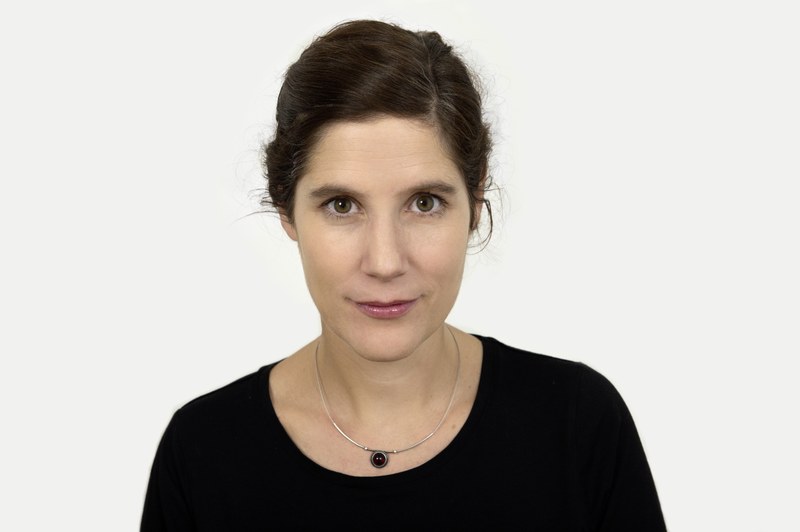
Prof. Annekatrin Klein
- Phone
- +41 61 264 58 36 (Direct)
- annekatrin.klein@fhnw.ch
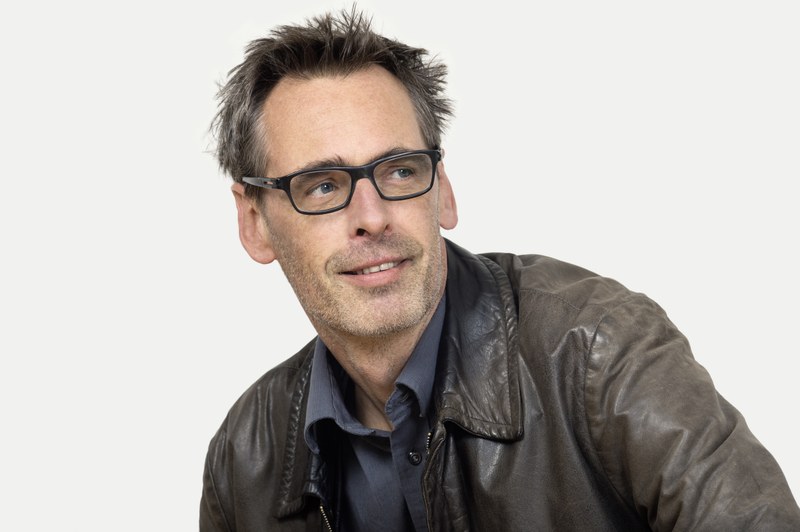
Prof. Uli Fussenegger
- Phone
- +41 61 264 56 19 (Direct)
- uli.fussenegger@fhnw.ch
Information events
Loading...