Skip to main contentSkip to search barSkip to navigationSkip to footer
Logo of the University of Applied Sciences and Arts Northwestern Switzerland
  • DE
  • EN
  • Home
  • International

Ten Schools One Goal

The FHNW comprises 10 schools with different specializations. Select a school to see its specific courses, study programmes and information.

Applied Psychology

Architecture, Construction and Geomatics

Art and Design

Music

Computer Science

Life Sciences

School of Education

Social Work

Engineering and Environment

Business

  • Degree programmes

    • All degree programmes
    • BA Music
    • BA/MA Music and Movement & Educational Music
    • MA Performance
    • MA Specialised Performance
    • MA Music Pedagogy
    • MA Composition/Music Theory
    • MA Music and Scene in Transformation
    • PreCollege
    • Info events
  • All about studying

    • Admission & Entrance Exam
    • Study internationally
  • Continuing education

    • All continuing educations
    • Music Pedagogy
    • Info events
  • Research

    • Research fields
    • Informations for students/PhD
    • Research events
  • Research Klassik

    • Communication Human & Machine
    • Music Philosophy
    • Music Pedagogy
    • Performing Sources
    • Sounding Futures
  • Research Schola Cantorum Basiliensis

    • Historical Performance Practice
    • Organology
    • Publications Schola Cantorum Basiliensis
    • Symposia and study days
  • Updates and insights

    • News and stories
  • Events

    • Concerts and events
    • Info days
  • Media

  • About the Basel Academy of Music

    • Director's board
    • Teaching staff
    • People directory
    • Event calendar
    • Contact
  • Institutes

    • Klassik
    • Schola Cantorum Basiliensis
    • Jazz
  • Campus and infrastructure

Logo of the University of Applied Sciences and Arts Northwestern Switzerland
  • About the School
    • HSM Basel
    • Klassik
    • Schola Cantorum Basiliensis
    • Jazz
    • Degree Programmes
    • Continuing Education
    • Research
  • Social Media
    • YouTube
    • Instagram
    • Veranstaltungskalender
  • About FHNW
    • Organisation
    • Schools
    • Locations
    • FHNW Library
    • Media Relations
  • Support
    • IT Support
    • Inside FHNW
    • Webmail
  • Data Protection
  • Imprint
  • Accessibility
  • Degree programmes

    • All degree programmes
    • BA Music
    • BA/MA Music and Movement & Educational Music
    • MA Performance
    • MA Specialised Performance
    • MA Music Pedagogy
    • MA Composition/Music Theory
    • MA Music and Scene in Transformation
    • PreCollege
    • Info events
  • All about studying

    • Admission & Entrance Exam
    • Study internationally
  • Continuing education

    • All continuing educations
    • Music Pedagogy
    • Info events
  • Research

    • Research fields
    • Informations for students/PhD
    • Research events
  • Research Klassik

    • Communication Human & Machine
    • Music Philosophy
    • Music Pedagogy
    • Performing Sources
    • Sounding Futures
  • Research Schola Cantorum Basiliensis

    • Historical Performance Practice
    • Organology
    • Publications Schola Cantorum Basiliensis
    • Symposia and study days
  • Updates and insights

    • News and stories
  • Events

    • Concerts and events
    • Info days
  • Media

  • About the Basel Academy of Music

    • Director's board
    • Teaching staff
    • People directory
    • Event calendar
    • Contact
  • Institutes

    • Klassik
    • Schola Cantorum Basiliensis
    • Jazz
  • Campus and infrastructure

Type a search term and search continuing education,degree programmes, events, documents and other content.

MA Music Performance | Early Music Medieval-Renaissance, Basel Academy of Music

Basel Academy of Music


  • Music
  • Degree programmes
  • Studying Music
  • All degree programmes
All degree programmes
HSM_SCB_MA_P_MA-Re_Partitur_MA_durch_Harfe_E_Kougionis.jpg

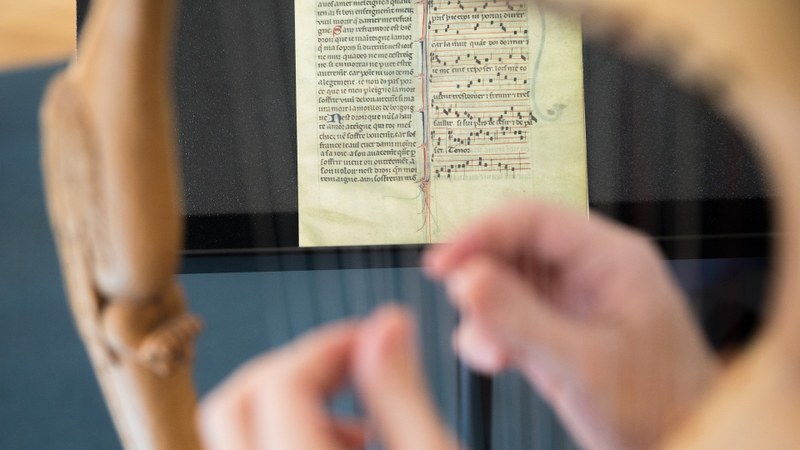
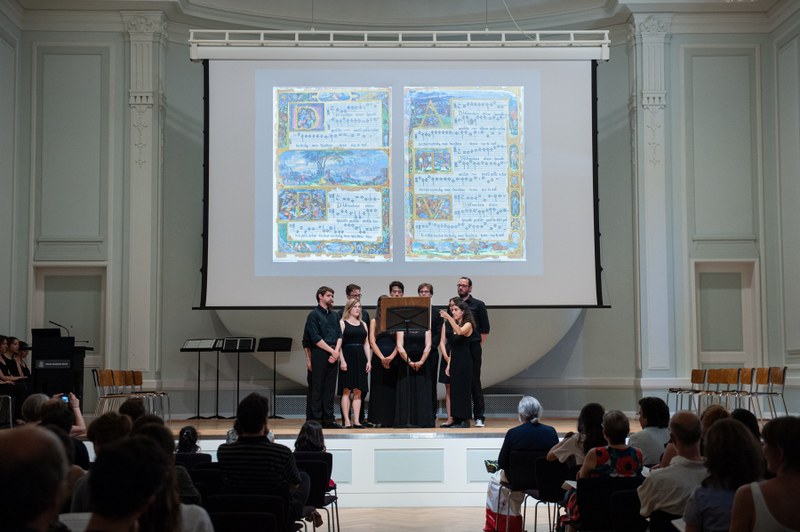
The master’s degree programme at the Schola Cantorum Basiliensis in Medieval Renaissance focuses on music from the 9th to the 16th century. It builds on previous studies in music with a good historical foundation and leads to the development of interpretative sovereignty in theory and practice. The focus is, on the one hand, on instrument/voice competence in solo performance and, on the other, on a reflective and communicative ensemble culture, which is particularly required in Medieval/Renaissance music. The Schola Cantorum Basiliensis is an inspiring international community of high-calibre lecturers and students.

  • HSM_SCB_MA_P_MA-Re_Partitur_MA_durch_Harfe_E_Kougionis.jpg
  • HSM_SCB_MA_P_MA-Re_MedRen Basel 2019_© Susanna Drescher_414.jpeg
  • HSM_SCB_MA_P_MA-Re_MedRen Basel 2019_© Susanna Drescher_186.jpeg

Factsheet

Degree
Master of Arts FHNW in Musikalischer Performance, Studienrichtung Alte Musik Mittelalter-Renaissance instrumental/vokal
Study mode
Full-time
Learning environment
Onsite
ECTS points
120
Duration
4 semesters
Language
level B1 in German is required
Staying abroad
Not applicable
Application fee
200 CHF
Semester fee
750 CHF (CH) | 1000 CHF (EU/EFTA) | 1250 CHF (Not-EU/Not-EFTA)

At a glance

  • Focus on musical practice as a soloist and as an ensemble
  • Theory and contextual subjects geared to the specific needs of early musical practice
  • Academic work on specific research topics in early music

Why study this?

The aim of this Master’s degree programme is to develop the independent artistic personality of instrumentalists and singers with excellent musical and technical ability, both as soloists and ensemble performers. It also imparts specific knowledge of music theory and history pertinent to Early Music, which will equip students to make independent and well-founded decisions about performance practice and aesthetics. This artistic and intellectual autonomy is necessary in order to succeed in a market which is defined less by traditional institutional employers and more by an interest in the creativity and persuasiveness of individual musicians.

The primary aim of this Master’s programme is to hone the students’ instrumental and vocal proficiency as well as their ability to work as part of an ensemble. Furthermore, independent academic work and the students’ artistic/creative output are fostered through a yearly project on a subject specific to medieval-Renaissance music and under the supervision of a member of the teaching staff. A Master’s thesis provides proof of the candidate’s capacity to deal with a subject in a scholarly and reflective manner.

This SCB Master’s programme is aimed at students (instrumental/vocal) who are highly qualified and prepared to dedicate themselves to a course of study in historical performance practice that meets the highest artistic standards.
Prerequisites are: talent, high level of ability (voice/instrument) as well as potential for further artistic development, experience in Early Music and an interest in the historical foundations underpinning its practice.

This Master’s programme is aimed at students who hold a very good Bachelor of Arts with a specialisation in medieval-Renaissance music from the Schola Cantorum Basiliensis, as well as those who have studied elsewhere but have a solid grounding in the theory and practice of relevant to these eras. The focus of the study programme is European music from Carolingian period until the 16th century.

Career opportunities for medieval-Renaissance music specialists include performance work in concert, festival and Early Music concert series settings. As expert ensemble musicians, they are qualified to play with existing ensembles or establish their own ensemble. A number of graduates opt to pursue a career in academic research within their chosen field of specialisation, while others choose to share their experience and expertise in workshops and masterclasses.

What is a Lute, Gittern, Citole, Cetra, Cythara? Which medieval plectrum instruments can be learned and studied at the Schola?

Prof. Marc Lewon, Schola Cantorum Basiliensis, presents medieval plectrum instruments


Structure and programme contents

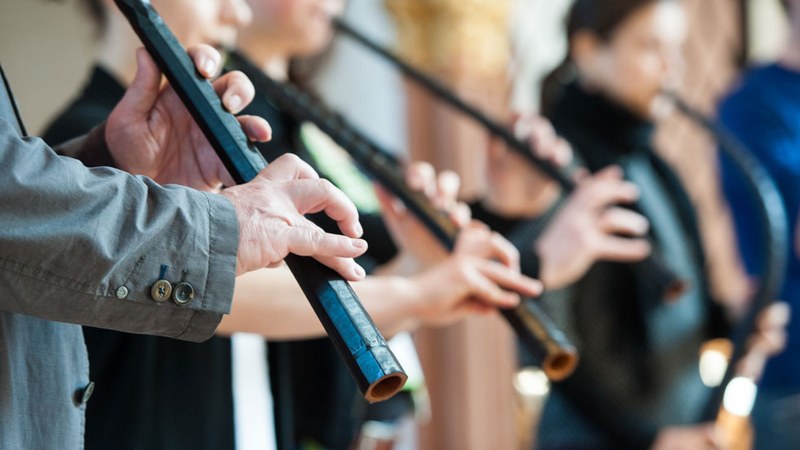
The master's programme in Medieval and Renaissance Music focuses on music from approximately the 9th to the 16th century. It builds on previous studies in music with a strong historical foundation and leads to the development of interpretative mastery in theory and practice. The focus is on instrumental/vocal competence in solo performance on the one hand, and on a reflective and communicative ensemble culture on the other, which is particularly important in medieval and Renaissance music. The main subjects are singing and early plucked instruments (plectrum lutes, harp), keyboard instruments (organetto, clavicytherium, clavisimbalum), string instruments (fiddle da braccio and da gamba) and wind instruments (recorder, traverso, shawm).

In addition to technical and musical support in the main subject and in ensemble internships, theory and contextual subjects provide an excellent basis for the specific needs of early musical practice. In-depth engagement with one's own research topics demonstrates competence in reflective and scientific work and communication. This further develops musical independence and connects it with practice.

The Schola Cantorum Basiliensis is a renowned centre for medieval and early Renaissance music. With top-class lecturers and an inspiring international community of students, aspiring musicians are optimally prepared for a varied career as innovative performers.

Modules and regulations

The BA and MA degree programmes at the Basel Academy of Music are based on modules.

The legally binding structure provides an initial guide to the content and weighting of the subjects on the degree programme.
The detailed content and modalities of the individual subjects can be found in the module descriptions.
The study regulations come into force together with the study and examination regulations of the Basel Academy of Music FHNW and form the legal framework.

Structure

Structure MA Specialised Music Performance Early Music Medieval-Renaissance instrumental/vocal in German

Module descriptions

Below please find the link with all the information on the module descriptions of several FHNW schools.

  • Switch the language settings to English.
  • Filter by semester, Hochschule für Musik Basel FHNW, the desired degree programme or other criteria to display the relevant module information.
  • Use the PDF button to call up a document from each overview and save it for yourself.
  • Course registrations are made via the intranet.

Module descriptions

Study Regulations

Study Course Regulations MA Specialised Music Performance Early Music Medieval-Renaissance instrument/voice in German

History window: Music in the Middle Ages

Prof. Dr. Marc Lewon and Prof. Dr. Johannes Menke of Schola Cantorum Basiliensis as a guest on the podcast

  • Part 1: Early and High Middle Ages (in German)
  • Part 2: The Late Middle Ages (in German)

Lecturers

Medieval Department
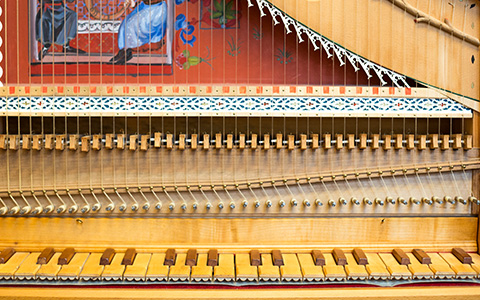
teaser_clavicytherium_teaser.jpg
More details

Schola Cantorum Basiliensis

HSM_SCB_Zinken_Haende18_S_Drescher.jpg
All Lecturers

Requirements, admission, entrance exam

To be admitted to the Master’s programme, applicants must have passed the admission procedure. It breaks down as follows:

  • verification of the admission criteria
  • submission of all necessary registration documents in time
  • passing the entrance exam
  • a free place at the Academy was offered to the applicant (limited places of admission)

Admission shall be granted for the academic year to which the entrance exam applies to.

We expect students to have good German language skills at the beginning of the studies. Students who are not German native speakers must present at least a B1 German language certificate (according to the Common European Framework of Reference for Languages (CEFR)) at the beginning of the studies.

Admission Criteria

To be admitted to the Master’s programme, applicants must hold a Bachelor degree in Music/Music and Movement or an equivalent qualification.

Applicants who have failed any part of their Bachelor degree programme may be provisionally admitted to the Master’s programme under the condition that they successfully resit the relevant exam(s) by the end of the first MA semester. In order to be accepted for study, enough billable ECTS credit points must be available to fulfil all requirements of the diploma programme. For the Master's degree the minimum is 30 ECTS credit points. Applicants must declare any ECTS credits they have acquired from a previous course of study that they had failed to complete.

The admission procedure requires applicants pass an entrance exam. It breaks down as follows:

  1. Verification that the applicant meets all formal admission criteria
  2. Admission to the entrance exam
  3. Entrance exam
  4. Decision on admission.

Admission shall be granted for the academic year to which the entrance exam applies. This test may be retaken no more than once per degree programme/major, but no earlier than the next official entrance exam date.

Places on the degree programme are limited; a quota is set for first-year admissions. Based on the framework regulations governing student intake restrictions for Bachelor and Master’s degree programmes at the University of Applied Sciences and Arts (FHNW), the FHNW Academy of Music shall make its final selection based on the level and comparative ranking of the applicants' examination results.

For further information on the admission criteria, please see the Study Course Regulations MA Specialised Music Performance Early Music Medieval-Renaissance instrumental/vocal in German.

General Registration ProcedureAll about Studying in Basel

Entrance exam

The entrance exam is individual for each study programme direction.

Dates

Registration
You may apply from 15 December until 31 January.
The following documents must be handed in with your registration:

  • A curriculum Vitae incl. motivational letter
  • school leaving qualification (Matura, Abitur, Baccalauréat, High School-Diploma)
  • Bachelor Diploma
  • Second Master students: Master Diploma

On-site
The on-site auditions will take place between mid-March and mid-April. The exact dates may be seen here in the beginning of January.

Announcement of the results
The results of the on-site entrance exam will be communicated by email in the beginning of May.

Procedure

The entrance exam take place on site in Basel.

Persons unable to take an on-site assessment for visa, financial or environmental (long distance travel) reasons may submit a request for an online entrance assessment (video presentation and live interview). This request must be sent to scb.hsm@fhnw.ch at the same time as the registration (by 31 January), stating the reasons, and must then be approved by the management.

On-site audition

List of works for the entrance exam on-site

Audition plus interview
Please prepare a programme of 15 to max. 20 minutes with pieces from at least three different stylistic fields. Use the repertoire samples as a guide. The programme must be submitted together with the list of works for the entrance exam on-site. The candidate may choose the first piece. Then, the jury will decide which works to play and is allowed to interrupt the audition at any time. Afterwards, there will be a short conversation about the study objectives and contents as well as the applicant´s prior education, experience and career goals, the preferred professor, etc.

Theory/general section
The general section of the entrance exam (theory) takes place on the same day, usually before or after the on-site audition for the main subject (duration: 20 min.):

  • sing and identify intervals, tone sequences and simple chords
  • sing and notate a simple tonal melody (e.g.: a tenor)
  • improvise a continuation to the dictated melody with your voice and, if possible, sing a simple contrapuntal counterpart to it.
  • answer questions about tonality and the function of the melody in the movement
  • sight-sing a simple vocal part from modern notation (e.g. from a chanson)

Minor

For a Minor second instrument, the requirements are generally the same as for the main subject but with the following changes:

  • Please prepare two pieces of music from the requested repertoire for main subject.
  • These should have together a duration of 10 minutes.

The Minor exam takes place together with the examinations for the main subjects. Please keep the corresponding date (see list of entrance exams per main subject) free in any case.

The entrance examinations for the Minor in improvisation will take place at the same date as the exam for improvisation as a main subject.


Organisational matters

Quicklinks
  • Welcome: A brief overview
  • Studying in Switzerland
  • Tuition fees & Financing
  • Scholarship
  • Module descriptions
Files and Regulations
  • Dates Entrance Exam on Site
  • List of works for Entrance Exam
  • Study regulations
  • Semester dates

Advising and information events

Contact
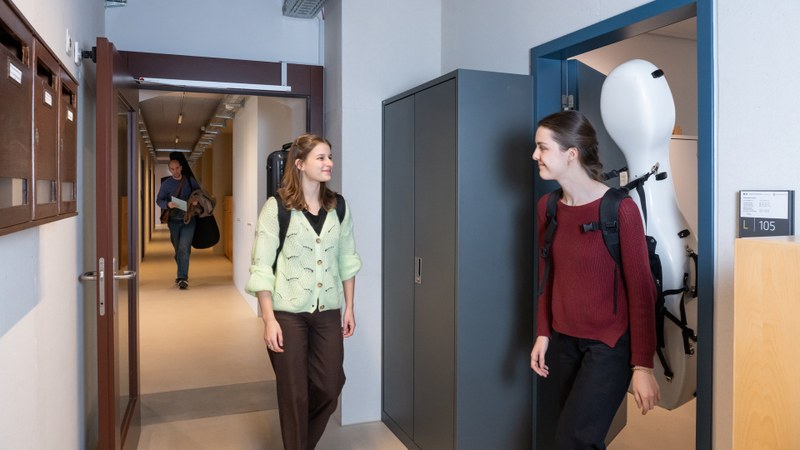
Student Administration Office Schola Cantorum Basiliensis

Student Administration Office Schola Cantorum Basiliensis

Phone
061 264 57 42 (Direct)
E-Mail
scb.hsm@fhnw.ch
Kelly Landerkin

Prof. Kelly Landerkin

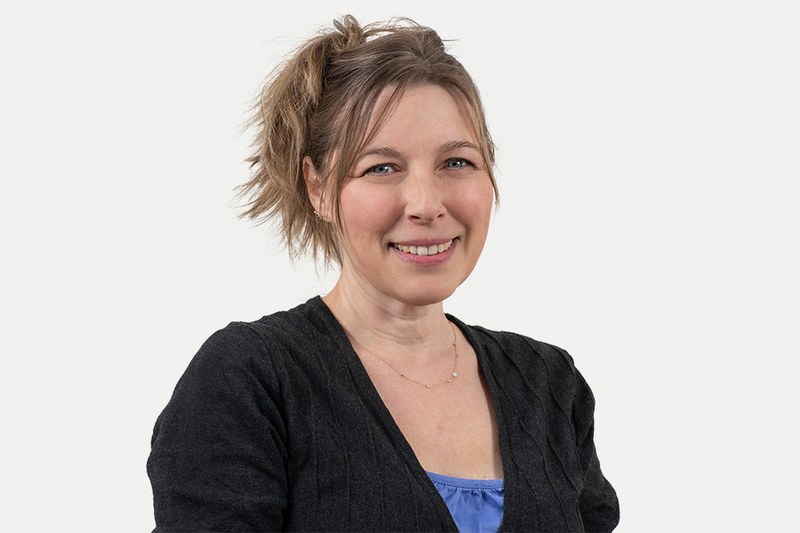
Member of the Management Board SCB, Head of Programmes Bachelor and Master Medieval-Renaissance and Master Music Pedagogy
Phone
+41 61 264 57 57 (Central office)
E-Mail
kelly.landerkin@fhnw.ch

Information events

Loading...


Registration

The next registration window is open from 15th December to 31th January.

Basel Academy of Music FHNW University of Applied Sciences and Arts Northwestern Switzerland

  • About the School
    • HSM Basel
    • Klassik
    • Schola Cantorum Basiliensis
    • Jazz
    • Degree Programmes
    • Continuing Education
    • Research
  • Social Media
    • YouTube
    • Instagram
    • Veranstaltungskalender
  • About FHNW
    • Organisation
    • Schools
    • Locations
    • FHNW Library
    • Media Relations
  • Support
    • IT Support
    • Inside FHNW
    • Webmail
Logo FHNW - 20 Years
Logo Swiss Universities
Logo European University Association
© University of Applied Sciences and Arts Northwestern Switzerland (FHNW)
  • Data Protection
  • Imprint
  • Accessibility
  • DE
  • EN