
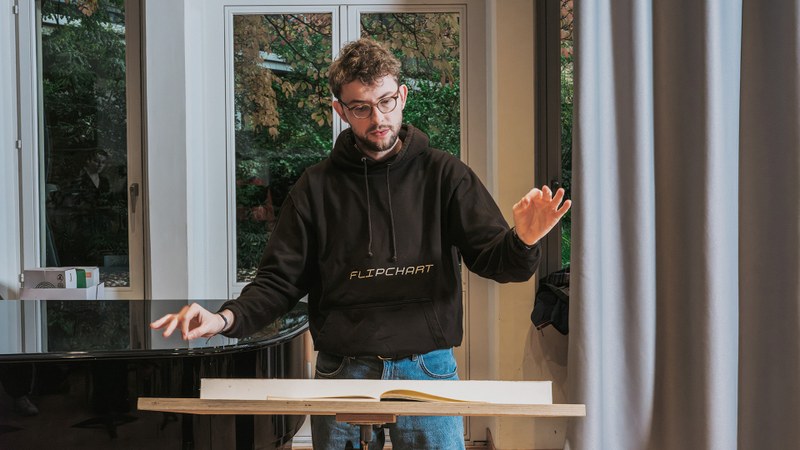
Is it your professional goal to conduct choirs professionally? Would you like to develop an expressive conducting language and practise working with university choirs, student ensembles and external orchestras during your studies? Would you like to develop, rehearse and perform your own concert project? Then our Choral Conducting degree is the next step after a successful BA or MA degree in Music.
Factsheet
- Degree
- Master of Arts FHNW in Spezialisierter Musikalischer Performance, Studienrichtung Chorleitung
- Study mode
- Full-time
- Learning mode
- Onsite
- ECTS credits
- 120
- Next start
- 13.9.2027
- Duration
- 4 semesters
- Teaching language
- B1 level in German required
- Stay abroad
- Possible
- Application fee
- 200 CHF
- Semester fee
- 750 CHF (CH) | 1000 CHF (EU/EFTA) | 1250 CHF (Not-EU/Not-EFTA)
At a glance
- Expansion of the ensemble’s repertoire by incorporating historical performance practice and sources
- Development of an expressive conducting language with practical relevance to various choirs and ensembles
- Critical study of sources
Why study this?
Holders of a FHNW Master of Arts in Specialised Music Performance Choral Conducting are qualified to lead choirs and other vocal ensembles, whether amateur, semi-professional or professional, and different line-ups.
This study course is aimed at musicians who wish to specialise in choral conducting and pursue a career as a choral conductor.
Study variant available
The combined master's program – Choral Conducting and education in music pedagogy
MA Music Pedagogy | instrument/voice | Choral Conducting
Structure and programme contents
The BA and MA degree programmes at the Basel Academy of Music are based on modules.
The legally binding structure provides an initial guide to the content and weighting of the subjects on the degree programme.
The detailed content and modalities of the individual subjects can be found in the module descriptions.
The study regulations come into force together with the study and examination regulations of the Basel Academy of Music FHNW and form the legal framework.
Structure
Module descriptions
Study Regulations
Lecturers
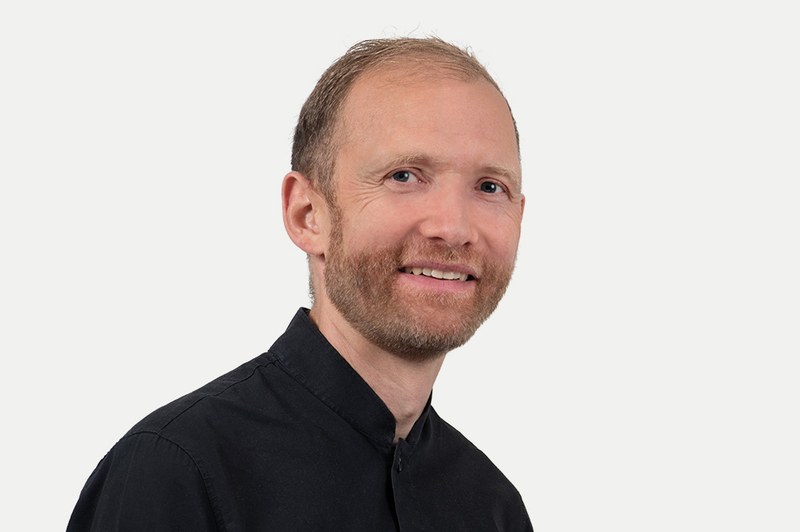
Martin Wettges
Institut Klassik

Requirements, admission, entrance exam
In order to enter the FHNW Master of Arts in Specialised Music Performance programme with a Major in Choral Conducting, applicants must be in possession of a Bachelor in Music (or an equivalent degree) as well as they must have passed the entrance exam and were offered a free place at the Academy (limited places of admission). Applicants who have submitted all the necessary registration documents in time will be invited to a live audition.
For further information on the admission criteria, please see the Study field regulations of the Master of Arts FHNW in Specialised Music Performance, Choral Conducting (in German).
We expect students to have sufficient German language skills at the beginning of the studies. Students who are not German native speakers must present a B1 German language certificate according to the Common European Framework of Reference for Languages (CEFR) at the beginning of the studies. This certificate must be complete, i.e. all modules (reading, listening, writing, speaking) have been tested separately and passed at least at level B1 overall. Only certificates that have been certified with the ALTE-Q-Mark seal of approval (e.g. the B1 certificate of the Goethe-Institut or the telc certificate) are accepted. The required certificate B1 must be submitted with the confirmation of admission but not later than 31st May. Exceptions will be decided upon by the head of degree programme.
Entrance Exam
The entrance exam is individual for each study programme direction.
Dates
Procedure
Organisational matters
Projects / Ensembles
Quicklinks
Files and Regulations
Music library "Vera Oeri-Bibliothek"
Advising and information events
Contact

Student Administration Academy of Music, Klassik
- Phone
- +41 61 264 57 32 (Direct)
- klassik.hsm@fhnw.ch
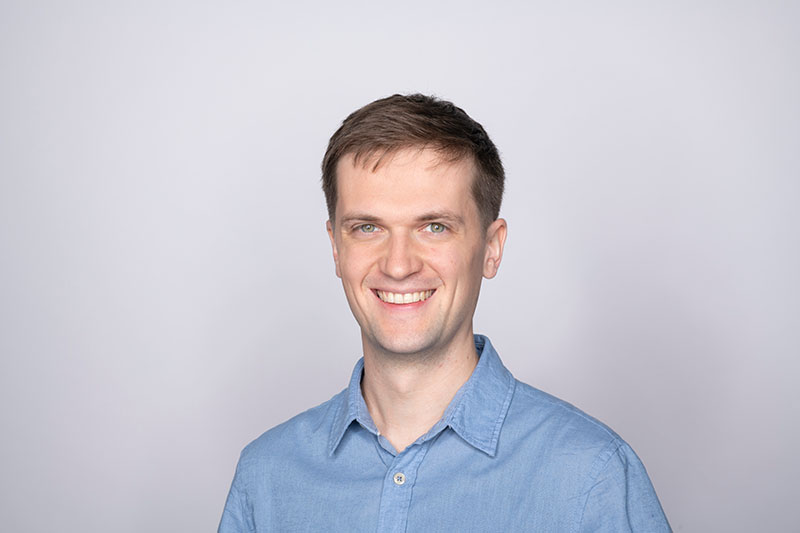
David Lichtsteiner
- Phone
- +41 61 264 57 57 (Central office)
Information events
Loading...