Skip to main contentSkip to search barSkip to navigationSkip to footer
Logo of the University of Applied Sciences and Arts Northwestern Switzerland
  • DE
  • EN
  • Home
  • International

Ten Schools One Goal

The FHNW comprises 10 schools with different specializations. Select a school to see its specific courses, study programmes and information.

Applied Psychology

Architecture, Construction and Geomatics

Art and Design

Music

Computer Science

Life Sciences

School of Education

Social Work

Engineering and Environment

Business

  • Degree programmes

    • All degree programmes
    • BA Music
    • BA/MA Music and Movement & Educational Music
    • MA Performance
    • MA Specialised Performance
    • MA Music Pedagogy
    • MA Composition/Music Theory
    • MA Music and Scene in Transformation
    • PreCollege
    • Info events
  • All about studying

    • Admission & Entrance Exam
    • Study internationally
  • Continuing education

    • All continuing educations
    • Music Pedagogy
    • Info events
  • Research

    • Research fields
    • Informations for students/PhD
    • Research events
  • Research Klassik

    • Communication Human & Machine
    • Music Philosophy
    • Music Pedagogy
    • Performing Sources
    • Sounding Futures
  • Research Schola Cantorum Basiliensis

    • Historical Performance Practice
    • Organology
    • Publications Schola Cantorum Basiliensis
    • Symposia and study days
  • Updates and insights

    • News and stories
  • Events

    • Concerts and events
    • Info days
  • Media

  • About the Basel Academy of Music

    • Director's board
    • Teaching staff
    • People directory
    • Event calendar
    • Contact
  • Institutes

    • Klassik
    • Schola Cantorum Basiliensis
    • Jazz
  • Campus and infrastructure

Logo of the University of Applied Sciences and Arts Northwestern Switzerland
  • About the School
    • HSM Basel
    • Klassik
    • Schola Cantorum Basiliensis
    • Jazz
    • Degree Programmes
    • Continuing Education
    • Research
  • Social Media
    • YouTube
    • Instagram
    • Veranstaltungskalender
  • About FHNW
    • Organisation
    • Schools
    • Locations
    • FHNW Library
    • Media Relations
  • Support
    • IT Support
    • Inside FHNW
    • Webmail
  • Data Protection
  • Imprint
  • Accessibility
  • Degree programmes

    • All degree programmes
    • BA Music
    • BA/MA Music and Movement & Educational Music
    • MA Performance
    • MA Specialised Performance
    • MA Music Pedagogy
    • MA Composition/Music Theory
    • MA Music and Scene in Transformation
    • PreCollege
    • Info events
  • All about studying

    • Admission & Entrance Exam
    • Study internationally
  • Continuing education

    • All continuing educations
    • Music Pedagogy
    • Info events
  • Research

    • Research fields
    • Informations for students/PhD
    • Research events
  • Research Klassik

    • Communication Human & Machine
    • Music Philosophy
    • Music Pedagogy
    • Performing Sources
    • Sounding Futures
  • Research Schola Cantorum Basiliensis

    • Historical Performance Practice
    • Organology
    • Publications Schola Cantorum Basiliensis
    • Symposia and study days
  • Updates and insights

    • News and stories
  • Events

    • Concerts and events
    • Info days
  • Media

  • About the Basel Academy of Music

    • Director's board
    • Teaching staff
    • People directory
    • Event calendar
    • Contact
  • Institutes

    • Klassik
    • Schola Cantorum Basiliensis
    • Jazz
  • Campus and infrastructure

Type a search term and search continuing education,degree programmes, events, documents and other content.

MA Specialised Performance | Early Music instrumental improvisation, Basel Academy of Music

Basel Academy of Music


  • Music
  • Degree programmes
  • Studying Music
  • All degree programmes
All degree programmes
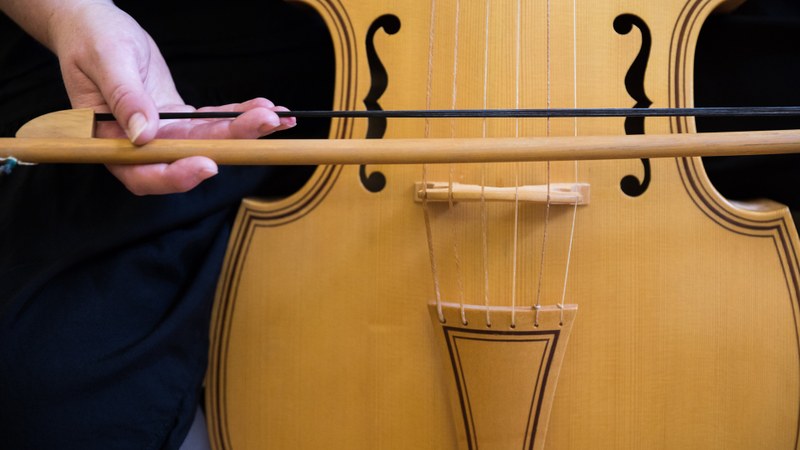
HSM_SCB_MA_Spezialisierte_Performance_Impro_Viola17_E_Kougionis.jpg

Composing music in the contemporary musical language was an essential skill for all well-qualified musicians until well into the 19th century. The improvisational approach played a decisive role in the programme and forms the basis of the master’s degree in Improvisation at the Schola Cantorum Basiliensis. Improvisation in its various forms is central to historical music practice. This is where almost all the skills acquired in early music flow together. In addition to contemporary descriptions and methods, traditional compositions are essential and often the only sources for the unscripted practice of certain epochs. Stylistic composition is therefore a central element of the degree programme, as are improvisation in the ensemble, questions of methodological teaching and performance-related aspects.


Factsheet

Degree
Master of Arts FHNW in Spezialisierter Musikalischer Performance, Studienrichtung Alte Musik Improvisation instrumental
Study mode
Full-time
Learning environment
Onsite
ECTS points
120
Duration
4 semesters
Language
level B1 in German is required
Staying abroad
Possible
Application fee
200 CHF
Semester fee
750 CHF (CH) | 1000 CHF (EU/EFTA) | 1250 CHF (Not-EU/Not-EFTA)

At a glance

  • Deepening knowledge of historical compositional theory, the thoroughbass and historical sources, and communicating in improvisation and composition in a reflective, creative and artistically convincing manner.
  • Developing the highest technical skills and personal creativity in order to express yourself in a stylistically differentiated manner in improvisational and compositional discourse.

Why study this?

Strengthening historically informed improvisation in the context of practical performance leads to new impulses in historical performance and creates a bridge to contemporary forms of improvised music. Graduates of this programme will be capable of presenting creative performances based on historical criteria. An intentional ‘side-effect’ of this programme is to establish a new, creative approach to existing ‘monuments’ of music literature, and to achieve an up-to-date, dynamic attitude towards our musical heritage.

This programme is aimed particularly at keyboard instrumentalists who are advanced not only technically but also in their ability to improvise according to historically informed criteria. Players of melody instruments may also be accepted on this programme, if they show a special talent and affinity for improvisation.

Graduates can make improvisation and composition in styles from the 16th to 18th centuries a centrepiece of their concert programmes and apply these in their work as a professional ensemble director/continuo player. In addition, for those working as lecturers, teachers and tutors, the historically-informed and methodically reflected approach to improvisation and composition in different Early Music styles, which they have acquired during their studies, will form a central component of their work as educators.


Structure and programme contents

Historically informed improvisation

Until well into the 19th century, among the many talents well-qualified musicians had to have was the ability to perform in the musical idiom of the time. This also formed an essential part of the improvisational training they received.

In addition to contemporary accounts and methods, the compositions which have been passed down through the centuries constitute important, and often the only, sources for unwritten musical practices of certain eras. Consequently, stylistically-informed composition is a core part of this study programme.

This specialized Master’s programme also focuses on improvisation within an ensemble, as well as issues pertaining to the sharing of methodological expertise and performance practice (clarity, sound aesthetics, contact with the public, stage presence).

Improvisation in all its variants – for keyboard players, practically all forms of solo repertoire; for players of melody instruments particularly ornamentation, diminution, variations and cadences – is a central element of historical performance practice.  Ideally, this is where all the specific knowledge and competence gained in the field of Early Music flows together to create an exciting realm of ‘composition in performance’. The Schola Cantorum Basiliensis (SCB) offers a unique combination of courses in practical improvisation, history, and historical composition techniques, which have been developed and refined over the course of its degree programmes.

The aim of this programme is to provide students with the ability to improvise with a high degree of stylistic differentiation, as well as attaining knowledge of historic composition techniques and thoroughbass, advanced instrument proficiency, and individual musical creativity.

Modules and regulations

The BA and MA degree programmes at the Basel Academy of Music are based on modules.

The legally binding structure provides an initial guide to the content and weighting of the subjects on the degree programme.
The detailed content and modalities of the individual subjects can be found in the module descriptions.
The study regulations come into force together with the study and examination regulations of the Basel Academy of Music FHNW and form the legal framework.

Structure

Structure MA Specialised Music Performance Early Music instrumental improvisation in German

Module descriptions

Below please find the link with all the information on the module descriptions of several FHNW schools.

  • Switch the language settings to English.
  • Filter by semester, Hochschule für Musik Basel FHNW, the desired degree programme or other criteria to display the relevant module information.
  • Use the PDF button to call up a document from each overview and save it for yourself.
  • Course registrations are made via the intranet.

Module descriptions

Study Regulations

Study Course Regulations MA Specialised Music Performance Early Music instrumental improvisation in German


Lecturers

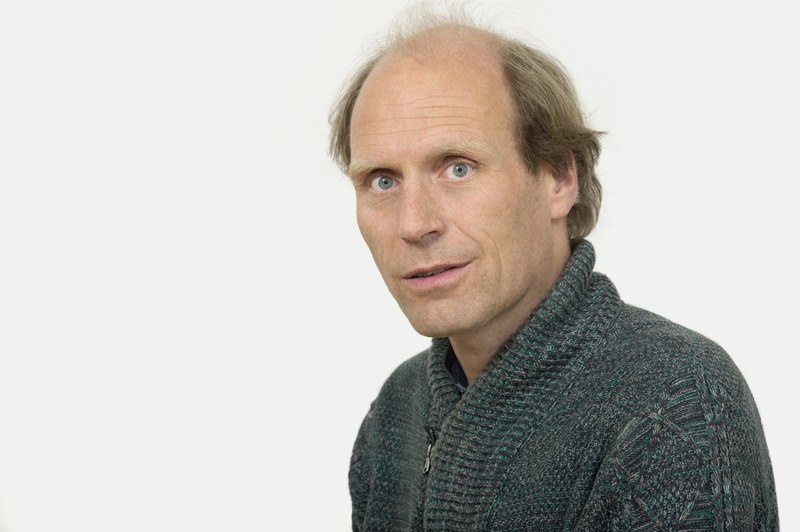
Dirk Börner

teaser_dirk-boerner-010h.jpg
More details

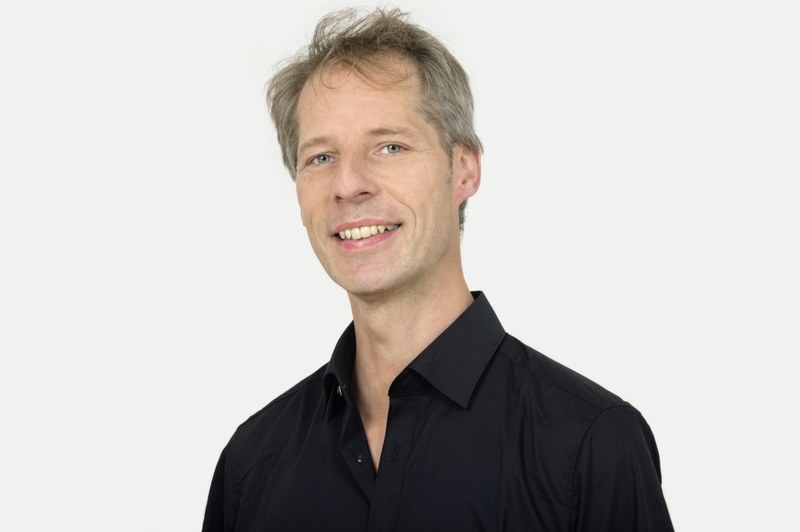
Emmanuel Le Divellec

teaser_emmanuel-le-divellec-055h.jpg
More details

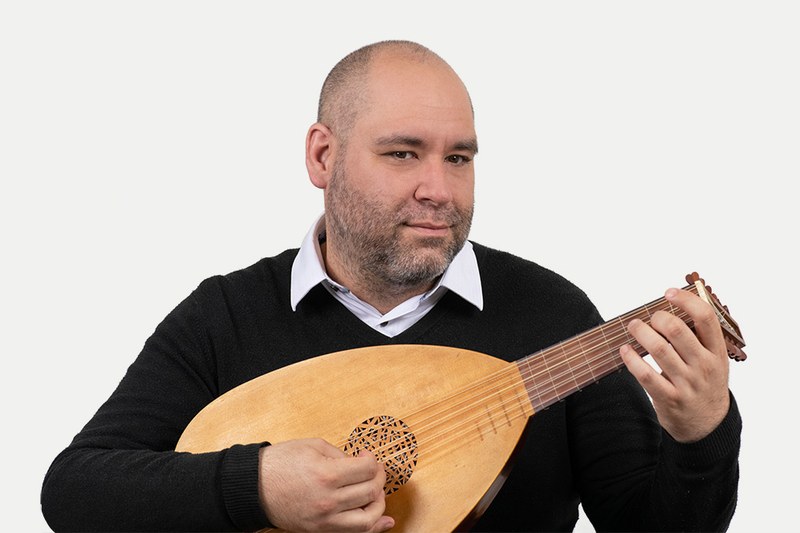
Sven Schwannberger

teaser_sven-schwannberger.jpg
More details

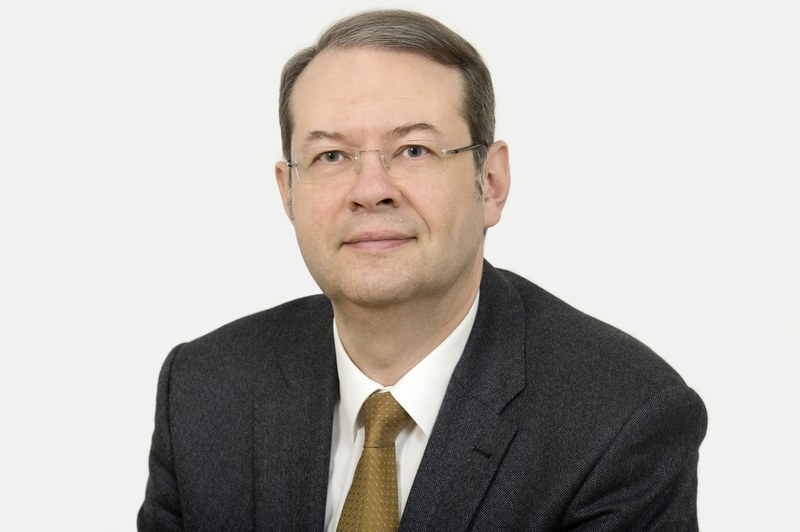
Markus Schwenkreis

teaser_markus-schwenkreis-010h.jpg
More details

Schola Cantorum Basiliensis

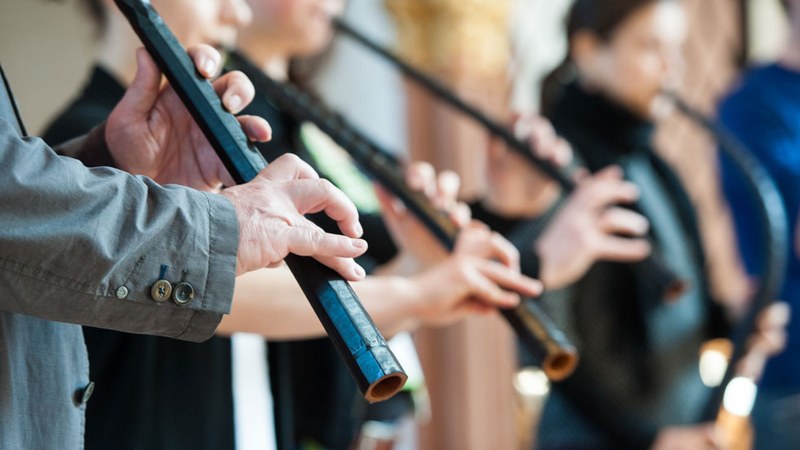
HSM_SCB_Zinken_Haende18_S_Drescher.jpg
All Lecturers

Requirements, admission, entrance exam

To be admitted to the Master’s programme, applicants must have passed the admission procedure. It breaks down as follows:

  • verification of the admission criteria
  • submission of all necessary registration documents in time
  • passing the entrance exam
  • a free place at the Academy was offered to the applicant (limited places of admission)

Admission shall be granted for the academic year to which the entrance exam applies to.

We expect students to have good German language skills at the beginning of the studies. Students who are not German native speakers must present at least a B1 German language certificate (according to the Common European Framework of Reference for Languages (CEFR)) at the beginning of the studies.

Admission Criteria

To be admitted to the Master’s programme, applicants must hold a Bachelor degree in Music/Music and Movement or an equivalent qualification.

Applicants who have failed any part of their Bachelor degree programme may be provisionally admitted to the Master’s programme under the condition that they successfully resit the relevant exam(s) by the end of the first MA semester. In order to be accepted for study, enough billable ECTS credit points must be available to fulfil all requirements of the diploma programme. For the Master's degree the minimum is 30 ECTS credit points. Applicants must declare any ECTS credits they have acquired from a previous course of study that they had failed to complete.

The admission procedure requires applicants pass an entrance exam. It breaks down as follows:

  1. Verification that the applicant meets all formal admission criteria
  2. Admission to the entrance exam
  3. Entrance exam
  4. Decision on admission.

Admission shall be granted for the academic year to which the entrance exam applies. This test may be retaken no more than once per degree programme/major, but no earlier than the next official entrance exam date.

Places on the degree programme are limited; a quota is set for first-year admissions. Based on the framework regulations governing student intake restrictions for Bachelor and Master’s degree programmes at the University of Applied Sciences and Arts (FHNW), the FHNW Academy of Music shall make its final selection based on the level and comparative ranking of the applicants' examination results.

For further information on the admission criteria, please see the Study Course Regulations MA Specialised Music Performance Early Music instrumental improvisation in German.

General Registration ProcedureAll about Studying in Basel

Entrance exam

The entrance exam is individual for each study programme direction.

Dates

Registration
You may apply from 15 December until 31 January.
The following documents must be handed in with your registration:

  • A curriculum Vitae incl. motivational letter
  • school leaving qualification (Matura, Abitur, Baccalauréat, High School-Diploma)
  • Bachelor Diploma
  • Second Master students: Master Diploma

On-site
The on-site auditions will take place between mid-March and mid-April. The exact dates may be seen here in the beginning of January.

Announcement of the results
The results of the on-site entrance exam will be communicated by email in the beginning of May.

Procedure

The entrance exams consist of an on-site audition.

Persons unable to take an on-site assessment for visa, financial or environmental (long distance travel) reasons may submit a request for an online entrance assessment (video presentation and live interview). This request must be sent to scb.hsm@fhnw.ch at the same time as the registration (by 31 January), stating the reasons, and must then be approved by the management.

On-site audition

List of works for the entrance exam on-site

Please also refer to the document Eignungsabklärung.

Audition plus interview
The tasks of the exam can come from the following fields:

  1. task with 3 days preparation time
    Improvisation of a fugue or a ricercare on a given theme. The theme will be sent to the candidate electronically 3 days before the examination. As a complementary prima vista task, a modulating prelude or toccata is to be played before the fugue or ricercare. The initial key or mode will be announced immediately before the exam. Candidates for melody instruments or voice can choose instead between ornamentation/diminution of a madrigal or a slow aria.
  2. task with twenty minutes preparation time
    Performance of a partimento bass
  3. possible prima vista tasks (no preparation time)
    Variations on an ostinato bass, improvisation of one or more suites of own choice on a given bass, improvisation of a chorale prelude on a given chorale, improvisation of a fughette or an invention on a given theme, musical performance of a given affect.
  4. Composition
    Please prepare an audition of a self-composed solo piece for your own instrument, no longer than 4' and bring the score in quadruplicate.

The short interview about the study objectives and content, previous education, career goals, preferred lecturers, etc.will follow the audition.

The general section of the entrance exam (theory) and proof of proficiency on a keyboard instrument take place on the same day, usually before or after the on-site audition for the main subject (duration: 20 min.).

  • sing and identify intervals played on the harpsichord (closed and open position)
  • active singing of intervals above or below a given pitch
  • sing and identify seventh chords (7, 5/6, 3/4/6, 2/4/6)
  • Dictation: sing and notate a two-voice setting (soprano and bass)
  • identify the chords (preferably figured bass; modern harmony also acceptable)
  • Improvisation: sing a continuation of the dictated melody
  • Sight-sing a melody of medium difficulty from the 17th or 18th century, notated in treble or bass clef
  • Performance of a prepared, short piece of your choice on the harpsichord (not required for those with major keyboard or plucked instruments)
  • Tonality and mode issues

Further information can be found here.


Organisational matters

Quicklinks
  • Welcome: A brief overview
  • Studying in Switzerland
  • Tuition fees & Financing
  • Scholarship
  • Module descriptions
Files and Regulations
  • Dates Entrance Exam on Site
  • List of works for Entrance Exam
  • Study Regulations
  • Semester dates

Advising and information events

Contact
Student Administration Office Schola Cantorum Basiliensis

Student Administration Office Schola Cantorum Basiliensis

Phone
061 264 57 42 (Direct)
E-Mail
scb.hsm@fhnw.ch
C. Federico Sepúlveda

Prof. C. Federico Sepúlveda

Member Management Board Schola Cantorum Basiliensis, Head of Programmes MA in Music Performance, Specialised Masters Improvisation and Thoroughbass, MAS AVES, Scholarships
Phone
+41 61 261 57 57
E-Mail
federico.sepulveda@fhnw.ch

Information events

Loading...


Registration

The next registration window is open from 15th December to 31th January.

Basel Academy of Music FHNW University of Applied Sciences and Arts Northwestern Switzerland

  • About the School
    • HSM Basel
    • Klassik
    • Schola Cantorum Basiliensis
    • Jazz
    • Degree Programmes
    • Continuing Education
    • Research
  • Social Media
    • YouTube
    • Instagram
    • Veranstaltungskalender
  • About FHNW
    • Organisation
    • Schools
    • Locations
    • FHNW Library
    • Media Relations
  • Support
    • IT Support
    • Inside FHNW
    • Webmail
Logo FHNW - 20 Years
Logo Swiss Universities
Logo European University Association
© University of Applied Sciences and Arts Northwestern Switzerland (FHNW)
  • Data Protection
  • Imprint
  • Accessibility
  • DE
  • EN