
Dr Yvonne Volkart, Head of Research at the Institute for Art, Gender and Nature (IAGN) at the HGK Basel, will give a talk on plant-based forms of perception at the ‘Ecological Translation’ symposium on 28–29 April 2026 at the Goethe-Institut in Athens.
Dr Yvonne Volkart, Head of Research at the Institute Art Gender Nature (IAGN) at the HGK Basel, will speak at the ‘Ecological Translation’ symposium, taking place on 28–29 April 2026 at the Goethe-Institut in Athens, on plant-based forms of perception and the possibilities offered by the artistic and aesthetic appropriation of VR technologies in this field.
In her publication ‘Technologies of Care. From Sensing Technologies to an Aesthetics of Attention in a More-than-Human World’ (2023), Dr Yvonne Volkart argues that, in order to overcome our prevailing system of extractivism and contribute to the collective shaping of a different world, we must develop technologies of relationship with the ecological, and that art can play a decisive role in this.
By ‘technologies’, she means ‘technologically’ based techniques, but also, more generally, aesthetic practices of attention to the non-human world, artistic methods that help to sharpen our sensitivity to the non-human and ‘our’ human dependence on it. Drawing on Natasha Myers, Yvonne Volkart speaks of ‘becoming an antenna’ and of reclaiming this ability, for in the course of capitalist history these modes of perception have been stolen from us.
In her current project ‘Plants_Intelligence. Learning Like a Plant’, funded by the Swiss National Science Foundation (SNSF), Yvonne Volkart has shifted her focus from artistic technologies of attention to the senses/technologies of plants: according to Emmanuele Coccia, plants – particularly flowers – are, by definition, antennae. How do plants exist in the world; how do they calculate and act, decide and behave, grow and expand? Which technologies and methods make the ways in which plants perceive the world tangible? Can virtual reality technologies enable us to perceive the world as a plant does?
Drawing on two different virtual reality projects by the artist and researcher Rasa Smite, Yvonne Volkart addresses these questions as part of the ‘Ecological Translation’ symposium and explores the possibilities that the artistic and aesthetic appropriation of VR technologies might open up.
The interdisciplinary symposium “Ecological Translation”, taking place on 28–29 April 2026 at the Goethe-Institut Athens with an accompanying exhibition running from 28 April to 30 May 2026, brings together experts from the fields of law, science, technology, politics and art to discuss the implications of digital nature conservation strategies. No single discipline can tackle the complexity of climate change on its own.
‘Ecological Translation’ aims to raise public awareness of the opportunities and risks arising from new technological and scientific approaches to climate change, and to promote understanding of these issues. The term ‘Ecological Translation’ refers both to the imaginary possibility of translation between humans and non-human life, and to the concept of ‘ecology’, which arises from the correspondence between different disciplinary conceptions of nature and humanity’s place within it.
Contact
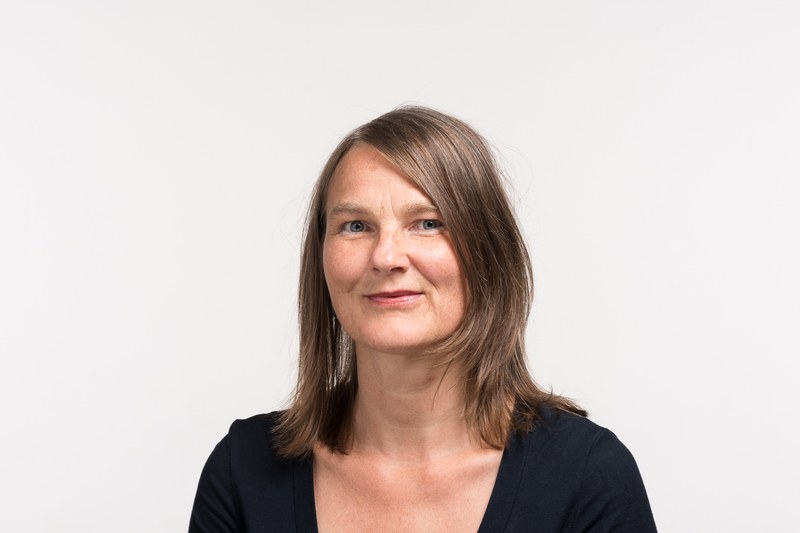
Dr. Yvonne Volkart
- Phone
- +41 61 228 40 77 (Central office)
- yvonne.volkart@fhnw.ch