Skip to main contentSkip to search barSkip to navigationSkip to footer
Logo of the University of Applied Sciences and Arts Northwestern Switzerland
  • DE
  • EN
  • Home
  • International

Ten Schools One Goal

The FHNW comprises 10 schools with different specializations. Select a school to see its specific courses, study programmes and information.

Applied Psychology

Architecture, Construction and Geomatics

Art and Design

Music

Computer Science

Life Sciences

School of Education

Social Work

Engineering and Environment

Business

  • Degree programmes

    • All degree programmes
    • BA Music
    • BA/MA Music and Movement & Educational Music
    • MA Performance
    • MA Specialised Performance
    • MA Music Pedagogy
    • MA Composition/Music Theory
    • MA Music and Scene in Transformation
    • PreCollege
    • Info events
  • All about studying

    • Admission & Entrance Exam
    • Study internationally
  • Continuing education

    • All continuing educations
    • Music Pedagogy
    • Info events
  • Research

    • Research fields
    • Informations for students/PhD
    • Research events
  • Research Klassik

    • Communication Human & Machine
    • Music Philosophy
    • Music Pedagogy
    • Performing Sources
    • Sounding Futures
  • Research Schola Cantorum Basiliensis

    • Historical Performance Practice
    • Organology
    • Publications Schola Cantorum Basiliensis
    • Symposia and study days
  • Updates and insights

    • News and stories
  • Events

    • Concerts and events
    • Info days
  • Media

  • About the Basel Academy of Music

    • Director's board
    • Teaching staff
    • People directory
    • Event calendar
    • Contact
  • Institutes

    • Klassik
    • Schola Cantorum Basiliensis
    • Jazz
  • Campus and infrastructure

Logo of the University of Applied Sciences and Arts Northwestern Switzerland
  • About the School
    • HSM Basel
    • Klassik
    • Schola Cantorum Basiliensis
    • Jazz
    • Degree Programmes
    • Continuing Education
    • Research
  • Social Media
    • YouTube
    • Instagram
    • Veranstaltungskalender
  • About FHNW
    • Organisation
    • Schools
    • Locations
    • FHNW Library
    • Media Relations
  • Support
    • IT Support
    • Inside FHNW
    • Webmail
  • Data Protection
  • Imprint
  • Accessibility
  • Degree programmes

    • All degree programmes
    • BA Music
    • BA/MA Music and Movement & Educational Music
    • MA Performance
    • MA Specialised Performance
    • MA Music Pedagogy
    • MA Composition/Music Theory
    • MA Music and Scene in Transformation
    • PreCollege
    • Info events
  • All about studying

    • Admission & Entrance Exam
    • Study internationally
  • Continuing education

    • All continuing educations
    • Music Pedagogy
    • Info events
  • Research

    • Research fields
    • Informations for students/PhD
    • Research events
  • Research Klassik

    • Communication Human & Machine
    • Music Philosophy
    • Music Pedagogy
    • Performing Sources
    • Sounding Futures
  • Research Schola Cantorum Basiliensis

    • Historical Performance Practice
    • Organology
    • Publications Schola Cantorum Basiliensis
    • Symposia and study days
  • Updates and insights

    • News and stories
  • Events

    • Concerts and events
    • Info days
  • Media

  • About the Basel Academy of Music

    • Director's board
    • Teaching staff
    • People directory
    • Event calendar
    • Contact
  • Institutes

    • Klassik
    • Schola Cantorum Basiliensis
    • Jazz
  • Campus and infrastructure

Type a search term and search continuing education,degree programmes, events, documents and other content.

MA Music Performance | Jazz Producing/Performance, Basel Academy of Music

Basel Academy of Music


  • Music
  • Degree programmes
  • Studying Music
  • All degree programmes
All degree programmes
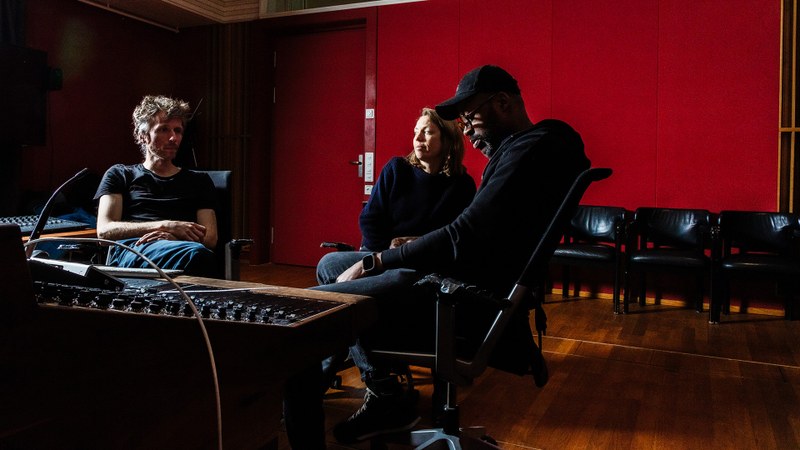
HSM_Jazz_MA_Producing_Performance23_P_Grabowicz.jpg
HSM_Jazz_MA_Producing_Performance2_P_Grabowicz.jpg

Shape your artistic profile – as a performer, producer, or composer. This program gives you the freedom and resources to realize your musical vision in an international, diverse, and inspiring community. Through solid craft, creative originality, and critical reflection, you will develop your own musical language and contribute to the future of Jazz. Our outstanding faculty guide you as artistic mentors.


Factsheet

Degree
Master of Arts FHNW in Music Performance, Studienrichtung Jazz Producing/Performance
Study mode
Full-time
Learning environment
Onsite
ECTS points
120
Next start
14.9.2026
Duration
4 semesters
Language
German, English
Staying abroad
Possible
Application fee
200 CHF
Semester fee
750 CHF (CH) | 1000 CHF (EU/EFTA) | 1250 CHF (Not-EU/Not-EFTA)

At a glance

  • Flexible, project-oriented program structure with individual focus areas in performance, composition, and production
  • Coaching from experienced, renowned faculty
  • Work in state-of-the-art studios and collaborate with other disciplines
  • Regular inspiring projects, masterclasses, and collaborations
  • Wide range of electives across all institutes of the Hochschule für Musik Basel

Why study this?

Developing a well-rounded and versatile artistic identity requires an ability to work effectively and constructively with other musicians, writers, arrangers and other creatives in a variety of different musical settings and styles. A thorough musical, technical and cultural knowledge makes it possible to quickly grasp the set-up and running of the entire production process, whether live or studio-based. It also provides artists with the ability to turn their artistic/creative ideas into music and do so in a technologically complex environment.

Students also increase their awareness of how the cultural context informs the creative  process in music, acquire the ability to develop a personal vision of current and new music, and accumulate comprehensive practical and theoretical knowledge of various traditionally defined music styles.

Graduates of this program actively shape today’s music scene. As independent artists, they contribute to diverse contexts, develop their own projects and realize them professionally. The degree also opens the path to further studies.

This programme is aimed at advanced instrumentalists, vocalists, composers, or producers who hold a Bachelor’s degree in music, an equivalent qualification, or equivalent professional experience.

Programme goal

Thanks to its open, modular structure and flexible weighting of study units, students define their individual  goals and work in a project-oriented way. At the core of the programme is a main subject combination in three areas:

  • Performance
  • Composition
  • Production

One of these is chosen as the primary focus, while the other two serve as complementary areas that broaden and integrate the artistic development.
Artistic Research connects artistic practice with reflective inquiry. Students develop and examine their own artistic questions, document their process and place their work in professional and societal contexts.
The programme is complemented by electives and ensemble participation.
For graduation, students present a portfolio of compositions, professional productions or a live performance.
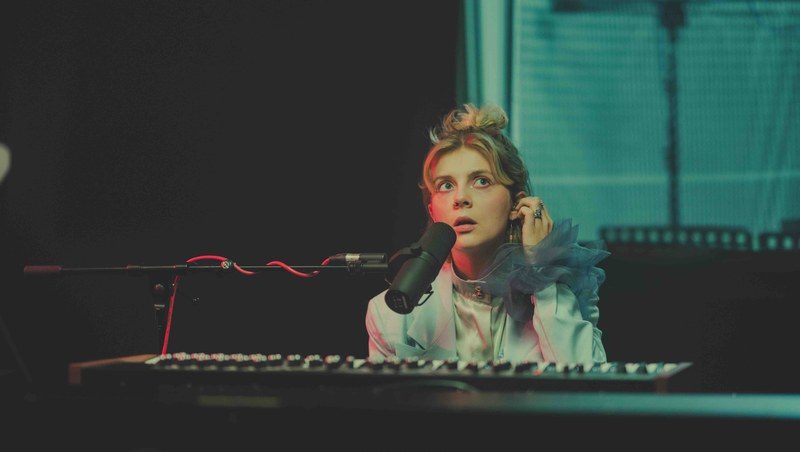
A stimulating environment that provided me with the space to develop as an artist.
Lorraine Dinkel, alumna

Structure and programme contents

Core subject: concept and content

The programs core subject consists a combination of the three areas Instrument or Vocal, Composition and Music Production. The profile "allrounder" is open to choose any of these three areas for the focal point (major), while the other two complement this as combination subjects I + II (minor). The «performer» profile sets a deeper focus on instrument or vocal while composition and production are less imperative.

Major

Minor I

Minor II

Performance

Composition

Music Production

Composition

Music Production

Performance

Music Production

Performance

Composition

Profile

Core subject combination

Duration*

"performer"

Major Instrument / Vocal

60’


Minor Composition

20’


Minor Music Production

20’

"composer"

Major Composition

50’


Minor Music Production

20’


Minor Instrument / Vocal

30’

"producer"

Major Music Production

60'


Minor Composition

30'


Minor Instrument / Vocal

30'

*The time placement and distribution of the teaching units can be adjust each semester by a study consultation. A total of 120 minutes is available for the profile «producer» and 100 minutes for the profile «performer».

Students develop an independent artistic vision and learn how to shape, realise and document it in diverse musical contexts.

Through the development of their own artistic projects and their continuous reflection within the framework of artistic research, students acquire essential professional competencies — ranging from artistic conception and musical and technological realisation to collaboration, project organisation and production in the studio or on stage.

Graduates move confidently and reflectively within the landscape of contemporary music, develop a distinctive artistic voice and contribute as versatile and competent artists in the field of jazz and related music.

Modules and regulations

The BA and MA degree programmes at the Basel Academy of Music are based on modules.

The legally binding structure provides an initial guide to the content and weighting of the subjects on the degree programme.
The detailed content and modalities of the individual subjects can be found in the module descriptions.
The study regulations come into force together with the study and examination regulations of the Basel Academy of Music FHNW and form the legal framework.

Structure

Structure MA Musical Performance Jazz Producing/Performance in German

Module descriptions

Below please find the link with all the information on the module descriptions of several FHNW universities.

  • Switch the language settings to English.
  • Filter by semester, Hochschule für Musik Basel FHNW, the desired degree programme or other criteria to display the relevant module information.
  • Use the PDF button to call up a document from each overview and save it for yourself.
  • Course registrations are made via the intranet.

Module descriptions

Study Regulations

Study Course Regulations MA Music Performance Jazz Producing/Performance in German


Lecturers

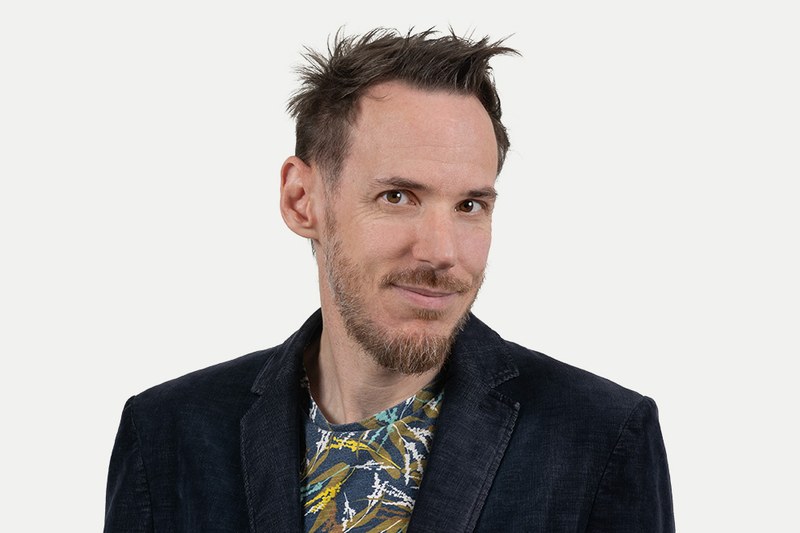
Daniel Dettwiler

teaser_daniel-dettwiler.jpg
More details

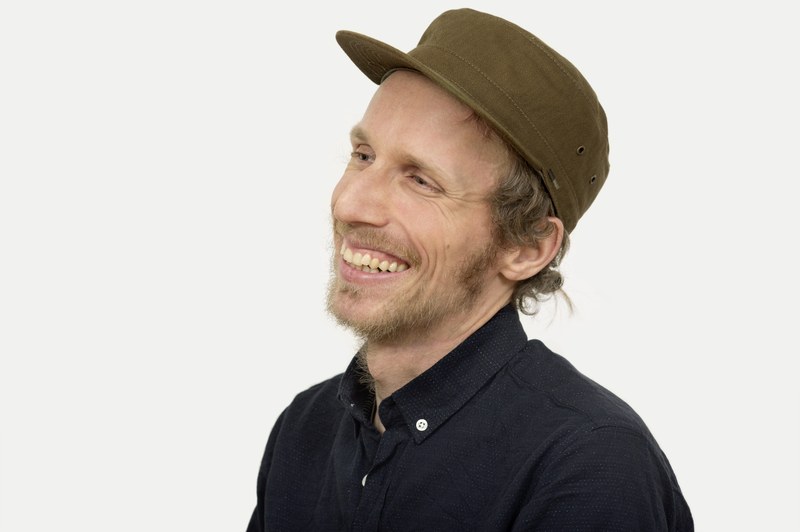
Patrik Zosso

teaser_patrik-zosso-023h.jpg
More details

Institut Jazz

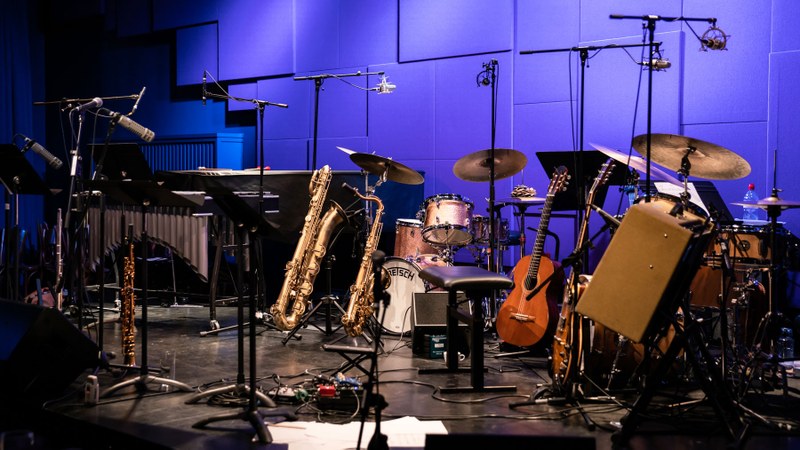
HSM_Jazz_Instrumente_Club16_S_Drescher.jpg
More details

Requirements, admission, entrance exam

Applicants are eligible for the MA in Music Performance Jazz (Producing/Performance) if they hold a Bachelor’s degree in Music (Jazz profile) or an equivalent qualification, have passed the entrance exam, and have been awarded a study place (limited number).
For full admission criteria, please consult the Study Course Regulations of MA Music Performance Jazz Producing/Performance (in German).

Applicants who submit complete registration materials on time will be invited to the entrance exam.

Good basic knowledge of English is required at the start of the program. These skills will be assessed during the admission process.

General Registration ProcedureAll about Studying in Basel


Entrance exam

The entrance exam is individual for each study programme direction.

Please note:
Applicants apply for one major and one complementary subject. The second complementary subject, which may be taken individually or in a group, is not part of the entrance exam and does not require registration materials.

Focus on musical performance

Guideline for the admission procedure
The admission procedure of the Basel Academy of Music for the Master of Arts in Musical Performance, Producing/Performance Jazz with focus on Performance takes place in several phases:

Please note: If you choose main (focus) subject Performance, you choose between Composition and Production as your complementary subject. Please state your main (focus) and complementary subject clearly in your motivation letter when applying and upload the requested materials for both the main and complementary subject before 15 February.

In exceptional cases, you may be allowed to study two complementary subjects, both Composition and Production, if your main (focus) subject is Performance. A separate admission exam will be necessary if you want to audition for a second complementary subject. This additional audition will take place after the second round of the regular admission procedure, upon request. No material needs to be submitted for a possible additional exam at the time of applying.

First Round: Dossier and letter of motivation
Video dossier
An audiovisual (image/sound) recording must be submitted. At least three pieces of the candidate's current musical work are presented with an ensemble and/or as a soloist. We are interested in getting to know the applicant’s artistic identity, which can be rendered through musical interaction and expression as well as through personal compositions and arrangements by the candidate. The selection of the recorded music should document both the interpretative and improvisational skills and the applicant’s familiarity and affinity with jazz and/or with jazz related musical genres.

Please note:

  • All tracks should be unedited full takes
  • We recommend using a stereo microphone and placing it properly. If no stereo microphone is available, the microphone of a camera, computer or smartphone can also be used.
  • The video should be filmed in a static perspective, hands and face should be visible.
  • Public recordings may be submitted, provided that they meet the above criteria and have not been edited.
  • The recordings should be recent, in no case older than one year.
  • The individual pieces can be recorded separately.

Dossier Complementary Subject (Composition or Production)

Complementary Subject Composition
Three compositions from the candidate's current compositional work must be submitted:

  • Audio files in MP3 format
  • Corresponding scores (PDF)

Complementary Subject Production
A sound file of a recording/mix (studio production) and/or a film/video soundtrack or a remix/sound design produced by the candidate, submitted with a short write-up (PDF) documenting the production method.

Upload and transmission

  • Please upload to either Vimeo (https://vimeo.com) or YouTube (https://youtube.com).
  • Access to the video must be granted until the end of June.
  • Please submit the list of video links (instrumental/vocal performances) together with the registration no later than 15 February.

Letter of motivation
Please document your previous general and musical education in the letter of motivation. In addition, your motivation for and expectations of this Master degree study programme should be outlined.

Master Project Plan
During this master's program, students develop their individual artistic profile. In doing so, they commit to exploring and researching topics connected to their artistic development and documenting this process. Students look to contextualise their own work with the work of others and will share the artistic outcome. At the end of their studies, they will present the results of this exploration in a master thesis, documenting the artistic process and research. They will also publicly present their master project in a concert/presentation.

The Master Project Plan needs to be submitted with the registration. In it, the candidate outlines her/his artistic interests and sketches a personal approach to artistic development and artistic research. During the course of study, research questions and the methodological approach can and may evolve. When sketching the areas of your interest in the master project plan, please include aspects of professional development as well, outlining your plans to integrate your work in the professional field.

The following items should be addressed in the Master Project Plan:

  • Musical/artistic interests and questions
  • Contextualisation of your own artistic work with that of other musicians and artists
  • Aims and implementation of your master studies
  • Plans for professional integration during and after studies

Pre-selection
Based on the submitted dossier (video recordings, letter of motivation, Master Project Plan), a committee decides on the admission to the second round that constitutes of a live audition. Candidates who are admitted to the second round will be notified about the date of the live audition.

Second Round: Audition (on-site or online*)

Ensemble and/or solo performance (duration: 20 minutes)

The performance can be designed freely. In addition to an individual artistic profile, skills in improvisation are considered important. The repertoire may consist of jazz standards as well as original compositions and/or arrangements. The repertoire may include pieces previously submitted for the first round. In the performance, a connection to the artistic interest outlined in the Master Project Plan should be apparent. Please also prepare a repertoire list to be submitted to the committee. Ensemble performances can be completed with the candidate's own rhythm section (which is always the case for online auditions) or with a rhythm section organised by the school. If playing with a rhythm section (piano, bass, drums) organised by the school, the repertoire must be selected in such a way that it can be accompanied based on the charts (sheet music) provided by the candidate without prior rehearsal.

Complementary subject

At the request of the committee, audition (for complementary subject Composition: two to three pieces are to be prepared) or presentation (for complementary subject Production: short presentation/audition of one to two personal productions).

Accompaniment (for complementary subject Performance): The audition can be completed with the student's own rhythm section (always the case for online auditions) or with a rhythm section organised by the academy. If the audition is performed with a rhythm section (piano, bass, drums) organised by the academy, the repertoire must be selected in such a way that it can be accompanied without prior rehearsal on the basis of the scores brought along by the candidate.

Master Project Plan: Hearing/Q&A with the committee (duration: 10 minutes)
Following the audition, the Master Project Plan will be discussed. The candidate briefly presents the intended study plans and aims, and the committee then asks questions.

*Audition mode
The second round (live performance=audition) takes place in presence on site. Upon request, the audition can take place in an online mode. The request has to be made upon the registration. Once granted, the choice is binding. Without a specific request, the audition will be scheduled to take place on site.

Specific requirements for the online audition:

  • If possible, the online audition should be completed with an independently organised ensemble (at least in duo).
  • Care must be taken to ensure the best possible conditions for good transmission quality of the stream, for which we use the ZOOM platform. We recommend registering on http://zoom.us beforehand and familiarising yourself with the platform.

Guidelines for the admission procedure (PDF)

Focus on composition

Guideline for the admission procedure
The admission procedure of the Academy of Music/FHNW for the Master of Arts in Musical Performance, Producing/Performance Jazz with focus on Composition takes place in several phases:

Please note: You choose one main subject (focus subject) and one complementary subject (combination subject). If you choose main subject (focus subject) Composition, you choose between Performance and Production as your complementary subject. Please state your main (focus) and complementary subject clearly in your motivation letter when applying and upload the requested materials for both the main and complementary subject before 15 February.

In exceptional cases, you may be allowed to study two complementary subjects, both Performance and Production, if your main subject (focus subject) is Composition. A separate admission exam will be necessary if you want to audition for a second complementary subject. This additional audition will take place after the second round of the regular admission procedure, upon request. No material needs to be submitted for a possible additional exam at the time of applying.

First Round: Dossier and letter of motivation
Composition Dossier
Three compositions from the candidate's current compositional work must be submitted:

  • Audio files in MP3 format
  • Corresponding scores (PDF)

Dossier Complementary Subject (Performance or Production)

Complementary Subject Performance
An audiovisual (image/sound) recording must be submitted. At least three pieces of the candidate's current musical work are presented with an ensemble and/or as a soloist. We are interested in getting to know the applicant’s artistic identity, which can be rendered through musical interaction and expression as well as through personal compositions and arrangements by the candidate. The selection of the recorded music should document both the interpretative and improvisational skills and the applicant’s familiarity and affinity with jazz and/or with jazz related musical genres.

Complementary subject Production
A sound file of a recording/mix (studio production) and/or a film/video soundtrack or a remix/sound design produced by the candidate, submitted with a short write-up (PDF) documenting the production method.

Upload and transmission

  • Please upload to either Vimeo (https://vimeo.com) or YouTube (https://youtube.com).
  • Access to the video must be granted until the end of June.
  • The composition dossier is labeled with the candidate's name and can be saved under "Work list/Work" in the registration tool.
  • Please submit the list of video links (instrumental/vocal performances) together with the registration no later than 15 February.

Letter of motivation
Please document your previous general and musical education in the letter of motivation. In addition, your motivation for and expectations of this Master degree study programme should be outlined.

Master Project Plan
During this master's programme, students develop their individual artistic profile. In doing so, they commit to exploring and researching topics connected to their artistic development and documenting this process. Students look to contextualise their own work with the work of others and will share the artistic outcome. At the end of their studies, they will present the results of this exploration in a master thesis, documenting the artistic process and research. They will also publicly present their master project in a concert/presentation.

The Master Project Plan needs to be submitted with the registration. In it, the candidate outlines her/his artistic interests and sketches a personal approach to artistic development and artistic research. During the course of study, research questions and the methodological approach can and may evolve.
When sketching the areas of your interest in the master project plan, please include aspects of professional development as well, outlining your plans to integrate your work in the professional field.

The following items should be addressed in the Master Project Plan:

  • Musical/artistic interests and questions
  • Contextualization of your own artistic work with that of other musicians and artists
  • Aims and implementation of your master studies
  • Plans for professional integration during and after studies

Pre-selection
Based on the submitted dossier (composition dossier, video recordings/production dossier, letter of motivation, Master Project Plan), a committee decides on the admission to the second round that constitutes of a live audition. Candidates who are admitted to the second round will be notified about the date of the live audition.

Second Round: Audition (on-site or online*)
Hearing composition (duration: 20 minutes)
Presentation of up to 4 notated original compositions with different instrumentations. Both recordings (audio files) and musical scores should be presented, supplemented by prepared explanations of the individual compositions (colloquium). One of the compositions must be written for the instrumentation of a "large ensemble" (at least sextet). The scores and audio samples must be submitted electronically at least 14 days prior the second round (live audition). The presentation may also include compositions that have already been submitted for pre-selection.
In the compositions presented, a connection to the artistic interest outlined in the Master Project Plan should be apparent.

Complementary subject
At the request of the committee, audition (for complementary subject Performance; two to three pieces are to be prepared) or presentation (for complementary subject production: short presentation/audition of one to two personal productions).

Accompaniment (for complementary subject Performance): The audition can be completed with the student's own rhythm section (always the case for online auditions) or with a rhythm section organised by the university. If the audition is performed with a rhythm section (piano, bass, drums) organised by the university, the repertoire must be selected in such a way that it can be accompanied without prior rehearsal on the basis of the scores brought along by the candidate.

Master Project Plan: Hearing/Q&A with the committee (duration: 10 minutes)
Following the audition, the Master Project Plan is discussed. The candidate briefly presents the intended study plans and aims, and the committee then asks questions.

*Audition mode
The second round (live performance=audition) takes place in presence on site. Upon request, the audition can take place in an online mode. The request has to be made upon the registration. Once granted, the choice is binding. Without a specific request, the audition will be scheduled to take place on site.

Specific requirements for the online audition:

  • If possible, the online audition should be completed with an independently organised ensemble (at least in duo).
  • Care must be taken to ensure the best possible conditions for good transmission quality of the stream, for which we use the ZOOM platform. We recommend registering on http://zoom.us beforehand and familiarising yourself with the platform.

Guidelines for the admission procedure (PDF)

Focus on music production

Guideline for the admission procedure
The admission procedure of the Academy of Music/FHNW for the Master of Arts in Musical Performance, Producing/Performance Jazz with focus on Production takes place in several phases:

Please note: You choose one main subject (focus subject) and one complementary subject (combination subject). If you choose main subject (focus subject) Production, you choose between Performance and Composition as your complementary subject. Please state your main (focus) and complementary subject clearly in your motivation letter when applying and upload the requested materials for both the main and complementary subject before 15 February.

In exceptional cases, you may be allowed to study two complementary subjects, both Performance and Composition, if your main subject (focus subject) is Production. A separate admission exam will be necessary if you want to audition for a second complementary subject. This additional audition will take place after the second round of the regular admission procedure, upon request. No material needs to be submitted for a possible additional exam at the time of applying.

First Round: Dossier and letter of motivation
Production dossier
A sound file of an independently produced recording/mix (studio production) and/or a film/video soundtrack or remix/sound design with a brief explanation of the production method (PDF) must be submitted.

Dossier Complementary Subject (Composition or Performance)

Complementary Subject Composition
Three compositions from the candidate's current compositional work must be submitted:

  • Audio files in MP3 format
  • Corresponding scores (PDF)

Complementary Subject Performance
An audiovisual (image/sound) recording must be submitted. At least three pieces of the candidate's current musical work are presented with an ensemble and/or as a soloist. We are interested in getting to know the applicant’s artistic identity, which can be rendered through musical interaction and expression as well as through personal compositions and arrangements by the candidate. The selection of the recorded music should document both the interpretative and improvisational skills and the applicant’s familiarity and affinity with jazz and/or with jazz related musical genres.

Upload and transmission

  • For the upload the platform Vimeo (https://vimeo.com) or YouTube (https://youtube.com) has to be chosen.
  • Access to video must be maintained through the end of June of the registration year.
  • The production dossier is labeled with the candidate's name and can be saved under "Work list/Work" in the registration tool.
  • The links to the videos (instrumental/vocal performances) will be submitted simultaneously with the registration no later than 15 February.

Letter of motivation
Please document your previous general and musical education in the letter of motivation. In addition, your motivation for and expectations of this Master degree study programme should be outlined.

Master Project Plan
During this master's programme, students develop their individual artistic profile. In doing so, they commit to exploring and researching topics connected to their artistic development and documenting this process. Students look to contextualize their own work with the work of others and will share the artistic outcome. At the end of their studies, they will present the results of this exploration in a master thesis, documenting the artistic process and research. They will also publicly present their master project in a concert/presentation.

The Master Project Plan needs to be submitted with the registration. In it, the candidate outlines her/his artistic interests and sketches a personal approach to artistic development and artistic research. During the course of study, research questions and the methodological approach can and may evolve. When sketching the areas of your interest in the master project plan, please include aspects of professional development as well, outlining your plans to integrate your work in the professional field.

The following items should be addressed in the Master Project Plan:

  • Musical/artistic interests and questions
  • Contextualization of your own artistic work with that of other musicians and artists
  • Aims and implementation of your master studies
  • Plans for professional integration during and after studies

Pre-selection
Based on the submitted dossier (production dossier, video recordings/composition dossier, letter of motivation, Master Project Plan), a committee decides on the admission to the second round that constitutes of a live audition. Candidates who are admitted to the second round will be notified about the date of the live audition.

Seccond Round: Audition (on-site or online*)
Hearing Production (Duration: 20 minutes)

  • Presentation of a recording/mix (studio production) and/or a film/video soundtrack or a remix/sound design on a common medium (sound files) that was realised independently. Subsequently, the candidate reports on the production method of the work. The presentation may include projects that were also submitted for pre-selection.
  • Basic knowledge in production on a platform of choice (Pro Tools, Ableton Live, Max/MSP or similar) will be demonstrated by the presentation of a self-produced piece showing the artistic profile

Complementary subject
At the request of the examination committee, audition (for complementary subject performance; two to three pieces are to be prepared) or presentation (for complementary subject composition; short presentation/audition of one to two compositions).

Accompaniment (for complementary subject Performance): The audition can be completed with the student's own rhythm section (always the case for online auditions) or with a rhythm section organised by the university. If the audition is performed with a rhythm section (piano, bass, drums) organised by the university, the repertoire must be selected in such a way that it can be accompanied without prior rehearsal on the basis of the scores brought along by the candidate.

Master Project Plan: Hearing/Q&A with the committee (duration: 10 minutes)
Following the presentations, the Master Project Plan is discussed. The candidates briefly present the intended study objective, and the commission asks questions.

*Audition mode
The second round (live performance=audition) takes place in presence on site. Upon request, the audition can take place in an online mode. The request has to be made upon the registration. Once granted, the choice is binding. Without a specific request, the audition will be scheduled to take place on site.

Specific requirements for the online audition:

  • If possible, the online audition should be completed with an independently organised ensemble (at least in duo).
  • Care must be taken to ensure the best possible conditions for good transmission quality of the stream, for which we use the ZOOM platform. We recommend registering on http://zoom.us beforehand and familiarising yourself with the platform.

Guidelines for the admission procedure (PDF)


Organisational matters

Quicklinks
  • Welcome: A brief overview
  • Studying in Switzerland
  • Tuition fees & Financing
  • Scholarship
  • Module descriptions
Files and Regulations
  • Dates Entrance Exam on Site
  • List of works for Entrance Exam
  • Regulations
  • Semester dates

Advising and information events

Contact
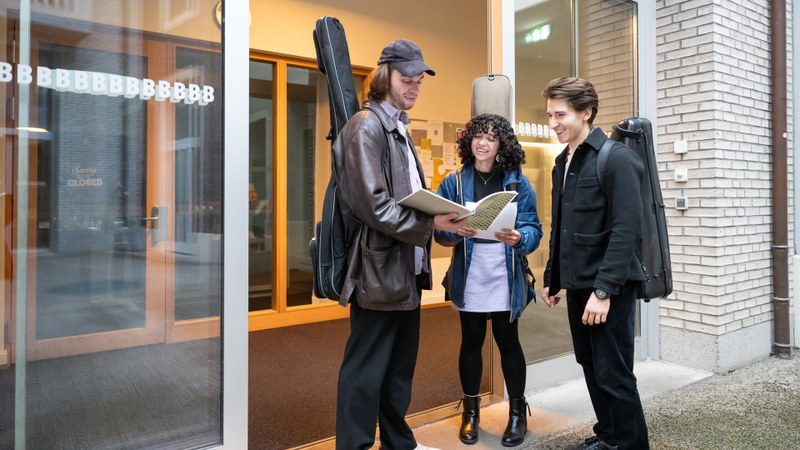
Student Administration Academy of Music, Jazz

Student Administration Academy of Music, Jazz

Phone
+41 61 333 13 13
E-Mail
jazz.hsm@fhnw.ch
Patrik Zosso

Prof. Patrik Zosso

Head of the Management Board Institut Jazz, Head of MA Musical Performance Producing/Performance
Phone
+41 61 333 13 13 (Central office)
E-Mail
patrik.zosso@fhnw.ch

Information events

Loading...


Registration

The registration window is open between 15th December and 15th February.

MA Music Performance | Jazz Producing/Performance

Date
14.9.2026
Duration
4 Semester
Place
Jazzcampus Basel
Register

Basel Academy of Music FHNW University of Applied Sciences and Arts Northwestern Switzerland

  • About the School
    • HSM Basel
    • Klassik
    • Schola Cantorum Basiliensis
    • Jazz
    • Degree Programmes
    • Continuing Education
    • Research
  • Social Media
    • YouTube
    • Instagram
    • Veranstaltungskalender
  • About FHNW
    • Organisation
    • Schools
    • Locations
    • FHNW Library
    • Media Relations
  • Support
    • IT Support
    • Inside FHNW
    • Webmail
Logo FHNW - 20 Years
Logo Swiss Universities
Logo European University Association
© University of Applied Sciences and Arts Northwestern Switzerland (FHNW)
  • Data Protection
  • Imprint
  • Accessibility
  • DE
  • EN