Skip to main contentSkip to search barSkip to navigationSkip to footer
Logo of the University of Applied Sciences and Arts Northwestern Switzerland
  • DE
  • EN

Ten Schools One Goal

The FHNW comprises 10 schools with different specializations. Select a school to see its specific courses, study programmes and information.

Applied Psychology

Architecture, Construction and Geomatics

Art and Design

Music

Computer Science

Life Sciences

School of Education

Social Work

Engineering and Environment

Business

  • Study offerings

    • All degree programmes
    • Undergraduate programmes
    • Graduate programmes
    • Information events
  • About degree programmes

    • Sports
  • Study internationally

    • Incoming students
    • Outgoing students
  • Support and legal matters

    • Advice and support
    • Grants and loans
    • Studying with disabilities
    • Regulations
  • Continuing education offerings

    • All continuing education programmes
    • MAS – Master of Advanced Studies
    • MBA – Master of Business Administration
    • CAS – Certificate of Advanced Studies
    • Information events
  • About continuing education

  • Strategic action fields

    • Future Health
    • New Work
    • Zero Emission
  • Research and services

    • Projects
  • Collaboration

  • International

    • International Network
    • ChallengeEU
    • Latin American Centre
    • International Offices
  • Study internationally

    • International degree programmes
    • Study abroad (outgoing)
    • Information for incoming students
    • Continuing education
  • News and stories

    • All news
  • Events

    • All events
    • Information events
    • Swiss Challenge entrepreneurs’ programme
  • Media

  • Profile and organisation

    • FHNW schools
    • Strategy
    • Facts and figures
    • Diversity
    • Sustainability
    • Alumni FHNW
    • Stiftung FHNW
    • People directory
  • Locations

    • Brugg-Windisch
    • Basel
    • Muttenz
    • Olten
  • Sports

Logo of the University of Applied Sciences and Arts Northwestern Switzerland
  • Offerings
    • Degree programmes
    • Continuing education
    • Research and services
  • About FHNW
    • Organisation
    • Schools
    • Locations
    • FHNW Library
    • Media relations
  • Support
    • IT support
    • Inside FHNW
    • Webmail
  • Social media
    • Facebook
    • Instagram
    • Bluesky
    • LinkedIn
    • YouTube
  • Data Protection
  • Imprint
  • Accessibility
  • Study offerings

    • All degree programmes
    • Undergraduate programmes
    • Graduate programmes
    • Information events
  • About degree programmes

    • Sports
  • Study internationally

    • Incoming students
    • Outgoing students
  • Support and legal matters

    • Advice and support
    • Grants and loans
    • Studying with disabilities
    • Regulations
  • Continuing education offerings

    • All continuing education programmes
    • MAS – Master of Advanced Studies
    • MBA – Master of Business Administration
    • CAS – Certificate of Advanced Studies
    • Information events
  • About continuing education

  • Strategic action fields

    • Future Health
    • New Work
    • Zero Emission
  • Research and services

    • Projects
  • Collaboration

  • International

    • International Network
    • ChallengeEU
    • Latin American Centre
    • International Offices
  • Study internationally

    • International degree programmes
    • Study abroad (outgoing)
    • Information for incoming students
    • Continuing education
  • News and stories

    • All news
  • Events

    • All events
    • Information events
    • Swiss Challenge entrepreneurs’ programme
  • Media

  • Profile and organisation

    • FHNW schools
    • Strategy
    • Facts and figures
    • Diversity
    • Sustainability
    • Alumni FHNW
    • Stiftung FHNW
    • People directory
  • Locations

    • Brugg-Windisch
    • Basel
    • Muttenz
    • Olten
  • Sports

Type a search term and search continuing education,degree programmes, events, documents and other content.

  • About FHNW
  • Profile and organisation
Profile and organisation

Diversity and equal opportunities,

The FHNW aims to ensure equal opportunities at all levels. By committing to a diversity-based study, continuing education and work environment, it is expressly in favour of embracing diversity and against discrimination, sexual harassment and bullying.

topimage-diversity.jpg

News – projects from the FHNW’s schools

includo

INCLUDO – we are all

The event series INCLUDO wants to create a space across all FHNW schools in which participants can discuss, learn and connect over diversity, awareness and social sustainability. Events are heald yearly, on all FHNW sites.
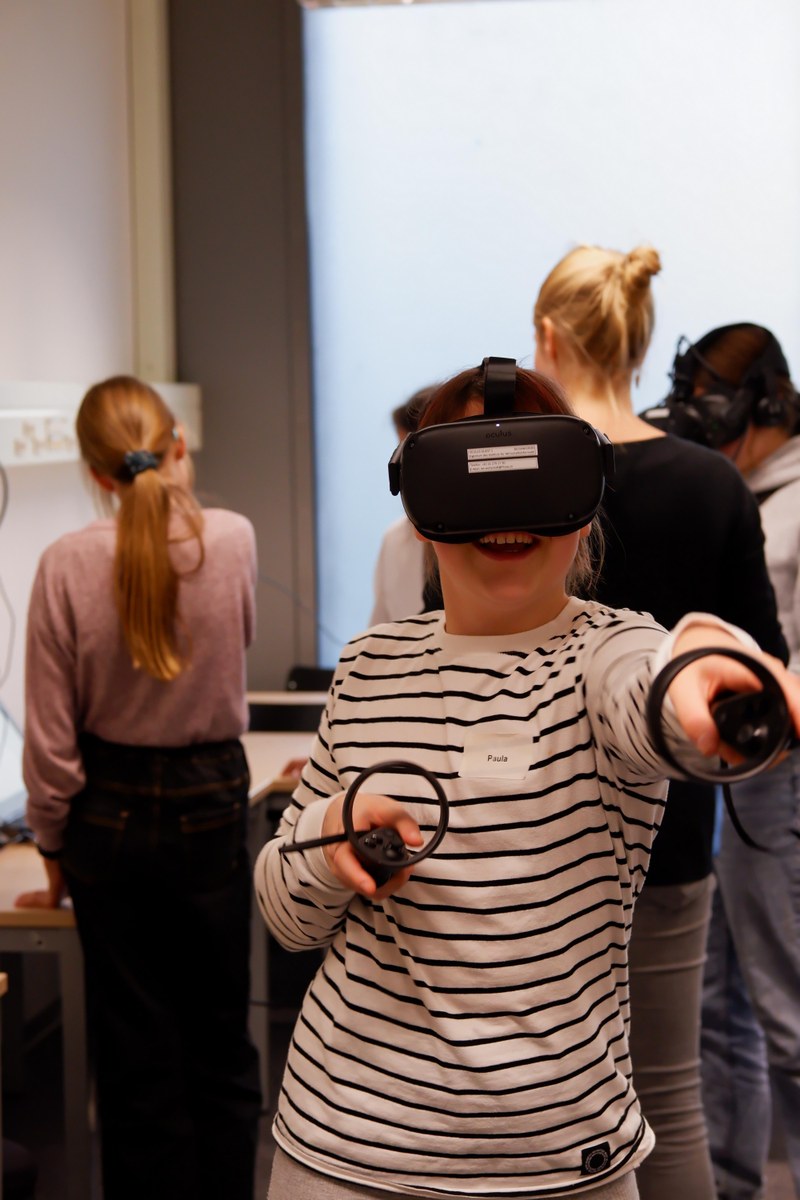
A girl wearing a virtual reality headset and two controllers

National Future Day 2026

Every year, the FHNW opens its doors for children from the 5th grade. The National Future Day aims to provide children an insight into many different job perspectives. On 12th November 2026, pupils from the 5th to the 7th grade can visit workshops and discover little known job profiles. They can discover jobs that fit to their wishes and interests – beyond traditional role models.

A type of sun-wheel with the words "act" and "do" on the spokes

FHNW 2035: FHNW 2035: Roadmap to a diversity-sensitive university

The FHNW sees itself as an inclusive place to work, study and meet, where the value of diversity is recognized, appreciated and lived, and where everyone feels that they belong. Based on the general principles (including the Gender Equality Act) and FHNW-specific principles, there are three overarching diversity goals for the coming years, which must be achieved through a wide range of measures:

  • Promoting diversity and improving accessibility
  • Communicate diversity competence and strengthen awareness
  • Communicate inclusively and increase the visibility of diversity

The document «Diversity goals 2035 and Diversity action plan 2025-2028 (PDF, 1 MB)» (in german) sets out the guidelines for a diversity-sensitive and inclusive university by 2035.

Sexual Harassment Awareness Day

Sexual Harassment Awareness Day 2026

Together with other Swiss universities and universities of applied sciences, the FHNW takes a stand against sexual harassment. We are comitted to a higher education environment without harassment and take part in the Sexual Harassment Awareness Day on 21st April 2026.

ChallengeEU

ChallengeEU

The FHNW is part of the European University Alliance ChallengeEU.

Work package 5 of the alliance focusses on diversity, equity and inclusion. The goals include promotion of an inclusive culture in international activities by implementing ODEI (Openness, Diversity, Equity, Inclusion) principles, exchange on good practices and development of specific trainings for students and staff.

More about ChallengeEU

The pride flag flies on FHNW Campus Burgg-Windisch

Pride Month

For more than 50 years during June, the LGBTQI+ community celebrates Pride Month. It highlights the diversity of sexualities and genders and protests continuing discrimination and missing equality. Over June, the FHNW will hoist Pride flags on its campuses in Brugg-Windisch, Olten and Muttenz.

Pride Month is an opportunity to reflect diversity and show support. It needs all of us to achieve equality and create a non-discriminatory education environment.


Topics and tasks

Horizon Europe Gender Equality Plan

The FHNW values and fosters the diverse potential of its students and staff, and is committed to ensuring equal opportunities at all levels. By promoting a study, continuing education, and work environment that embraces diversity, the FHNW actively supports lived diversity and takes a clear stance against discrimination, sexual harassment, and bullying.

One of the university’s priority goals is to achieve equal opportunities in leadership positions and to strengthen women’s participation in decision-making processes within higher education governance.

This objective, along with specific targets (an increase of 5%) and corresponding implementation measures and indicators, is defined in the central document «Diversity Goals 2035 and Diversity Action Plan 2025–2028 (PDF, 987 KB, German)».

Measures

To achieve a balanced gender ratio in leadership positions and to identify and remove existing barriers to career progression, the following measures, among others, are being implemented:

  • The targeted proportion of women in new appointments at levels 19/20 is specified for each school in its performance agreements.
  • Search committees are, wherever possible, composed on a gender-parity basis.
  • Diversity-sensitive talent scouting is being developed and/or professionalised (with a focus on STEM schools).
  • The «University of Applied Sciences Lecturer» branding developed for the FHNW is used across schools and integrated into job postings and recruitment processes.
  • Diversity is recognised and embedded as a topic within the FHNW’s leadership principles.
  • Awareness culture is strengthened, and leaders and staff are sensitised to issues such as stereotyping, unconscious bias, boundary violations, and breaches of personal integrity.
  • A reporting and investigation procedure for violation of personal integrity is in place.

Further measures can be found in the document «Diversity Goals 2035 and Diversity Action Plan 2025–2028 (PDF, 987 KB, German)».

Reporting

The goals set out in the Diversity Action Plan 2025–2028 are reviewed annually, discussed by the Directorate, and adjusted where necessary. At the end of the plan period, a comprehensive report will be produced, assessing the effectiveness of the measures based on predefined indicators and providing recommendations for further action.

Between 2017 and 2025, the proportion of women professors rose slightly from 25% to 30%, while the proportion of women in leadership positions A & B increased from 23% to 33%. In 2024, four of the nine FHNW schools were led by women. Efforts in line with the above measures will continue steadily.

Further Documents and Resources

  • FHNW 2035 Strategy
  • Sustainability at FHNW
  • Protection of Personal Integrity at the FHNW
  • Sexual Harassment Awareness Day
Accessibility

The FHNW is committed to equal opportunities for people – staff and students – with disabilities and impairments. In addition to providing the appropriate facilities, this also means enabling barrier-free studies. Contact points offer personal advice and provide information on issues such as disadvantage compensation. Additional information on barrier-free studying in Switzerland can be found on the swissuniability platform.

Compatibility

The FHNW makes it possible to reconcile areas of life such as work, family, caring for relatives and leisure. In addition to the benefits prescribed by law, generous working time arrangements and mobile and flexible working models serve to promote a work-life balance. Human resources departments, study administrations and diversity officers offer advice in this regard.

Parent-child rooms as well as rooms where mothers can breastfeed and express milk are available at the FHNW. The university also makes available bags of toys that allow children to be kept entertained while parents or other caregivers bring them onto the premises for a meeting or a visit to the library.

Diversity management

As part of the FHNW’s efforts in terms of diversity management, concepts and tools for maintaining and promoting diversity are integrated into the organisation. The document Diversity goals FHNW 2035 and action plan 2025–2028 (PDF, 1 MB, German) forms the basis for this. It not only defines areas for action but also gathers together concrete targets, indicators and measures and raises their profile.

Diversity-sensitive language

The FHNW sees itself as a university that welcomes diversity and promotes openness. As an educational institution under public law, it bears a special responsibility and at the same time acts as an important source of impetus for social discourse. Equality, respect and esteem are fundamental pillars of its university culture. This includes efforts to include all people in the language and to make visible who is being meant and addressed. The FHNW is therefore guided in its communication by the following five principles:

  1. We reflect our everyday use of language.
  2. We respect what people want to be called.
  3. We don’t reduce people to individual traits.
  4. We don’t value people and their experiences.
  5. We protect the personal integrity of others.

The digital FHNW Language Compass, which is published on the Inside FHNW (Intranet), is intended as a language guide for the areas of word, writing and images. Instead of dictating, it aims to inspire and give concrete recommendations on how to communicate in an inclusive manner. It addresses the themes of gender-inclusive, anti-racist and barrier-free language, LGBTQIA+ language and inclusive visual language. Finally, it gives an overview of basic Dos and Don'ts.

Equal opportunities at management level

The FHNW is strongly committed to equal opportunities at management level. It has set itself the goal of increasing the current proportion of female professors and females (32 %) by 15 % by 2035. To achieve this, various management tools and accompanying measures are being implemented, such as adapted employer branding and guidelines for selection committees.

Future

The FHNW opens its doors to school pupils on the annual “National Future Day”. Workshops offer a chance to discover new professions and gain a wealth of insights. The offerings can be viewed and booked on the National Future Day website.

Personal integrity and awareness

In order to ensure a diversity-appropriate study, continuing education and work environment, the FHNW expressly advocates against discrimination, sexual harassment and bullying. To this end, the FHNW has issued regulations on the protection of personal integrity and on reporting and investigative procedures in the event of violations of personal integrity. At the same time, new management culture processes, awareness-raising activities and management tools such as key employee data are contributing to inclusion and awareness. Further details on personal integrity at the FHNW.

Awareness is a key element in promoting a culture of respectful dialogue and appreciative cooperation; at the same time, it protects the personal integrity of students, staff and continuing education participants. In addition to developing “cultural elements for cooperation and leadership (PDF, 282 KB, German),” various formats are currently being (further) developed that raise awareness in various areas and at the same time promote the diversity competence of the university’s students, employees and continuing education participants.

Queerness

The FHNW is committed to a culture of diversity and thus to an LGBTQI+-friendly study and work environment. In addition to an inclusive language, there is a defined process for changing one’s name and gender entry. An expansion of facilities is currently under review (e.g. all-gender WCs, all-gender changing rooms). In the event of suspected discrimination on the basis of sexual orientation or gender identity, the reporting channels for violations of personal integrity apply.

Research and education

It is a central aim of the FHNW to strengthen the diversity competencies of its members. The topics diversity and heterogeneity have been included in a growing number of teaching and education modules. The FHNW also offers continuing education programmes in the field of diversity and equal opportunities. Numerous research projects of the FHNW’s schools engage with a wide range of issues from the field of diversity.

Further information

See the contact addresses in ‘Inside FHNW’ for details of the diversity officers of the individual schools (access for FHNW members only).


Contact

Andrea Flora Bauer

Dr. Andrea Flora Bauer

Coordinator Diversity & Sustainability
Phone
+41 56 202 73 37
E-Mail
andreaflora.bauer@fhnw.ch

FHNW University of Applied Sciences and Arts Northwestern Switzerland

  • Offerings
    • Degree programmes
    • Continuing education
    • Research and services
  • About FHNW
    • Organisation
    • Schools
    • Locations
    • FHNW Library
    • Media relations
  • Support
    • IT support
    • Inside FHNW
    • Webmail
  • Social media
    • Facebook
    • Instagram
    • Bluesky
    • LinkedIn
    • YouTube
Logo FHNW - 20 Years
Logo Swiss Universities
Logo European University Association
© University of Applied Sciences and Arts Northwestern Switzerland (FHNW)
  • Data Protection
  • Imprint
  • Accessibility
  • DE
  • EN