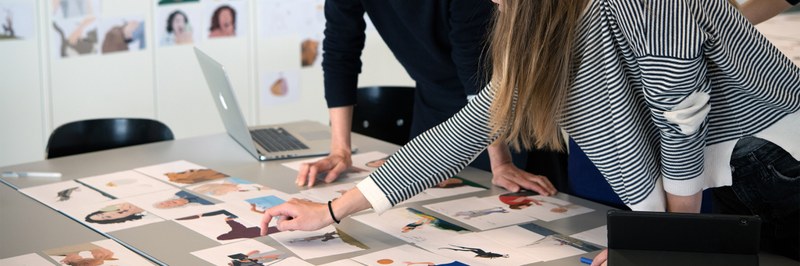
What shapes how we see, sense, and understand the world? In this module, you explore perception as a fundamental element of artistic and design practice. Through exercises, reflection, and interdisciplinary inputs, you investigate the connections between sensory experience, cognition, and creative expression.
Factsheet
- Learning mode
- Onsite
- ECTS credits
- 2
- Next start
- On request
- Duration
- 1 Week
- Teaching language
- English
- Place
- Campus HGK Basel
- Fee
- CHF 900
At a glance
- Focus: Methods for evaluating the impact of design projects and an introduction to design research approaches.
- Learning Format: Practice-oriented workshops with hands-on exercises, complemented by input sessions on reflection and contextual knowledge.
- Context: Insights into contemporary visual communication for both analogue and digital media, rooted in the tradition of the Basel School of Design.
- Location: Basel and the trinational Rhine Valley—an exceptional cultural setting with renowned museums and easy access to design landmarks in Switzerland, France, and Germany.
Aims and benefits
The workshops afford insights into topical themes of visual communication for analogue and digital communication channels in a study programme reflecting the rich tradition of the Basel School of Design. Practical exercises with a high level of professionalism form the core of the workshops focus. Reflection as well as contextual knowledge will be conveyed by way of input sessions, allowing participants’ work to be judged within a contemporary, future-oriented context relevant to professional practice. The trinational Rhine River Valley is a unique cultural environment with easy access to France and Germany and to sites such as the Vitra Design Museum (G), the Isenheimer Alter (F), or Ronchamps (F). In Basel, the Fondation Beyeler, Tinguely Museum, Museum of Fine Arts, Schaulager, and Museum of Contemporary Art are world-renowned. Besides its museums, Basel offers a rich mixture of cultural events.
Target audience
This workshop is aimed at professionals in the design field who want to gain more knowledge about methods for evaluating the impact of their projects, as well as those who wish to learn about design research methods in order to enter this field.
Structure and programme contents
As designers, we develop images and visual communication tools with the goal of ensuring that viewers perceive and understand the intended message. However, it often remains unclear whether this communicative goal is actually achieved.
This workshop demonstrates how the impact of design work can be evaluated using methods of reception research.
It is aimed at designers who want to gain more knowledge about assessing the impact of their projects—as well as anyone who wants to learn about design research methods and enter this field.
Further Education Options
General Information Workshops Institute Digital Communication Environments (IDCE)
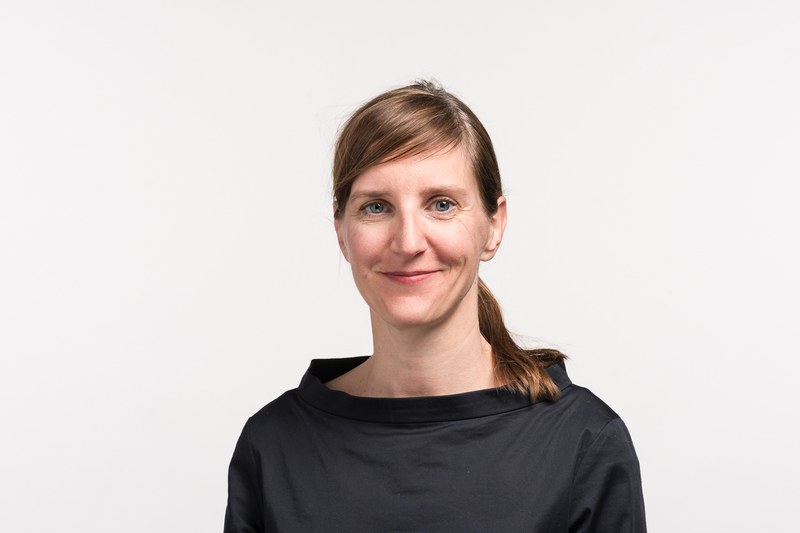
Claire Reymond is a researcher and lecturer at the Institute of Digital Communication Environments, Basel Academy of Art and Design FHNW. She conducts research in the field of image production as well as the visual reception of images.
In 2000, Claire Reymond completed her training as a graphic designer at the Basel School of Design and then worked as a designer for several years. She holds a Bachelor's degree in Psychology and a Master's degree in Iconic Research. At the Faculty of Psychology, University of Basel, she obtained her doctorate in the field of Empirical Aesthetics. In 2019, Claire Reymond was a visiting researcher at metaLAB at Harvard University, USA.
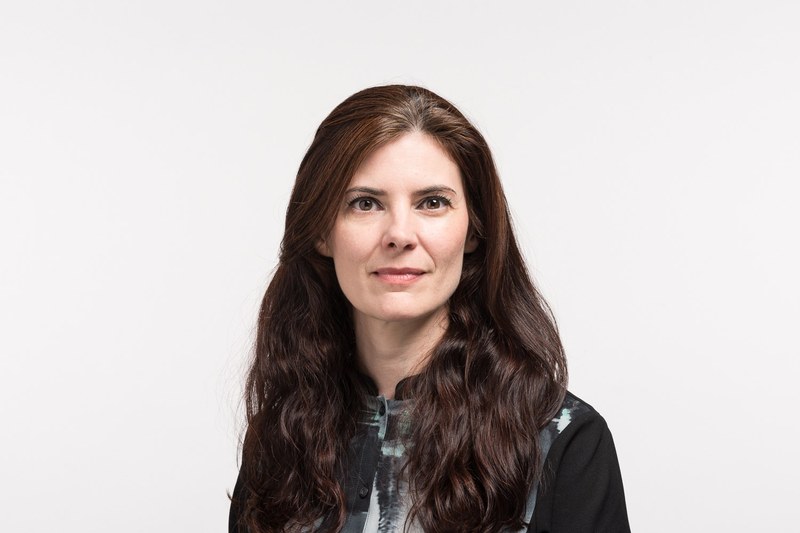
Paloma Lòpez-Grüninger studied Fine Arts at the University of Granada, Spain, and Visual Communication at the Basel Academy of Art and Design FHNW, Switzerland. Between 2005 and 2008 she was a member of the Graduate School “Image and Knowledge” from eikones – NCCR Iconic Criticism.
Her dissertation, with which she obtained her PhD from the University of Granada in 2011, looks into non-quantitative visualizations, particularly historic and current tree-diagrams in the domain of Biology, and the ways they construct and communicate their meaning.
Her research interests are focused on information design and instructional design, by applying the methodology of practice-led iconic research in order to gain insights into the power and meaning of images through systematic image generation.
Since 2012 she is a lecturer at the Master of Arts in Digital Communication Environments at the Basel Academy of Arts and Design FHNW, and coordinates the program since 2013.
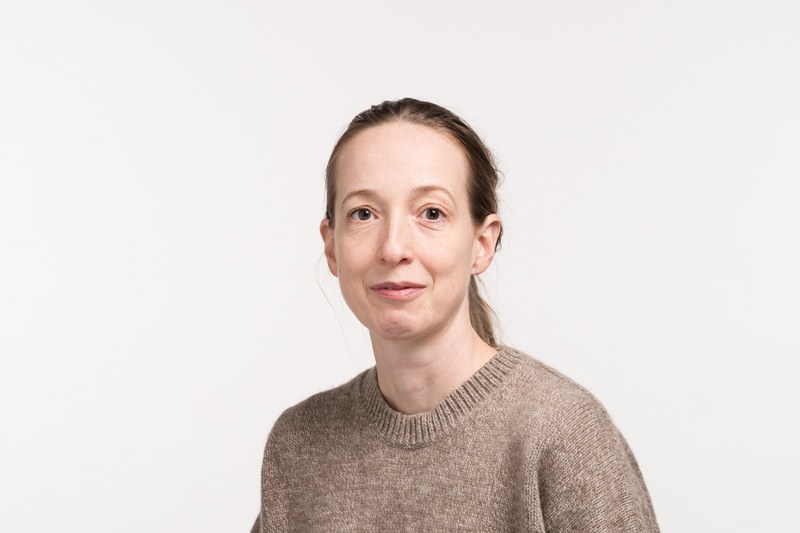
Susanne Käser studied visual communication at the HGK Basel FHNW from 2002 to 2005. She worked for design offices in Basel and Zurich and since 2005 as an independent graphic designer. Since 2007 she has been in charge of the documentation assignment for the restructuring of the Novartis Campus at the Institute Digital Communication Environments, HGK Basel FHNW. From 2009 to 2011 she studied visual communication and iconic research at the HGK Basel FHNW. As part of her master's thesis "The Image and the Sense of Touch", Susanne Käser investigated possibilities for a holistic form of documentation. From 2012 to 2014 she was responsible for the research project "Campus+ new strategies for the documentation of urban change processes". Currently, she is working on and developing third-party funded projects in the areas of research and service and is mentoring the final phase of the BA Visual Communication and digital Spaces.
Requirements and admission
The continuing education programs are primarily aimed at individuals with an academic degree from a recognized university and relevant professional experience after graduation.Individuals with equivalent qualifications will be admitted if their eligibility for participation is demonstrated by other evidence.
For further questions, please contact the Continuing Education Department, Ralf Michel
Organisational matters
Fees
Information and regulations
Advising and information events
Contact
Information events
Loading...