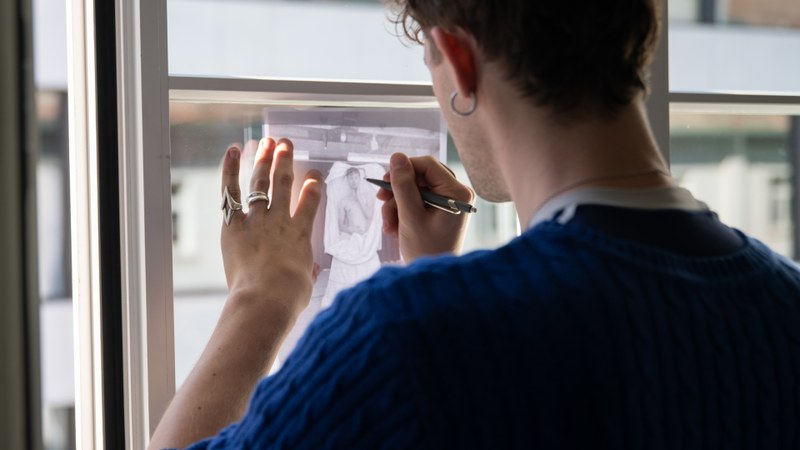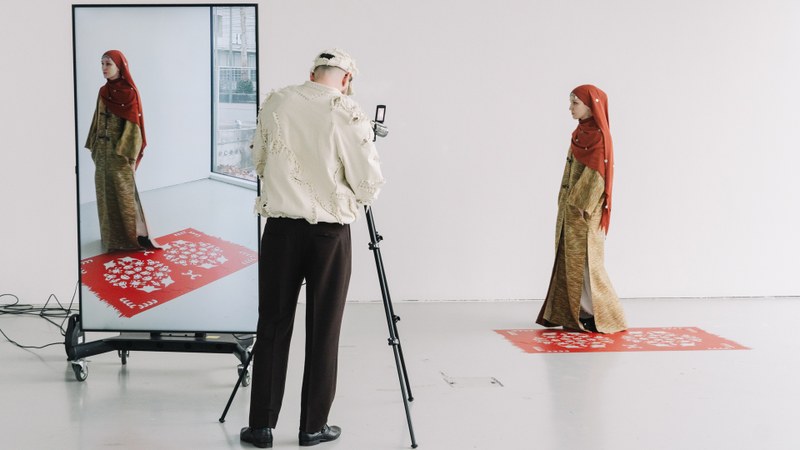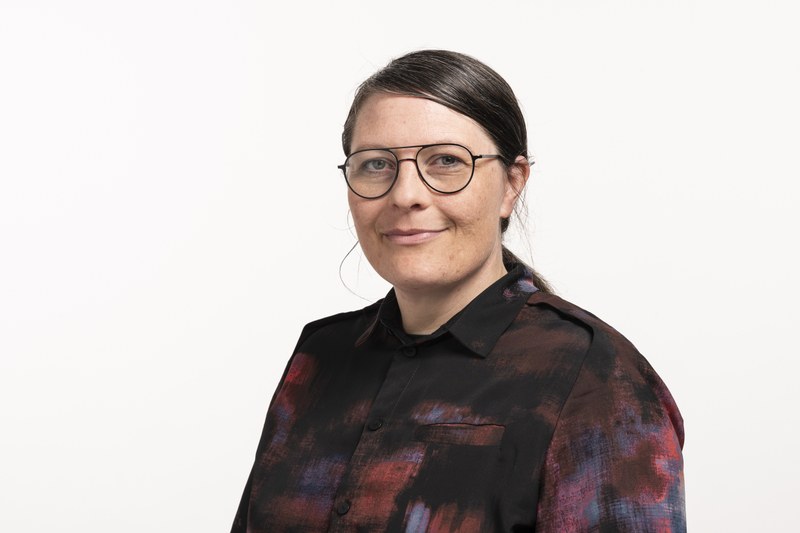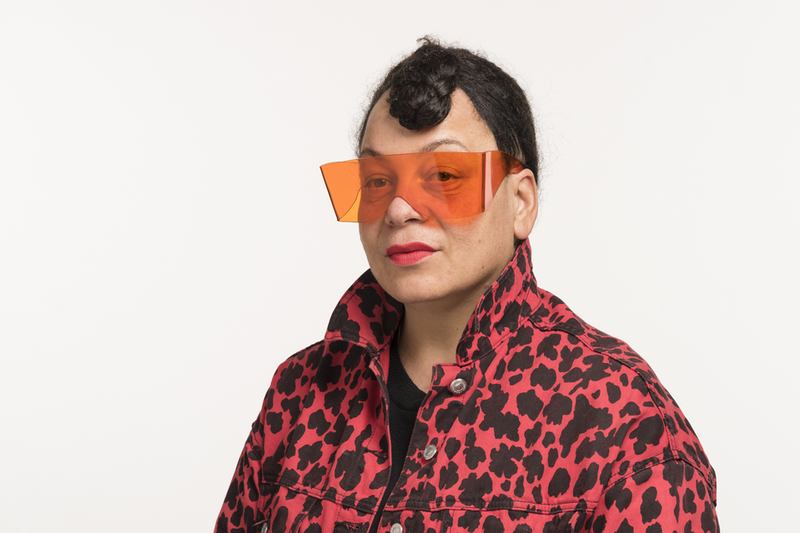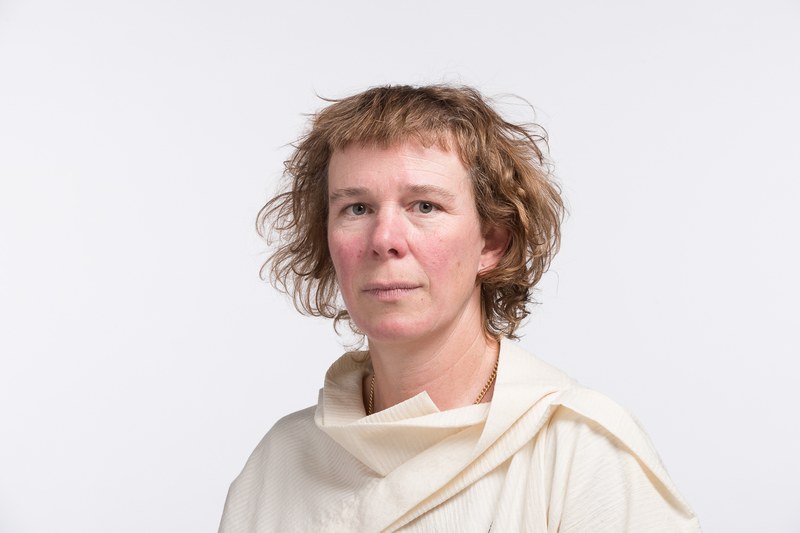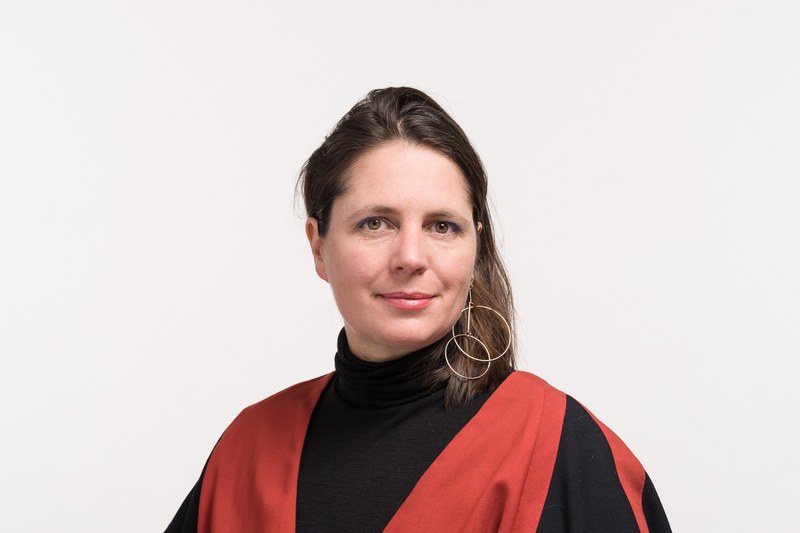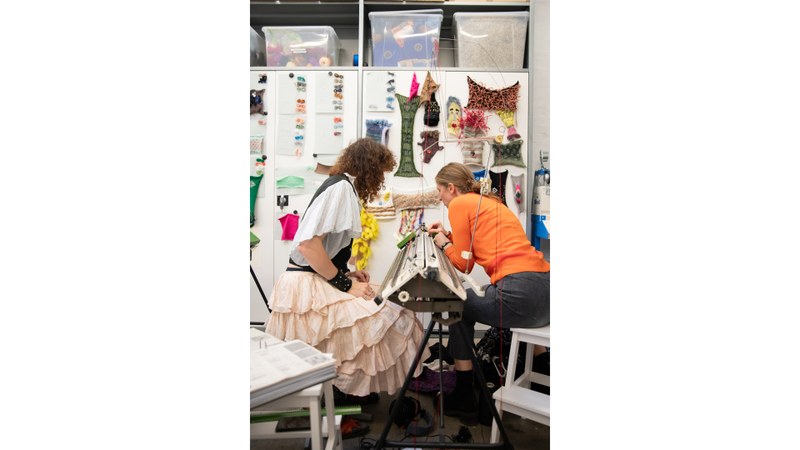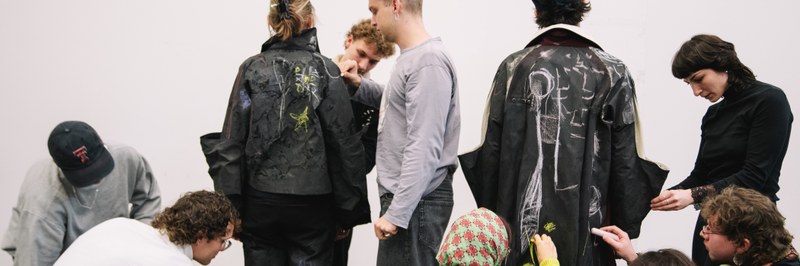
Doing fashion is a culture, and fashion design is a cultural practice. Fashion is involved in all areas that are very important to us at the moment. Alongside a emphasis on performance and performativity, the degree programme is characterised by a focus on the body, its perception and movement, on body-based design methods and on body-knowledge.
Factsheet
- Degree
- Bachelor of Arts in Fashion Design
- Study mode
- Full-time
- Learning environment
- Onsite
- ECTS points
- 180
- Next start
- 14.9.2026
- Duration
- 7 Semester
- Language
- German (B2 or equivalent)
- Place
- Campus HGK Basel
- Staying abroad
- Possible
- Application fee
- CHF 200.- (incl. aptitude assessment and enrolment)
- Semester fee
- CHF 750 (CH); CHF 1.000 (EU); CHF 1.250 (Not-EU/EFTA)
At a glance
- 'Doing fashion' is a culture, and fashion design is a cultural practice.
- A strong focus on the body, its perception, movement and body-based design methods, as well as body knowledge, characterises the programme, alongside a strong emphasis on performance and performativity.
- We deal with bodies: ranging from real (analogue) to virtual bodies generated by artificial intelligence (digital fashion).
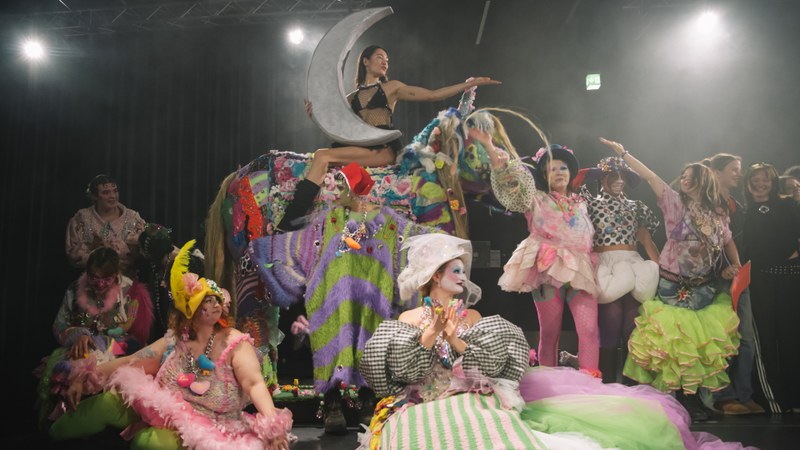
Performance Bachelorproject Billie Madrigal Cartin, Finn, Delia, Elem, Cat
Picture by Laura Gauch
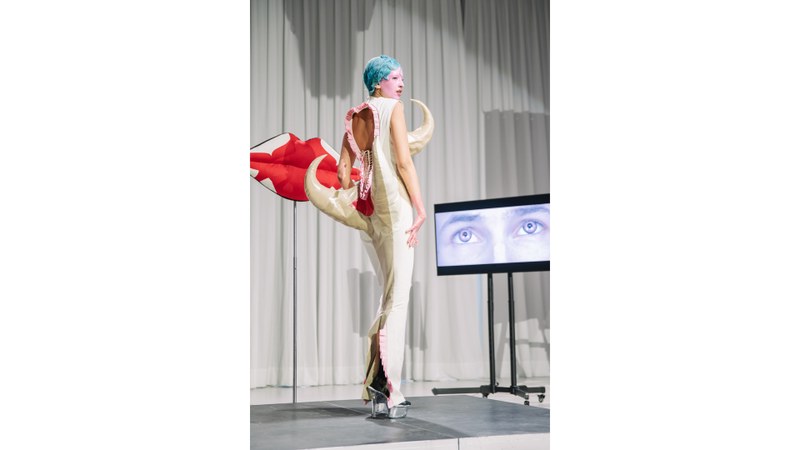
Performance Bachelorproject Aurélie Cuenot and Mardane Gaxotte as Paradigme Carré, Daddy On Dutyy
Picture by Laura Gauch
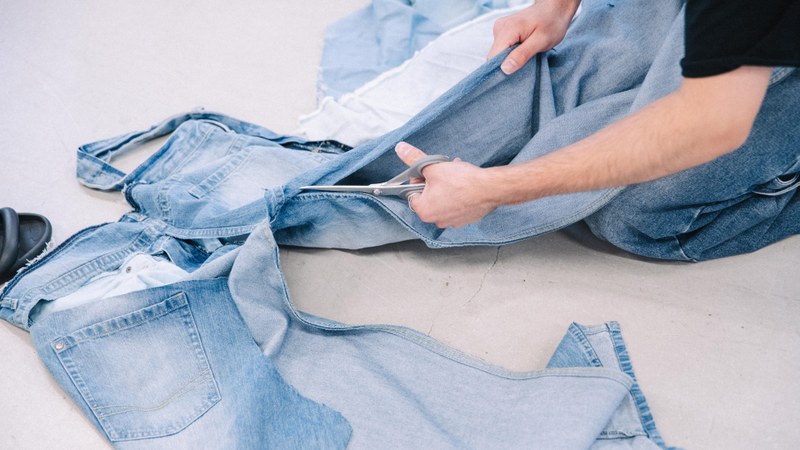
Lesson Research Hose
Picture by Laura Gauch
Why study this?
Goals and benefits
During your studies, you will be comprehensively prepared for the Swiss and international labour market. In addition to study trips, the internship semester and the opportunities for cooperation, the degree programme enables students to participate in publications, video / film, scenarios from various fashion spaces and curated fashion exhibitions. This environment supports students in their professional networking.
Career prospects
As a graduate of the Doing Fashion program, you will be equipped to find your own individual entry point into the broad professional field of fashion and fashion design. The diverse and well-founded program provides graduates with a sophisticated repertoire of design strategies and practical professional skills. The degree qualifies graduates to enter the professional world in the fields of fashion design, accessory design, and jewelry design. Graduates often also enter related fields such as fashion photography, film, and journalism, costume design, art and performance, and curating. The practical semester proves to be an indispensable introduction to the professional world. Many graduates receive grants from renowned institutions and work as freelance fashion designers. The master's program (Studio Fashion, ICDP) at HGK Basel offers the opportunity to further deepen one's knowledge.

Lesson Wildcard Performance
Picture by von Laura Gauch
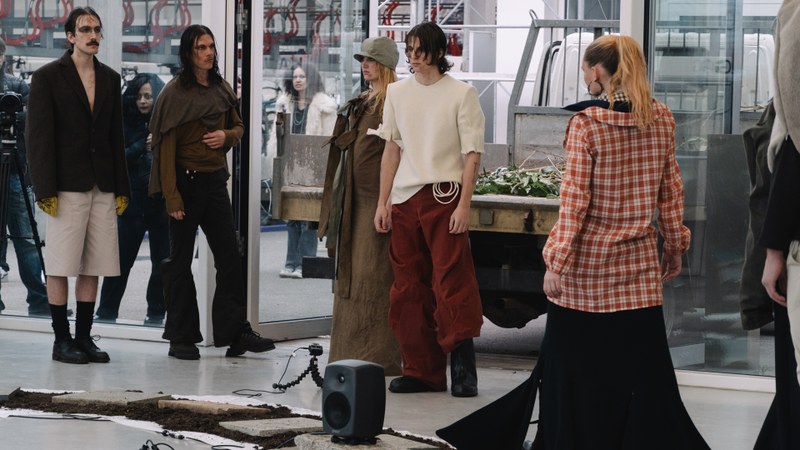
Performance Bachelorproject Mitja Leon Haring, Piero Zeni, Nicola Reisch, Rebecca Breakspeare , Vladyslav Ponomarenko, Kai Breakspeare
Picture by Laura Gauch
Structure and programme contents
The study programme
Doing fashion is a culture, and fashion design is a cultural practice. It is not easy to define exactly what fashion is or should be – and perhaps that is why it fascinates us and arouses our desires. Fashion is a global and social system that constantly produces paradoxes that we cannot always resolve. Fashion confronts people with their own contradictions. Fashion is intertwined with all the issues that are currently preoccupying us: gender, new digital spaces, identity, the future, climate, the environment, globalisation, regionalism and social justice.
A strong focus on the body, its perception, movement and body-based design methods, as well as body knowledge, characterise the programme, alongside a strong emphasis on performance and performativity. We deal with other bodies, other bodies of fashion in the midst of debates that are re-evaluating the confrontation between humans and machines. What are artificial and technical changes to the human body, how does the body of fashion move in the metaverse?
Study structure
‹Doing Fashion Knowledges› (1st to 6th semester)
The courses focus on creative, craft and technical skills, research and design practices: students learn about tools, techniques, theories and methods and practise the skills that underlie the fashion design process. The course content is specifically tailored to each semester. Third-semester students also go on a study trip lasting several days.
‹Doing Fashion Studio & Doing Fashion Purpose› (1st to 4th semester)
A cross-semester elective programme consisting of several specialisations breaks down the division into individual academic years and creates an activating interaction along various points of contact with current topics and design issues. Similarly, Graduate Studio 1+2 (1st and 3rd semesters) enables students to be involved in the realisation of thesis projects and in the public graduation ceremony. An important part of sharing knowledge and experience lies in mutual learning and understanding.
‹Out of Classroom – Internship› (5th semester)
During the practical semester, you will further develop the knowledge you have acquired and test and deepen your skills and abilities in a professional context. The practical period also encourages critical examination of current social and economic systems. This provides an opportunity to expand your international professional network.
Bachelor's thesis (6th and 7th semesters)
The PreThesis Research studio focuses on the exploration of critically reflected fashion design, thus opening up space for independent experimentation and research. Research in the sense of an exploratory process is understood as exploring, investigating and deepening one's own craft skills and design interests. The aim is to concretely situate one's own designs in relation to current ecological, ethical and economic challenges in the fashion system.
The thesis examination is a performative communication situation for one's own fashion vision. The concrete designs are brought to life in space, in motion and in relation to the physical body. On the one hand, the focus is on clarifying one's own approach; on the other hand, the content-related issues addressed in the fields of fashion, such as materials, textile techniques, social and political implications, etc., are also to be discussed. Together, these two aspects reveal a clear positioning in the fashion world.
Target audience
The Fashion Design programme is aimed at people with a keen interest in fashion and fashion design. You will explore social issues and learn how design shapes the world. You will develop an interest in creative and craft-based methods and techniques, as well as participatory and collaborative work processes, which you will deepen in the areas of professional competence, social competence and personal competence. During your studies, you will learn to treat others, materials and the environment with respect and to act responsibly.
Infrastructure
With its studios, labs and central Campus.Workshops, HGK Basel offers ideal conditions for combining technical curiosity, learning techniques and digital know-how. In addition, all students have access to their own workspace in the spacious studios around the clock. The Fashion Design programme has a professionally equipped sewing, leather, knitting and cutting studio, as well as its own digital workshop with a digital cutting system for textiles, paper and solid materials. The infrastructure is open to students 365 days a year.
Projects
The Graduates of 25 Live-Performance Kunsthaus Baselland

What opportunities does the younger generation have today to draw attention to themselves, to talk about themselves, and to take action? What is the self if it cannot—and must not—reinvent, reflect, and infinitely reproduce itself in the public sphere and in constantly changing media? The BA Doing Fashion Graduates 2025 at HGK Basel FHNW explore these questions in a very precise and contemporary way. Political, social, and cultural contradictions are stretched across an installative and performative spatial framework. Fashion design is always much more than just clothes and textiles worn on the body. Progressive fashion design can reveal and accentuate a person's personality. In an open process, designers—like artists—reinvent themselves, activate their own imagination and that of others, and thereby open up new spaces of imagination: spaces that address and integrate the audience and its perception—in fashion.
THE STARS IN MY ROOM ARE BRIGHTER THAN THE ONES OUTSIDE -The Cinema Edition — Art Basel 2025

What does it mean to become visible today—within a world of constant self-staging, mediated reflections, and social contradictions? Originally conceived as a live performance, this short film blurs the boundaries between stage and backstage, reality and perception. Guided by Nils Lange, the graduates of Doing Fashion reveal what lies behind the polished image—questioning who decides what is shown and what remains hidden. Political, social, and cultural contradictions are staged within a framework that is both installative and performative. In an open process, fashion designers reinvent themselves, activate their own imagination as well as that of others, and in doing so create new spaces—spaces that address and integrate the audience and its perception, through fashion.
Novembre Global Magazine

Blog
Further information on our events, projects and publications can be found on our blog.

Performance Bachelorproject Merve Topal, Ayşe Demirel und Hakkı Topal
Picture by von Laura Gauch
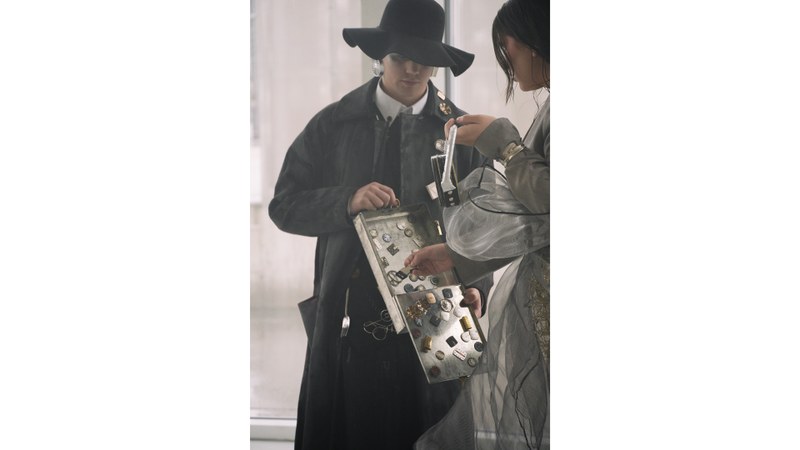
Performance Bachelorproject Damara Dimcic, Benjamin Heyden, Andjela Marinkovic
Picture by Laura Gauch
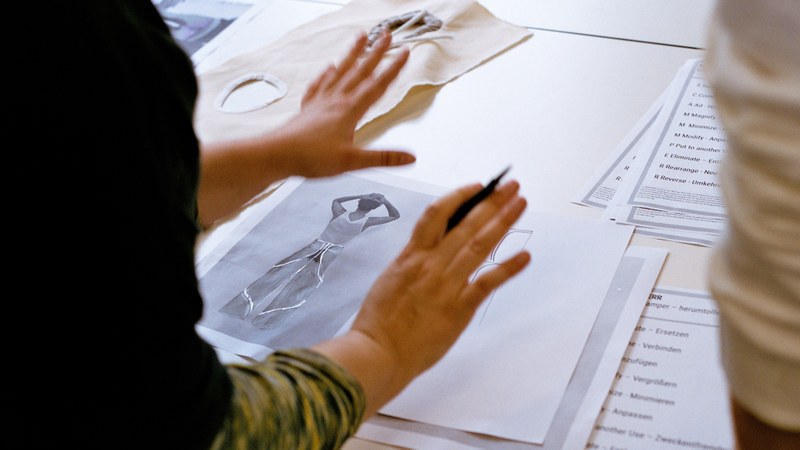
Lesson Research Hose
Picture by Laura Gauch
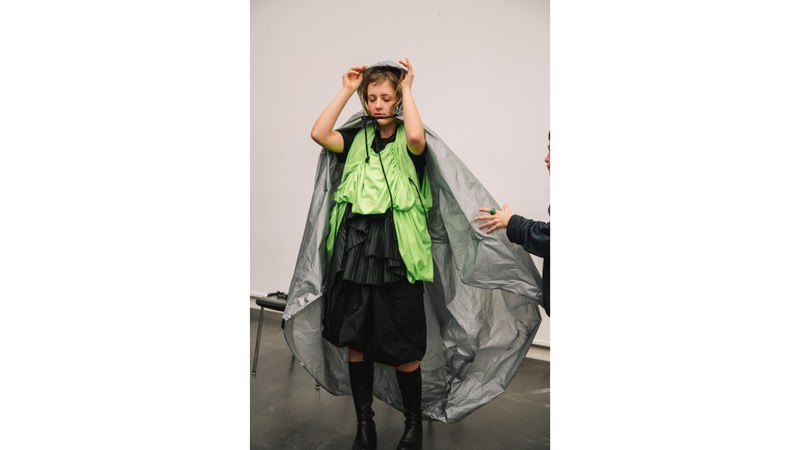
Studio graduation Natalia Garcia, Noëlle Schmid
Picture by Laura Gauch
Lesson Research Hose
Picture by Laura Gauch
International
International Office
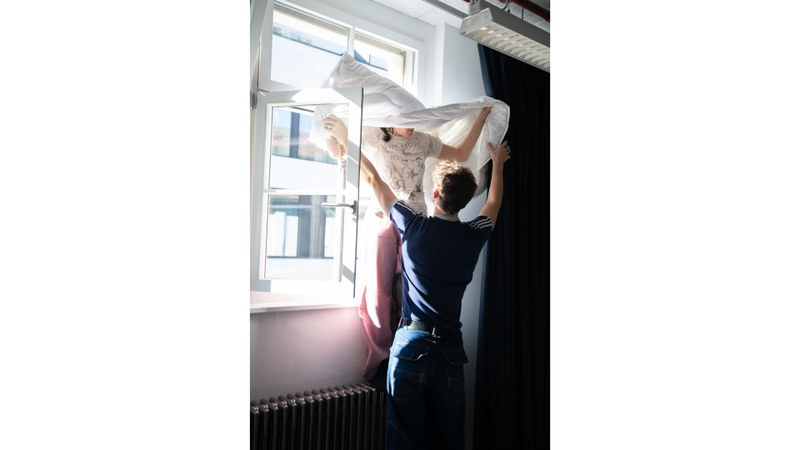
Lesson Wildcard Performance
Picture by von Laura Gauch
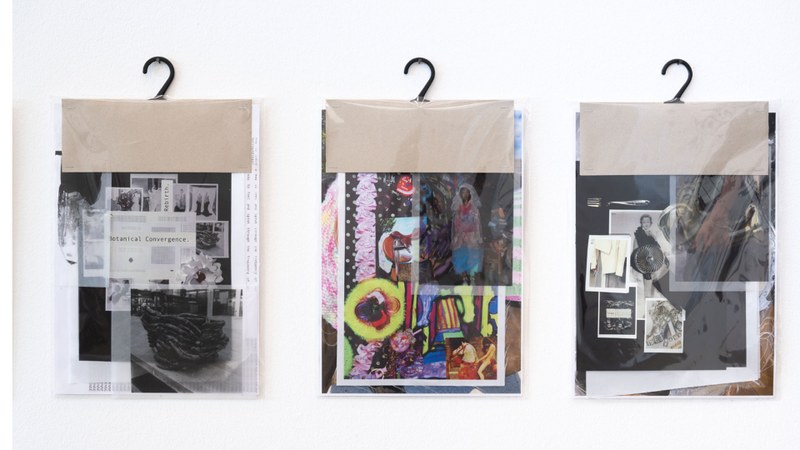
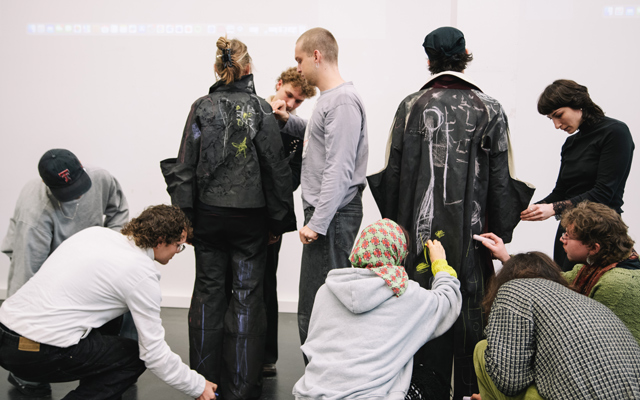
Studio graduation Moritz Vögeli, Noah Gempeler, Aline Heuser
Picture by Laura Gauch
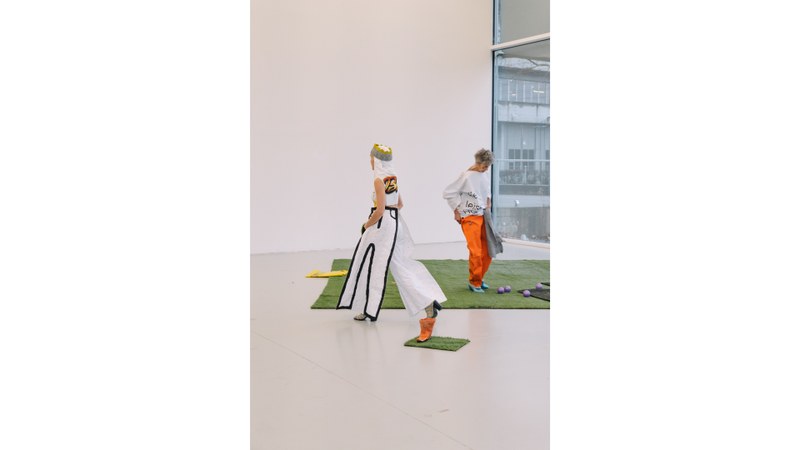
Performance Bachelorproject Maximilian Preisig
Picture by Laura Gauch

Lesson Wildcard Strick
Picture by Laura Gauch
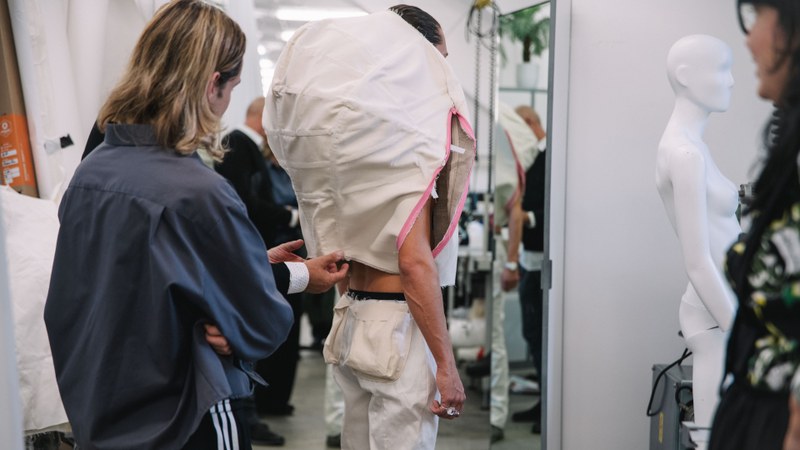
Picture by Laura Gauch 
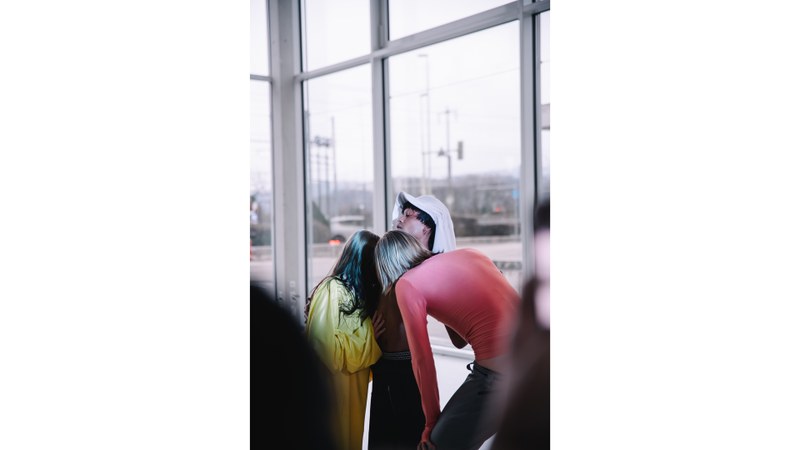
Performance Bachelorproject Till Garcia de Oteyza Arends, kuba stepień, emma szumlas, shlyvkha
Picture by Laura Gauch
Requirements and admission
Admission requirements
Educational requirements
For admission to the aptitude assessment for the bachelor’s programmes in Design (Industrial Design, Interior Architecture and Scenography, Fashion Design, Process Design, Visual Communication and Digital Spaces), one of the following qualifications is generally required:
- a certified vocational baccalaureate
- a certified specialized baccalaureate
- a certified upper secondary school (level II) baccalaureate
- proof of an equivalent educational degree at an upper secondary school (level II) obtained otherwise (Swiss education system)
Language of tuition
The language of tuition is German (B2 or equivalent) and partly English. Proof of language proficiency is required at the start of the degree programme.
Workplace experience or preparatory course in Design
In addition, candidates need to provide proof of one year of workplace experience or completion of a two-semester preparatory course in Design.
Catching up on the vocational baccalaureate
Applicants who have not completed at least three years of upper secondary schooling (level II) are not legally entitled to admission to a Bachelor's degree programme. Information concerning full-time or part-time on-the-job training courses focusing on a vocational, design-based or specialized baccalaureate is provided by the local vocational colleges.
Admission on the basis of exceptional talent (1)
In exceptional cases, applicants can be admitted to the Bachelor’s degree programmes without being in possession of an upper secondary school (level II) certificate (Swiss education system), namely if they can provide proof of exceptional talent, either in a design-related or an arts-related field.
Note: We recommend that you make enquiries by means of an email to the office of the respective degree programme at admission.BA-modedesign.hgk@fhnw.ch at least two weeks prior to the application deadline (15 February), or arrange an appointment with the Head of the degree programme.
____________
(1) If you are in possession of one of the following educational degrees, you are eligible for this mode of admission:
Federal Certificate of Vocational Proficiency EFZ (apprenticeship), Professional Certificate EBA, Specialized Secondary School (FMS), Compulsory Schooling, no educational qualification
Information of the aptitude assessment + dates + study regulations
To apply for a place at the HGK Basel, the required documents must be submitted by deadline 15.02.2026.
Please send the specific enquiries to email address.
Dates aptitude assessment 2026
- 01.11.2025
Publication of the detailed information on the aptitude assessment - 15.02.2026
Registration deadline and deadline for submitting the required documents for the aptitude assessment. - 31.08. - 11.09.2026
Introductory weeks at the HGK Basel (mandatory) - 14.09.2026
Fall Semester begin 2026/27
FAQ online registration
Registration
Fashion DesignSeptember 2026
- Date
- 14.9.2026
- Duration
- 7 Semester
- Place
- Campus HGK Basel
- Application start
- 1.11.2025
- Final application date
- 15.2.2026
Fashion DesignSeptember 2027
- Date
- 20.9.2027
- Duration
- 7 Semester
- Place
- Campus HGK Basel
- Application start
- 1.11.2026
- Final application date
- 15.2.2027
Campus HGK Basel
FHNW University of Applied Sciences and Arts Northwestern Switzerland
Basel Academy of Art and Design
Freilager-Platz 1
4142 Münchenstein near Basel