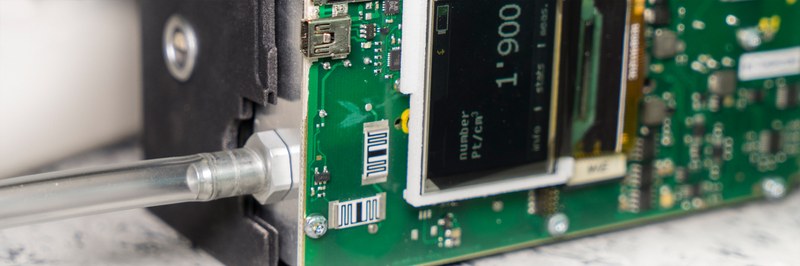
Aerosol particle measurement is used for environmental immission monitoring and for the measurement and characterization of particulate emissions from combustion processes, such as diesel engines or biomass combustion.
The Institute for Sensors and Electronics is also familiar with standard techniques in the aerosol field. In addition to classical measurement techniques (SMPS, CPC, etc.), our competencies include the development of new instruments based on light scattering, light absorption (e.g., via photoacoustics), and carbon analytics. Another core competency is the development of reactors to simulate atmospheric transformation processes.
In the context of research, highly precise and highly sensitive current measurement systems have been developed, with the capability to measure in the sub-femtoampere range. Further work includes aerosol generation and filtration. For this purpose, the Institute for Sensors and Electronics operates a well-equipped Aerosol Technology Laboratory.
Selected Projects

DUWAS: Sensor warns against volcanic ash
- Institute
- Institute for Sensors and Electronics
- Research field
- Aerospace, Electrical engineering
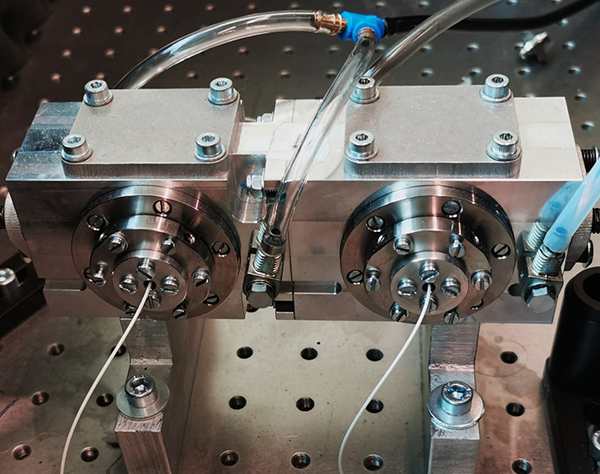
Measurement of soot particles with photothermal interferometry
- Institute
- Institute for Sensors and Electronics, Institute of Aerosol and Sensor Technology
- Research field
- Energy and environment, Electrical engineering
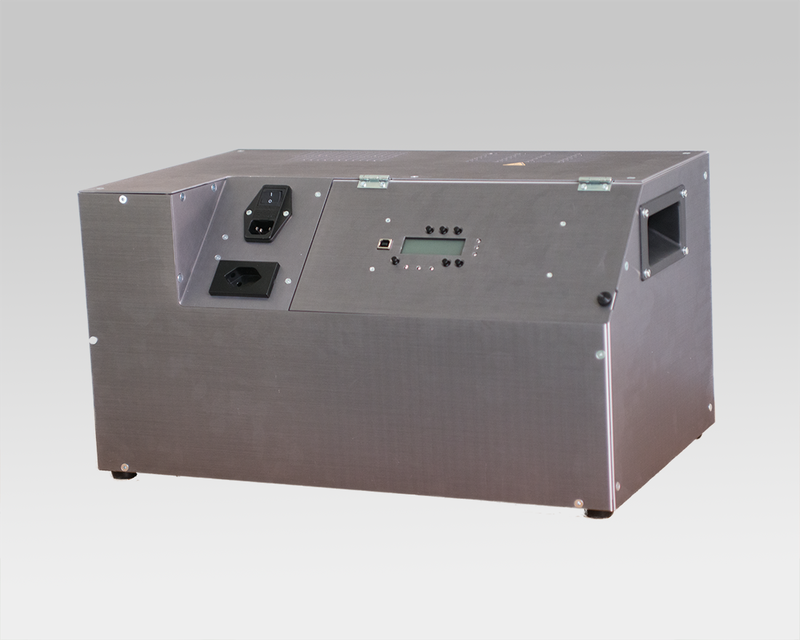
Employment of novel tools for the continuous characterization of the carbonaceous fraction in ambient aerosol
- Institute
- Institute for Sensors and Electronics
- Research field
- Electrical engineering

Masks on the experimental test rig: How well do they protect against fine aerosol particles?
- Institute
- Institute for Sensors and Electronics
- Research field
- Electrical engineering
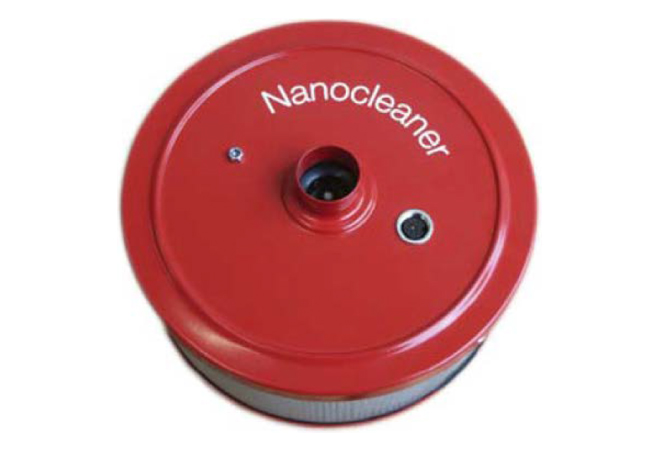
Cleaning of contaminated air from nanoparticles and viruses
- Institute
- School of Engineering and Environment, Institute for Sensors and Electronics

Periodic technical inspection for diesel soot emissions
- Institute
- Institute for Sensors and Electronics
- Research field
- Electrical engineering, Energy and environment
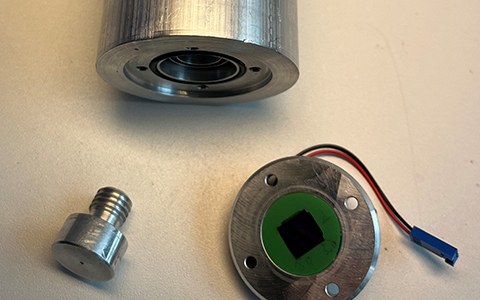
DustEar: Detection of single, micrometer sized aerosol particles by acoustic impaction
- Institute
- Institute for Sensors and Electronics
- Research field
- Electrical engineering, Energy and environment