Metabolomic and proteomic analyses for applications in pharma, environment and materials
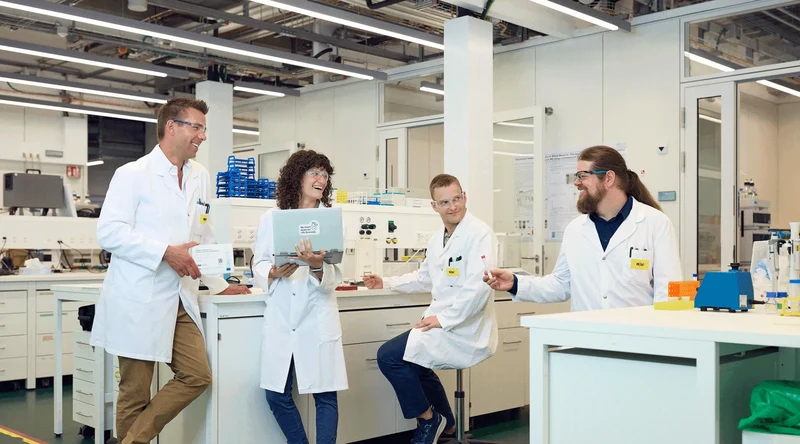
We answer questions and solve problems relating to pharmaceutical bioanalytics and environmental analytics. Metabolomic and proteomic analyses of biological systems with high-resolution LC-MS/MS and GC-MS/MS technologies is a major focus of our research. We also use highly sensitive NMR spectroscopy for structural elucidation and quantification.
We collaborate successfully with partners from industry, start-ups, public institutions and academics on a variety of application-based research projects. Our experienced team works with a wide range of state-of-the-art technologies in labs kitted out with the latest equipment.
Research focus areas
Microbiome
The microbiome is the collective genetic material of all microbes that live on or in the human body: bacteria, fungi, protozoa, and viruses. Microbes outnumber human cells 10:1.
Most microbes in the human body live in the gut, particularly the large intestine. Several diseases have been associated with the microbiome, and hence its analysis and characterisation are typically included in longitudinal and cross-sectional population studies.
We specialise in metabolomic analysis of microbiota. We offer exploratory studies using LC-QTOF or GC-TOF (e.g. Fiehn library) screenings. We can also narrow down analytes or analyte panels with targeted methods like LC-MS/MS and/or GC-MS.
Microsampling
Microsampling refers to the collection of very small volumes of biological samples, such as blood, for analysis. One microsampling technique is dried blood spot (DBS) analysis. A fingertip or earlobe is pricked and capillary blood is sampled, then dripped onto a filter paper. DBS is minimally invasive, requires a reduced amount of sample, and enables easy storage and shipment to the laboratory for analysis.
We use our expertise and equipment to fully automate DBS extraction and analysis. Our DBS-MS 500 (CAMAG, Switzerland) has space for 500 DBS cards and can apply an internal standard onto the DBS using a sprayer. The instrument can also scan the hematocrit and elute directly into a liquid chromatography coupled to tandem mass spectrometry (LC-MS/MS) or a vial for analysis.
In addition, we can conduct evaluation studies on other microsampling devices, develop new methods, and compare different approaches within metabolomics, lipidomics, and proteomics.
Microplastic analysis
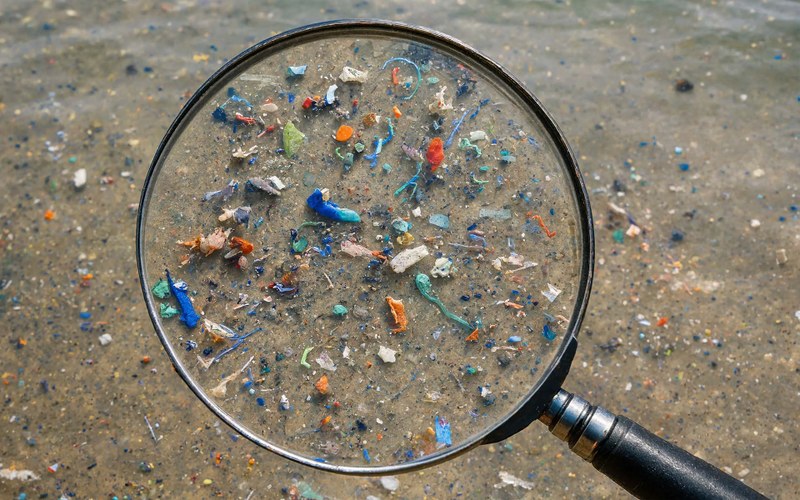
Microplastic (MP) analysis is of growing interest since current methods do not efficiently detect smaller particles. Particles with a diameter smaller than 300μm are especially relevant due to their potentially toxic effects on humans and animals.
Thanks to our GC-MS system with a pyrolysis autosampler, we can perform state-of-the-art microplastic analysis, including laser direct infrared spectroscopy (LDIR) and μ-Raman spectroscopy (RAMAN) – all under one roof at the FHNW Campus Muttenz.
Currently, we are establishing a competence center for microplastic analysis with the Institute for Ecopreneurship (IEC), in the context of environmental health and its effects on humans.
Facilities
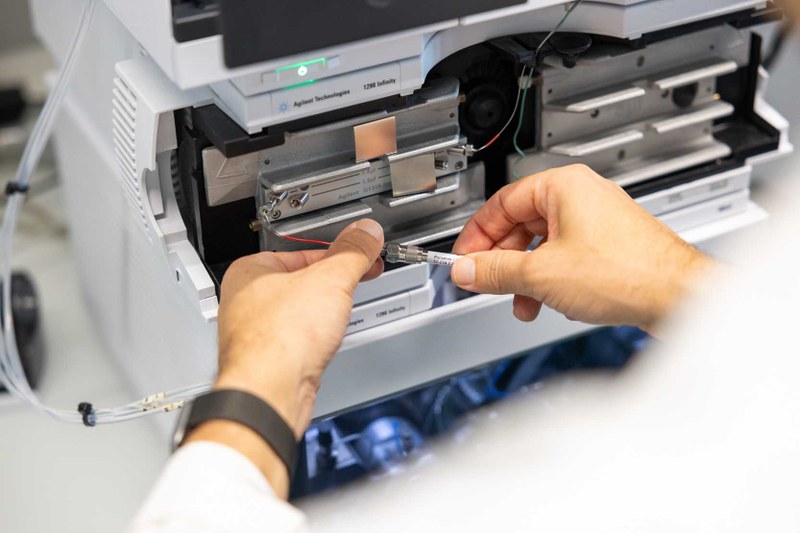
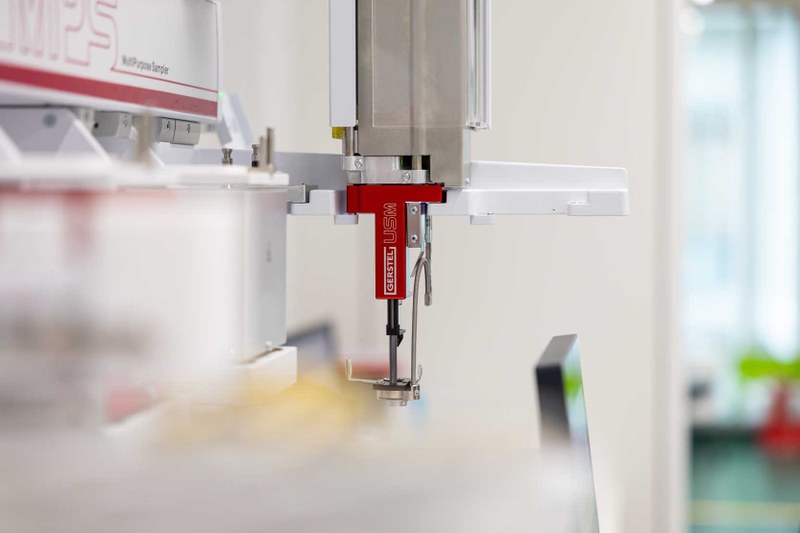

In addition to LC-MS, GC-MS, and NMR, our laboratory offers the following analytical instruments:
- Gas chromatography (GC) with FID and WLD
- Head-space GC
- HPLC and UHPLC with conventional detectors (DAD, ELSD, CAD, ECD, FLD)
- Atomic spectroscopy (AAS) and ICP-OES
- Automated HPTLC system and a TLC-MS interface
Projects
Detecting ultra short-chain perfluorocarboxylic acids (PFCAs) in water
- Institute
- Institute for Chemistry and Bioanalytics, Institute for Ecopreneurship
- Research field
- Instrumental analytics, Sustainable chemistry

Dried blood spot (DBS) testing to detect viruses in animals
- Institute
- Institute for Chemistry and Bioanalytics
- Research field
- Instrumental analytics
Microplastic analysis in environmental samples
- Institute
- Institute for Chemistry and Bioanalytics, Institute for Ecopreneurship
- Research field
- Instrumental analytics
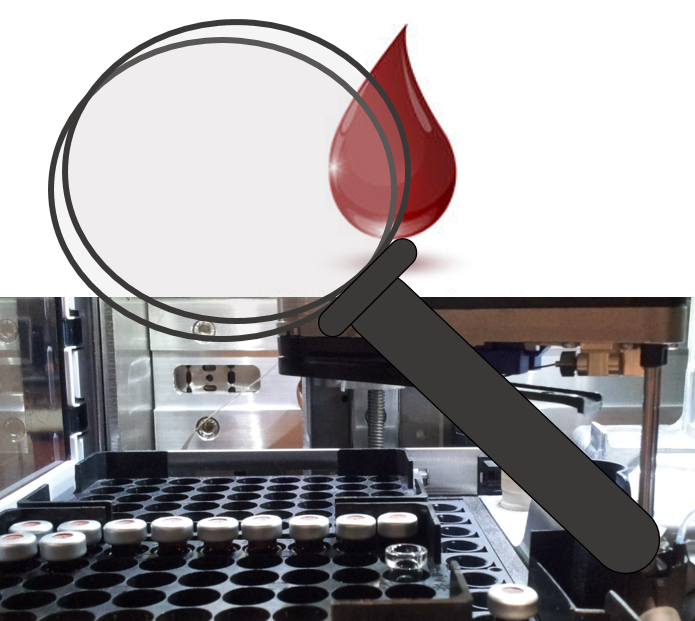
Automated preparation of whole blood samples
- Institute
- Institute for Chemistry and Bioanalytics
- Research field
- Instrumental analytics
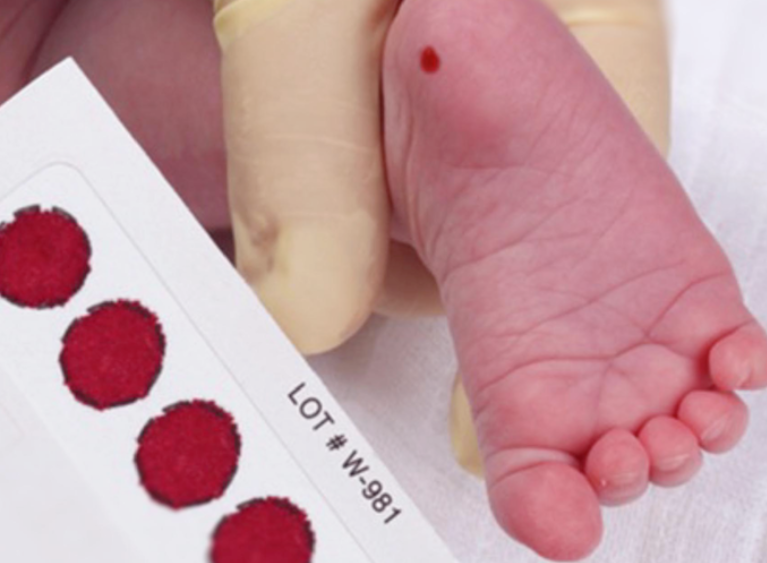
Fully automated blood screening in newborns
- Institute
- Institute for Chemistry and Bioanalytics
- Research field
- Instrumental analytics
Partners
We are proud of our successful collaboration with our partner laboratories and project partners.
Partner lab - Agilent Technologies

Project partners
- Camag
- CTC Analytics
- A. Vogel Bioforce
- Lonza
- Syngenta
- Solvias
- TUD SUD
- Universität Basel
- C-Cina
- Credentis
- Laves Arzneimittel
Publications
Contact

Prof. Dr. Stefan Gaugler
- Phone
- +41 61 228 50 98
- stefan.gaugler@fhnw.ch
Team


News, stories and events
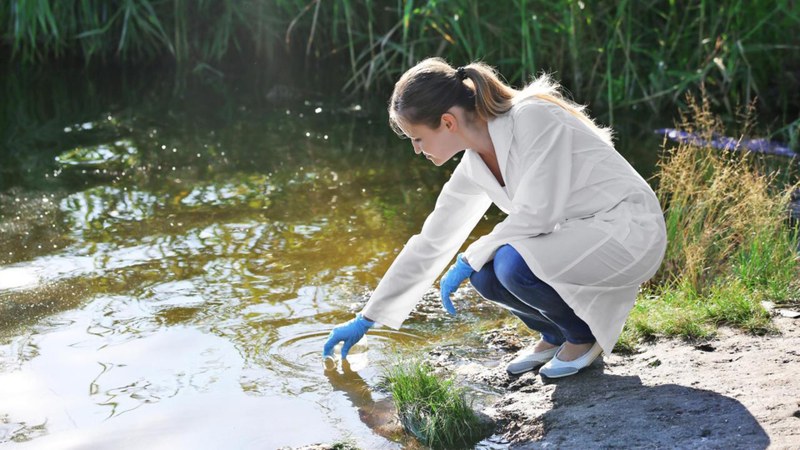
PFAS Summit 2026
- Date
- 19.11.2026, 09:00–18:00
- Place
- Campus Muttenz

Grant opportunities in life sciences
- Date
- 18.11.2026, 12:00–14:00
- Place
- Walter Klybeck

Made to measure treatment
- Date
- 12.12.2017
- Institute
- Institute for Chemistry and Bioanalytics