The course aims to bring students, researchers and professionals interested in social data analysis up to speed with the technology of Large Language Models (LLMs).
Steckbrief
- Lernsetting
- Präsenz
- ECTS-Punkte
- 1
- Dauer
- 3 Tage
- Durchführungssprache
- Englisch
- Durchführungsort
- Brugg-Windisch
- Preis
- CHF 400
- Format
- Kurs
- Zielpublikum
- Dozierende an Hochschulen, Mitarbeitende an Hochschulen
Ziele und Nutzen
Course topic
Large Language Models (LLMs) are a powerful machine learning technique able to represent and generate text, as well as data in other modalities. LLMs can also be used for automating several data analysis tasks with little tuning. The course provides several applications using social data, that will be implemented in practical sessions.
The practical sessions will showcase examples of data analysis tasks using LLMs in a variety of novel ways. These include the large-scale detection of online media polarization, the thematic clustering and labeling of textual sources, and how to use LLMs for data cleaning and analysis.
Course objectives
Day 1: Introduction to Large Language Models (LLMs)
Laboratory: Systems setup, the Hugging Face library, a first exercise
Day 2: LLMs for content representation, classification and regression
Laboratory: Thematic clustering and classification of textual sources, regression analysis
Day 3: LLMs for content generation and data analysis
Laboratory: Prompt engineering, retrieval-augmented generation, data analysis. Course feedback and Q und A

Dieser Kurs ist auch Teil der Methodenwoche
Aufbau und Inhalte
Course methods / Learning activities
The course combines lectures (morning sessions) with laboratories consisting of live coding and practicals (afternoon sessions).
Date and location
Mo, 1.6.2026, 8.45–16.30 Uhr
Di, 2.6.2026, 8.45–16.30 Uhr
Mi, 3.6.2026, 8.45–16.30 Uhr
Brugg-Windisch
Dozierende
- Prof. Dr. Giovanni Colavizza, Professor of Computer Science at the Department of Communication (University of Copenhagen) und Associate, Professor of Computer Science at the Department of Classical and Italian Philology (University of Bologna).
Voraussetzungen und Zulassung
Zielpublikum
- Dozierende an Hochschulen
- Mitarbeitende an Hochschulen
Aufnahmekriterien
A practical knowledge of the Python programming language is highly recommended.
Preliminary readings
- Riedl, «A very gentle introduction to Large Language Models», 2023. https://mark-riedl.medium.com/a-very-gentle-introduction-to-large-language-models-without-the-hype-5f67941fa59e.
- Alammar and Grootendorst, «Hands-on Large Language Models», O’Reily 2024. https://www.llm-book.com.
Organisatorisches
Preis
CHF 400
Beratung und Info-Anlässe
Kontakt

Svenja Schweri
- Telefon
- +41 56 202 81 02
- programme.iwb.ph@fhnw.ch
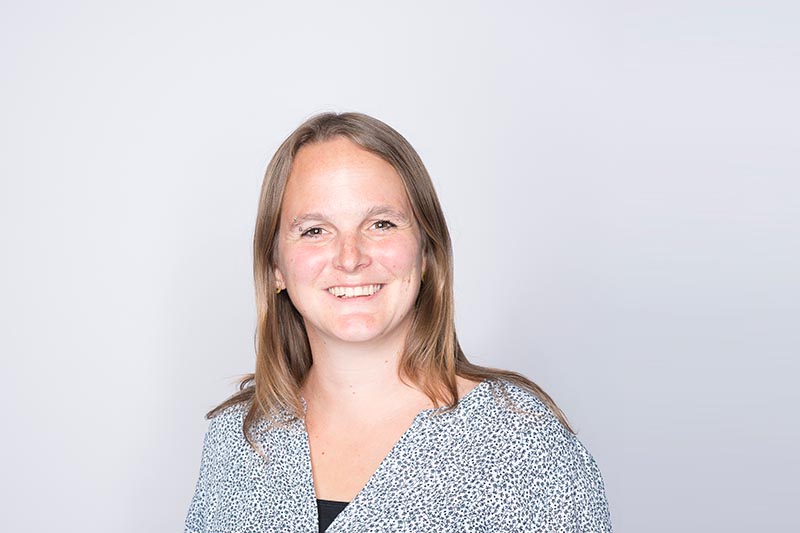
Dr. Jasmin Näpfli
- Telefon
- +41 56 202 79 54 (Direkt)
- jasmin.naepfli@fhnw.ch
Info-Anlässe
Zu diesem Angebot gibt es keine Info-Anlässe.