Skip to main contentSkip to search barSkip to navigationSkip to footer
Logo of the University of Applied Sciences and Arts Northwestern Switzerland
Degree Programmes
Continuing Education
Research and Services
International
About FHNW
DeEn
Locations and ContactFHNW LibraryMedia Relations
Logo of the University of Applied Sciences and Arts Northwestern Switzerland
  • Degree Programmes
  • Continuing Education
  • Research and Services
  • International
  • About FHNW
DeEn
Locations and ContactFHNW LibraryMedia Relations

Apply
MA MP instrument/
voice

Studying Music at...
Studying at Basel Ac...
Master of Arts...
Instrum...

Instrument/Voice

Institut Klassik | Is your career goal to combine your artistic career with a career in music education? Then this master's programme in Basel is an excellent choice.

Key data

Degree
Master of Arts FHNW in Musikpädagogik, Studienrichtung instrumental/vokal
ECTS points
120
Study start
Beginning of September
Studying mode
Full time
Duration
4 semesters
Teaching language
German, B1 level in German required
Place
Campus Musik-Akademie Basel
Application fee
200 CHF
Semester fee
750 CHF (CH) | 1000 CHF (EU/EFTA) | 1250 CHF (Not-EU/Not-EFTA) More Fees

You may apply between 15th December and 1st March.

Go to information eventsApply now

Mobile navi goes here!

The FHNW Master of Arts in Music Pedagogy with an Instrumental/Vocal Major pursues two objectives:

Professional performer

Students acquire the basics necessary to perform in public and to independently plan and deliver performances to a professional standard. The study programme also focuses on the development of the students’ own musical practice.

Teaching music

At the same time, students acquire the skills necessary to teach and communicate music to others. This programme enables students to give instrumental and/or vocal tuition on an individual or group basis to schoolchildren of all levels: music and upper secondary schools, and on a private basis. The Master of Arts in Music Pedagogy with an Instrumental/Vocal Major also offers a range of minor subjects, providing students with the opportunity to specialise further and gain an additional qualification.

Study variations

Students who already have been awarded a Master of Arts in Musical Performance with an instrumental/vocal major (or Specialized Performance with a Solo Performance major), are able to graduate the pedagogic education on their instrument/voice and chose an alternative artistic Major (possible study programmes may be found under “Structure”). The entrance exam of the artistic major is then held under the given conditions of the respective study programme.
Further information on these study variations and the specific requirements as well as admission criteria and entrance exam can be found here:

MA Music Pedagogy | instrument / voice | Second alternative artistic major
Loading

Creative Interpretation in New Music
Open Creation

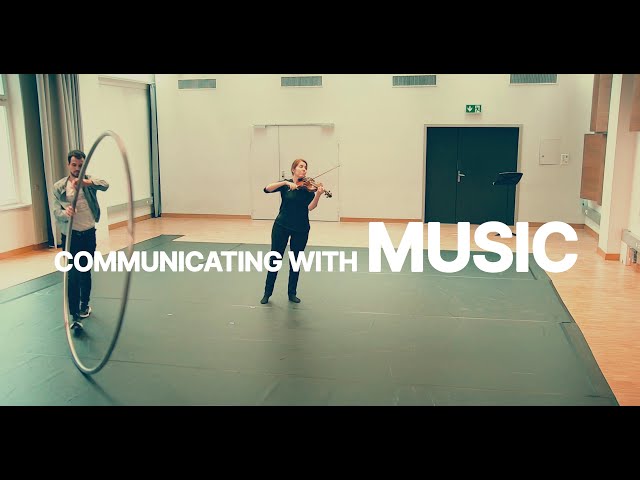
Communicating (with) music

Overview

Learning outcomes

The FHNW Master of Arts in Music Pedagogy with an Instrumental/Vocal Major focuses on nurturing the students’ artistic identity and providing them with the skills needed to share their musical expertise with different audiences. Students learn to engage with music at a deeper and more complex level and encouraged to develop their own unique ‘voice’. They also acquire the pedagogical-didactic skills needed to provide professional jazz tuition at all levels.

Target audience

The FHNW Master of Arts in Music Pedagogy with an Instrumental/Vocal Major is aimed at musicians who:

  • enjoy and are interested in sharing their musical expertise with people of all ages and in different settings;
  • would like to add a teaching qualification to their existing professional music qualifications.
Career prospects

The FHNW Master of Arts in Music Pedagogy with an Instrumental/Vocal Major prepares students for a wide range of careers. In addition to private or institutional tuition at music schools, upper-secondary schools, music societies and the like, graduates are qualified to work in many other fields, such as music and cultural mediation in concert halls and opera houses. Nearly all music schools in Switzerland now require prospective teaching staff to have a Master of Arts in Music Pedagogy (or an equivalent qualification).

Structure MA MP instrumental / vocal

Structures

Majors: everything DESPITE Singing, Piano, Organ, Percussion, Trumpet, Violin, Viola
Structure MA MP Klassik instrument/voice Major everything despite the following in German

Major: Singing
Structure MA MP Klassik instrument/voice Major: Singing in German

Major: Piano
Structure MA MP Klassik instrument/voice Major: Piano in German

Major: Organ
Structure MA MP instrument/voice Major: Organ in German

Major: Trumpet
Structure MA MP Klassik instrument/voice Major: Trumpet in German

Major: Percussion
Structure MA MP Klassik instrument/voice Major: Percussion in German

Majors: Violin
Structure MA MP Klassik instrument/voice Major: Violin in German

Major: Viola
Structure MA MP Klassik instrument/voice Major: Viola in German

Minors Institut Klassik
Overview Minors Institut Klassik

Structure Study Variations for second Master

Study Variations

Students who already have been awarded a Master of Arts in Musical Performance with an instrumental/vocal major (or Specialized Performance with a Solo Performance major), are able to graduate the pedagogic education on their instrument/voice and chose an alternative artistic Major.

Structures

Second Major: Wind Orchestra Conducting
Structure MA MP Klassik instrumental/vokal 2Major Wind Orchestra Conducting

Second Major: Choral Conducting
Structure MA MP Klassik instrumental/vocal 2Major Choral Conducting

Second Major: Chamber Music
Structure MA MP Klassik instrumental/vokal 2Major Chamber Music

Second Major: Lied Performance Singing
Structure MA MP Klassik instrumental/vocal 2Major Lied Performance Singing

Second Major: Lied Performance Piano
Structure MA MP Klassik instrumental/vocal 2Major Lied Performance Piano

Second Major: Open Creation
Structure MA MP Klassik instrumental/vokal 2Major Open Creation A Improvisation
Structure MA MP Klassik instrumental/vokal 2Major Open Creation A Composition
Structure MA MP Klassik instrumental/vokal 2Major Open Creation A Open Art
Structure MA MP Klassik instrumental/vokal 2Major Open Creation A Contemporary Performance
Structure MA MP Klassik instrumental/vokal 2Major Open Creation B Improvisation
Structure MA MP Klassik instrumental/vokal 2Major Open Creation B Composition
Structure MA MP Klassik instrumental/vokal 2Major Open Creation B Open Art
Structure MA MP Klassik instrumental/vokal 2Major Open Creation B Contemporary Performance

Second Major: Contemporary Music
Structure MA MP Klassik instrumental/vocal 2Major Contemporary Music

Minors Institut Klassik
Overview Minors Institut Klassik

Module descriptions

Module descriptions

Below please find the link with all the information on the module descriptions of several FHNW universities.

  • At the top right, switch the language settings to English.
  • At the bottom right, filter by semester, Hochschule für Musik Basel FHNW, the desired degree programme or other criteria to display the relevant module information.
  • Use the PDF button at the top left to call up a document from each overview and save it for yourself.
  • Course registrations are made via the intranet.
Admission / Entrance exam

Admission criteria
In order to enter the FHNW Master of Arts in Music Pedagogy programme with the Major instrumental/vocal, applicants must be awarded a Bachelor in Music/Music and Movement or equivalent as well as they have to have passed the entrance exam and were offered a free place at the Academy (limited places). Applicants who have submitted all the necessary registration documents in time and have passed the first round of the entrance exam will be invited to play a live audition. For further information on the admission criteria, please see the Studienreglement of the Master of Arts FHNW in Music Pedagogy.

Admission criteria for internal Bachelor applicants
Internal Bachelor candidates absolve the entrance exam within their Bachelor qualification. Further requirements for internal Bachelor and First Master’s students are:
- Having passed the Master preparation course
- The jury must unanimously recommend that the student continues in the Master study course
- The consent of the Major professor

Language skills
We expect students to have very good German language skills at the beginning of the studies. Students who are not German native speakers must present at least a B1 German language certificate according to the Common European Framework of Reference for Languages (CEFR) at the beginning of the studies.
This certificate must be complete, i.e. all modules (reading, listening, writing, speaking) have been tested separately and passed at least at level B1 overall. Only certificates that have been certified with the ALTE-Q-Mark seal of approval (e.g. the B1 certificate of the Goethe-Institut or the telc certificate) are accepted. The required certificate B1 must be submitted with the confirmation of admission but not later than Mai 31.
Exceptions will be decided upon by the head of degree programme.

Entrance exam
The entrance exam is split into two parts: One Major exam and one pedagogic exam. Applicants who hold a Bachelor in Music and Movement must also pass an exam in Music Theory and Ear training.

Procedure instrument / voice
For a second Master degree in Switzerland: Please mind the procedure of entrance exam of the respective artistic specialized major.
First round: Video recordings
Applicants must submit a video when registering.
Video requirements
The length of the video should be minimum 20 minutes to maximum 30 minutes. It should contain a representative selection of the repertoire requirements. The single works/movements submitted must indispensably be recorded without any cuts. If applicants submit one straight video with the whole programme, the applicant must set marks after every work/movement so that it is possible for the jury to purposely skip within the video.
Microphone: We recommend using a suitable stereo microphone and place it conveniently. If necessary, you may also use the mi-crophone of a camera, computer, or smartphone. Please record the video from a fixed point of view. The hands and the face of the musician must be visible. Publicly recorded concerts may be submitted as long as they correspond to the above-mentioned requirements (no cuts) and as long as they are not older than 6 months.
Please upload the video onto YouTube and add the link in the registration tool.
Please add the list of works to your application or send it by mail to registration.hsm@fhnw.ch until 15th February at the latest.
Only those applicants who will be considered for the second round will be invited for the live audition. Exceptions will be decided upon by the examination management.

Second round: Live audition
Repertoire requirements
Please prepare a programme of minimum 20 to a maximum of 30 minutes with pieces from at least three different stylistic epochs and play them from memory according to the usual professional practice. The choice of the programme (see Repertoire requirements) may be identical as the one of the video. However, changes of the programme for the live audition can only be made until 14 days prior to the audition date.
The candidate may choose the first piece. Then, the jury will decide which works to play and is allowed to interrupt the audition at any time. Afterwards, there will be a short conversation about the goals of the studies and the study course content as well as the applicant´s prior education, experience, the choice of the professor, etc.
In exceptional cases, an invitation to the live audition can be waived. In this case, an online interview with the examination board is mandatory.
Music Theory/Ear training (only for applicants with a Bachelor in Music and Movement)
In addition to the live audition, the applicant must pass an exam in Music Theory and Ear Training. If the applicant passes the exam and will be offered a free place, the head of programme is authorized to set special restrictions in order for the candidate to reach an equivalent educational level as the one of the Bachelor with an instrumental/vocal major.
Pedagogical aptitude assessment (external applicants)
Candidates who are invited to the second round (on-site audition) are asked to submit a video of a demonstration lesson of 20' duration with a student of their own instrument. The student can be beginner or advanced and there is no age limit. If possible, the lesson should be held in German. If this is not possible for organizational reasons, the lesson must either be held in English or the video must be subtitled accordingly. The recording must not be older than 6 months. Please upload the video onto Youtube and send the following information/documents by 10th April to registration.hsm@fhnw.ch by mail: 

  • the link
  • information about the student (age and characteristics, since when)
  • copies of the sheet music used (if applicable)
  • a short written reflection of your lesson 

Pedagogical aptitude assessment (internal applicants)
For internal applicants, the pedagogical aptitude test takes place on-site during the spring semester (after the head of degree programme has been able to check whether a place is available). The dates will be communicated individually.
The pedagogical aptitude test consists of a demonstration lesson of 20' duration (the allocation of students is taken on by the subject didactics teachers) in German language and a reflection talk following the lesson.

Dates
The live auditions will take place at the end of April. The exact dates may be seen here.

Registration
You may apply between 15th December and 15th February.
Along with the registration, it is mandatory to submit the following documents:
A curriculum vitae, a motivational letter, the school leaving qualification, the Bachelor Diploma. In case that the applicant already holds a Master Diploma, we also need a copy of that.

Announcement of the results
The results of the first round will be communicated by mail at the end of March.
The results of the second round will be communicated by mail in May.

Organisational Matters

Projects / Ensembles

At Hochschule für Musik Basel, students have the opportunity to participate in various project and ensemble programmes.
To the overview of the recurring offers.

Quicklinks
  • Welcome: A brief overview
  • Studying in Switzerland
  • Tuition fees & Financing
  • Scholarship
  • Module descriptions
Files and Regulations
  • Dates Entrance Exam on Site
  • List of works for Entrance Exam
  • Study Regulations
  • Semester dates

Contact and Info-Event

Loading
Loading

Registration

Teaching staff

Our internationally renowned teaching staff

to teaching staff

Minors and other postgraduate programmes

Loading
Basel Academy of Music

Basel Academy of Music

An international institute of higher education and research

No social media links available.

Degree Programmes

Master of Arts in Music Pedagogy
Minors Institut KlassikMA Music Pedagogy Majors Institut Klassik
null null
Student Administration Academy of Music, Klassik
Telephone

+41 61 264 57 32 (undefined)

E-mail

klassik.hsm@fhnw.ch

Address

Leonhardsstrasse 6 4009 Basel

Room

6-001

Availability

Monday - Thursday 10.00 - 12.00 h 14.00 - 16.00 h Friday 10.00 - 12.00 h

Annekatrin Klein

Prof. Annekatrin Klein

Leitung MA & DAS Musikpädagogik instrumental/vokal & MA MP Musiktheorie (CO-Leitung) / diverse Lehrveranstaltungen

Telephone

+41 61 264 58 36

E-mail

annekatrin.klein@fhnw.ch

Address

Hochschule für Musik Basel Leonhardsstrasse 6 4009 Basel

hsm_kammermusik/liedhsm_dirigierenhsm_mp_klassik_enhsm_kreation.komposition,improvisation_enhsm_musikpädagogik_en

What we offer

  • Degree Programmes
  • Continuing Education
  • Research and Services

About FHNW

  • Schools
  • Organisation
  • Management
  • Facts and Figures

Information

  • Data Protection
  • Accessibility
  • Imprint

Support & Intranet

  • IT Support
  • Login Inside-FHNW

Member of: